To any U.S. readers who are seeing this on Thursday: Happy Thanksgiving!

Today, of course, is about two things: giving thanks and food.

Here in Lexington, we’re blessed with a fabulous weekly farmers’ market, wonderful local farmers, and an abundance of local restaurants that serve delicious (and, often, locally sourced) food. If you like eating food when it’s in season and at its most delicious, it’s both easy and rewarding to eat and shop locally here in the Bluegrass.

One of our favorite local stores, where we can get all kinds of good food and good ingredients, both delicious and healthy, is the Good Foods Market & Cafe. Stella Parks, a (splendid) pastry chef and food blogger, wrote a great blog post on Good Foods, which you can read here.

In honor of the day, I’d like to take a moment to thank a few of our favorite local farmers and local businesses for the delicious, healthy food they offer:

Elmwood Stock Farm, for their fabulous vegetables, berries (including the world’s best strawberries), salsa, eggs, beef, chicken, turkey, lamb, and heritage-breed turkeys;

Henkle’s Herbs and Heirlooms for their wide variety of delicious heirloom tomatoes, and Velvet’s salsa fresca and homemade chicken salad;

Bleugrass Chevre for the best-ever goats’ milk cheese; and

Reed Valley Orchard for their stunning assortment of amazing apples, blackberries, and pears.

And there are others, too: producers of fresh, homemade pasta; irresistable chocolate truffles; delicious homemade scones; milk that’s better than any other you’ve tried; wonderful loaves of hearty, old-world-style breads; and more.

Our thanks to all of you!

… and Happy Eating!!

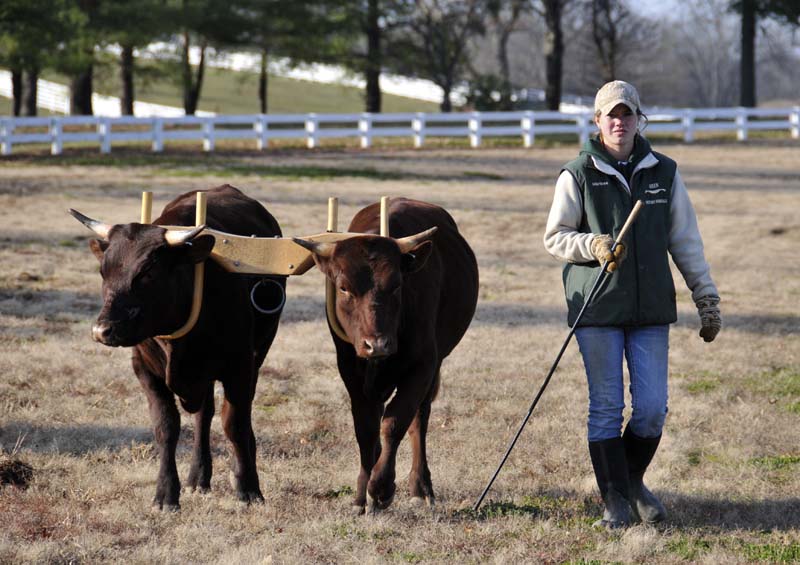
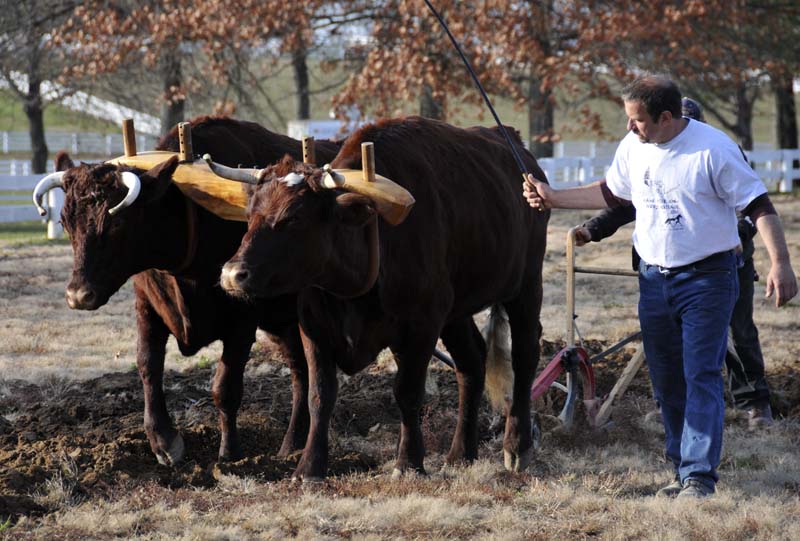
A couple of weeks ago, a group of people and their animals traveled all the way from Maine to spend several days at the Kentucky Horse Park, doing demos, interacting with Horse Park visitors, and even pulling the park’s trolley (um, that was the animals, not the people).

On one of their rehearsal days, I walked over to where they would be doing all their demonstrations and was lucky enough to see all eight pairs of oxen — sixteen total — hitched to the enormous set of logging wheels that had been delivered to the Horse Park back in September. That was quite a sight, I must say (but, sadly, I had walked out of the office without my camera).

I went back later in the week to see several of the teams hanging out with Horse Park visitors and doing some plowing demonstrations.

And what did I (and others) learn about oxen?

Oxen start their lives as “working cattle” — young steers (neutered males), which are handled and trained from their earliest days. When they’re four years old, these working cattle are considered oxen.

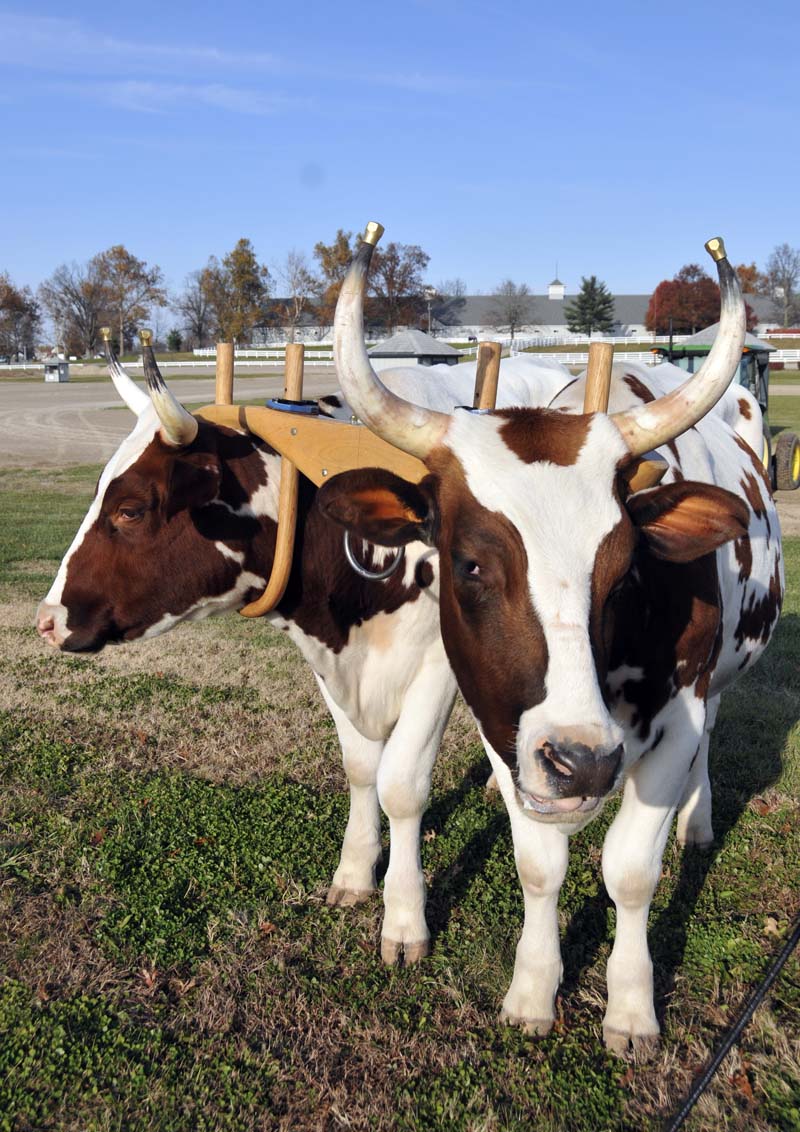
Oxen can be almost any breed (or cross) and size of cattle. The spotted ones you’ll see below are Ayrshire.

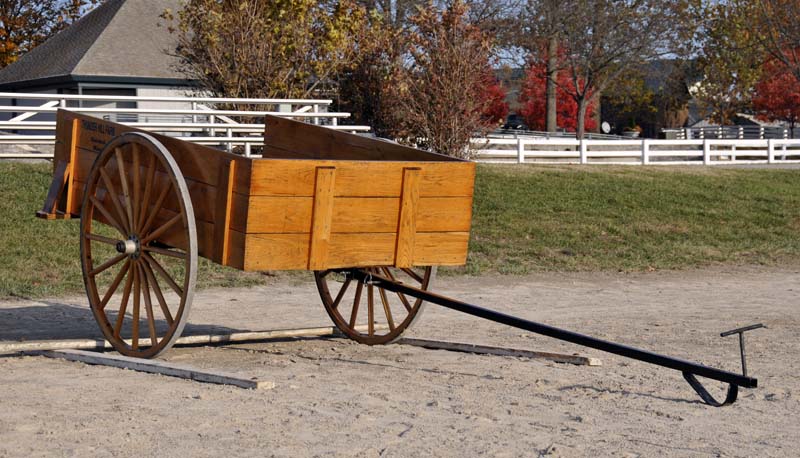
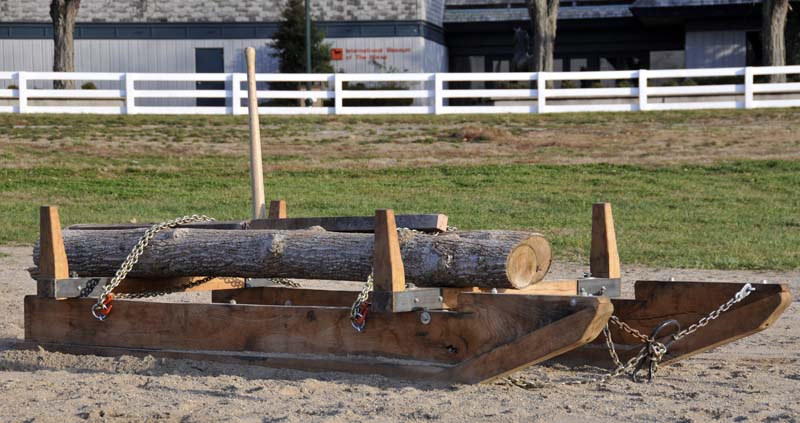
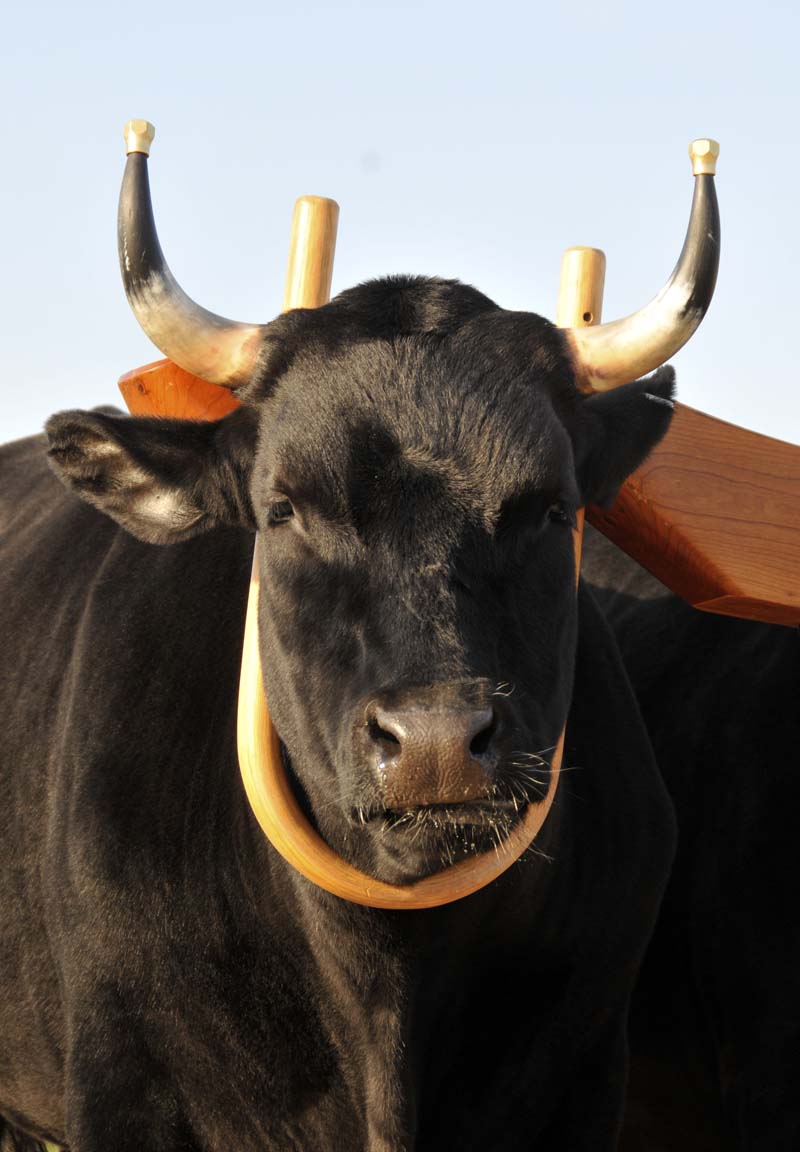
When they’re pulling a load (such as the cart or the sled shown below), the pole goes through the ring hanging from the bottom of the yoke, and a pin helps to hold the pole in place. 

I hope you enjoy the photos of these beautiful animals.

.

.

.

.

.

.

.

.

.

.

.

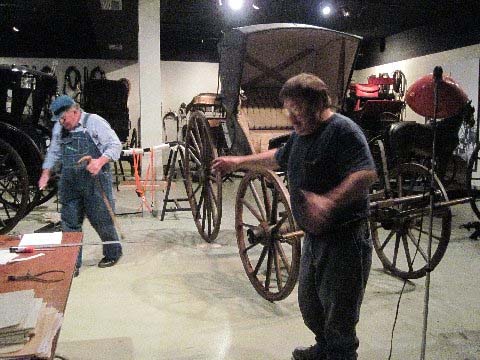
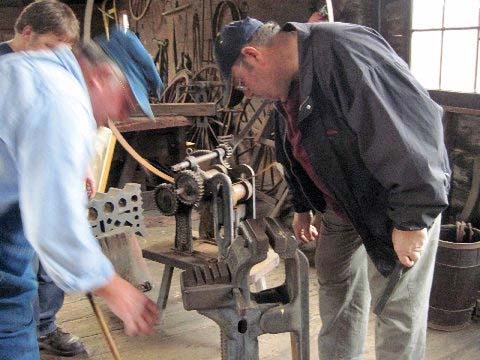
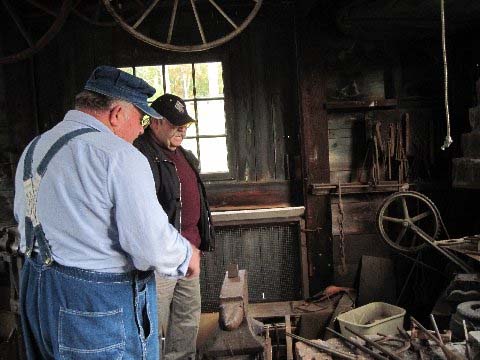
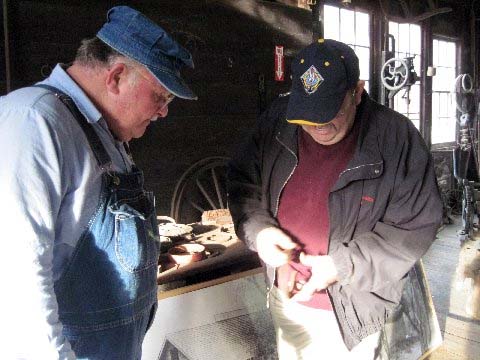
Jerry Trapani sent these photos, which show him (in the red shirt), fellow CAA member Harley Chandler (in the overalls and cap), and Harley’s brother, David (in the blue shirt).

Harley is a carriage builder and collector of antique carriage-making tools here in Kentucky, and he was recently commissioned to build a new carriage for Colonial Williamsburg. He and his brother did some research for the project at the Long Island Museum of American Art, History and Carriages in Stony Brook, where they also investigated some of the old tools in the museum’s blacksmith shop.

Thank you, Jerry and Rita Trapani, for these photos.

.

.

.

.

.

.

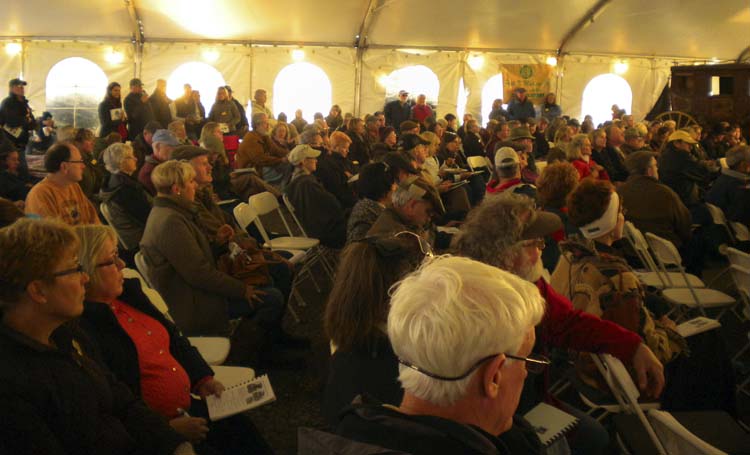
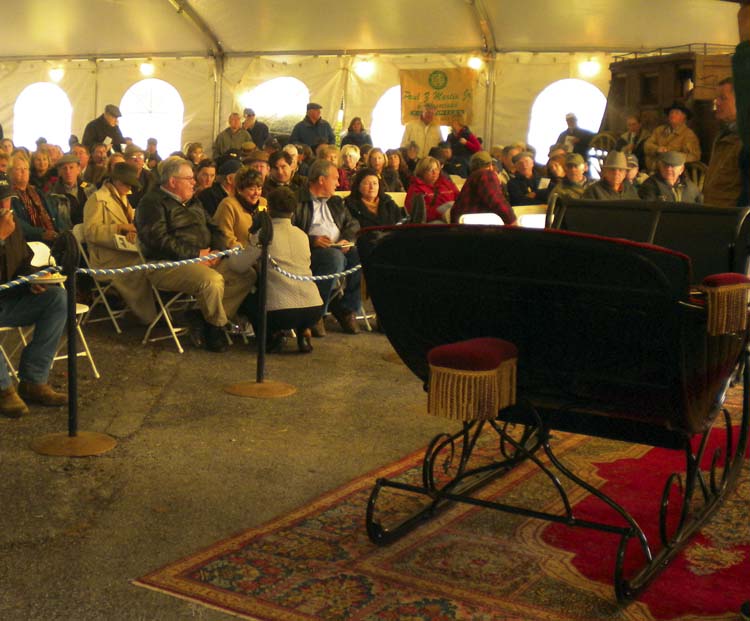
On Saturday, a carriage auction drew hundreds of visitors — carriage drivers, carriage collectors, and the merely curious — to the farm formerly owned by Elizabeth Lampton, just  a couple of miles from the Kentucky Horse Park.

.

.

There were about sixty carriages in the sale and several hundred other items, ranging from harness, whips, and hats to prints and massive, carved wardrobes.

.

.

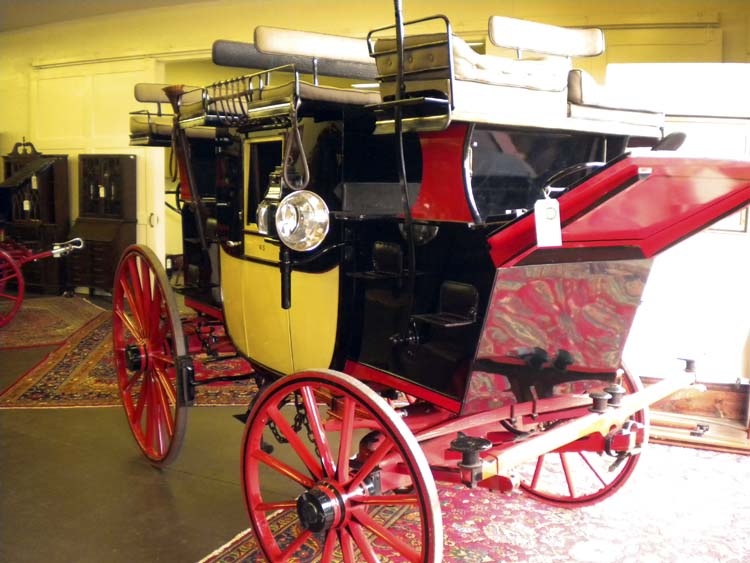
The item with the best known history — and the one that fetched the highest price — was this beautiful little coach:

.

the near side of the pony coach

.

... and the off side

.

This coach was built in the style of a Park Drag, but sometime during its lifetime was converted to the brighter colors and the look of a Road Coach. It was built to be pulled by a team of Hackney ponies, so it’s three-quarters the size of regular coach.

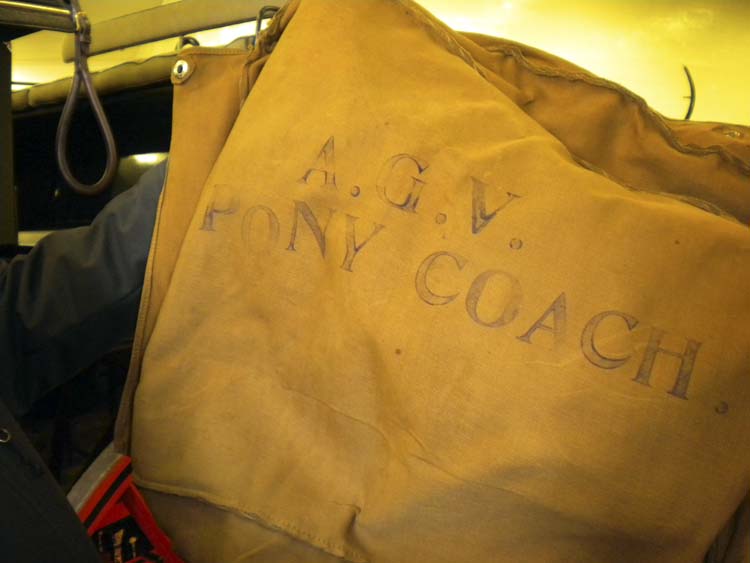
It was custom-built in 1910 for America’s great coaching enthusiast of the day, Alfred Gwynne Vanderbilt, by Mills & Sons of London. The finished coach was shipped to New York aboard the British luxury ocean liner, the Lusitania. When the coach arrived in New York, the Brewster Co. unpacked it and hurried it off to Madison Square Garden, so that Mr. Vanderbilt could show it with his new team of Hackney ponies at the National Horse Show.

Sadly, A. G. Vanderbilt was later one of the Lusitania’s many passengers who died when the ship was torpedoed by a German submarine in May 1915. The story goes that he was last seen putting a life vest on a woman holding a baby.

.

the coach's original seat covers, with Alfred G. Vanderbilt's initials

.

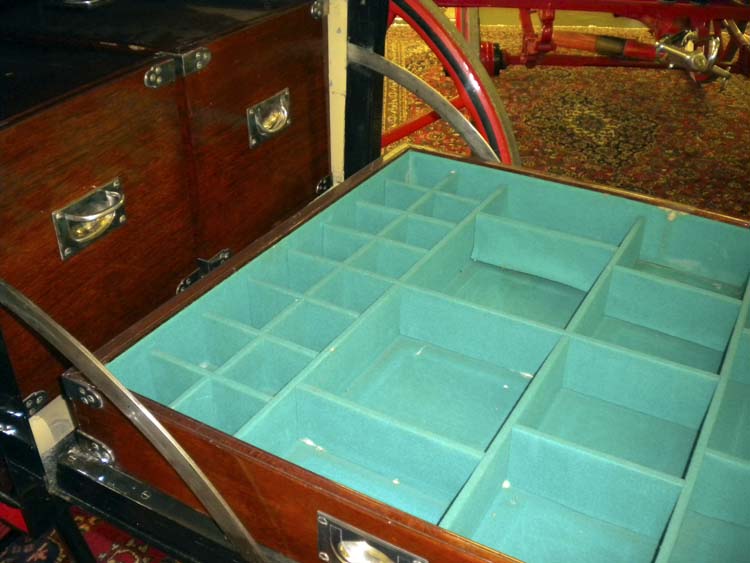
this tray and the two to the left sit in the coach's boot; this one would've held glassware, plates, etc. and the two to the left look like they would've held bottles ... A. G. Vanderbilt preferred "white" metal on his vehicles, instead of brass, so all the silver is sterling

.

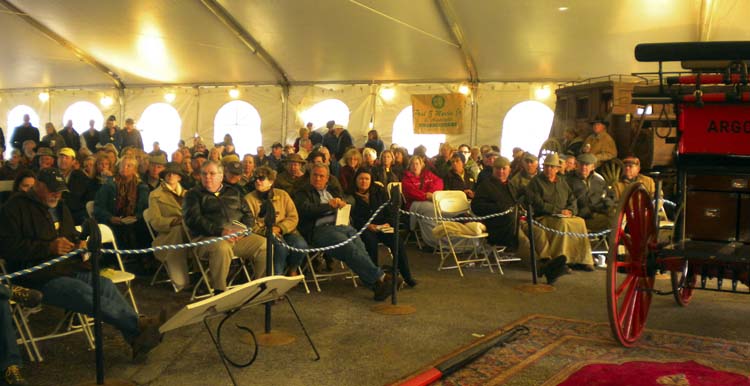
When it was time for this coach to be auctioned, the bidding was fierce, and everyone not bidding was listening and watching rather intently to see what would happen. In the end, it sold for $140,000.

.


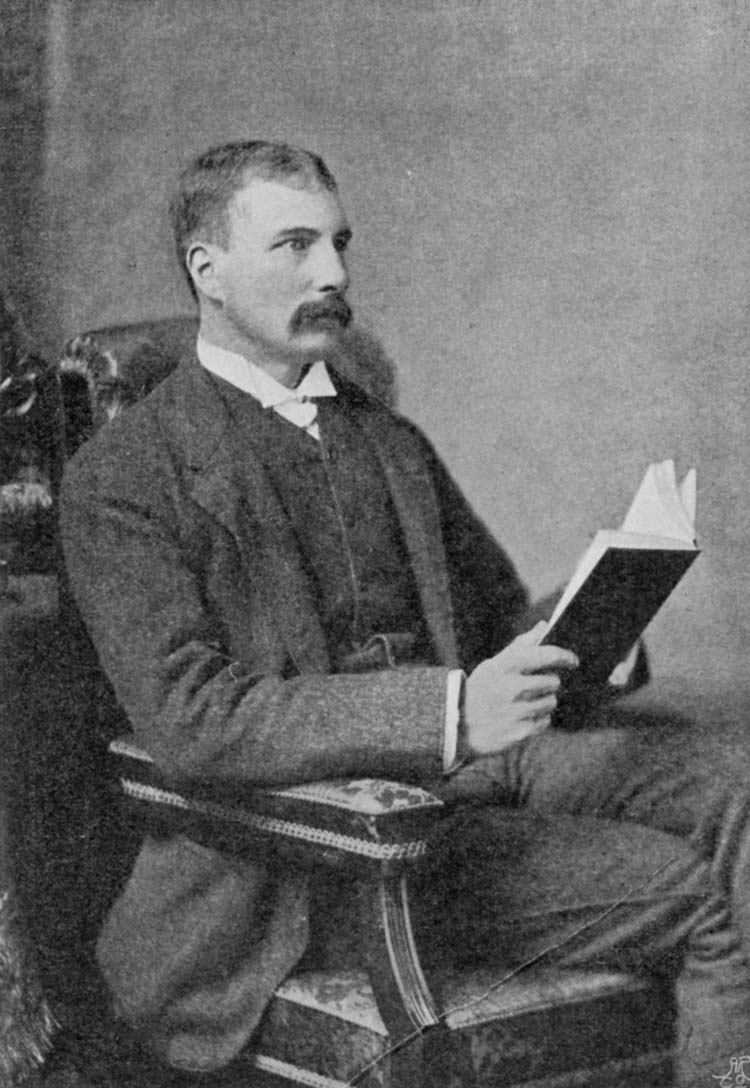
In case you’re wondering about our Mr. T. F. Dale, here’s a photo of him:

.

from Riding, Driving, and Kindred Sports, Volume 1 in The Sports Library (1899)