Windsor


Our trip to Windsor started perfectly, when we managed to fit all of our cold- and wet-weather clothes and shoes, and all of our other supplies for a week in England, into two suitcases and two carry-on bags (one for each of us). Then, we had the quickest, easiest, friendliest, and least crowded check-in and trip through security that either of us have ever had an airport other than Lexington’s. And, as if that weren’t enough, the largest and heaviest of our two checked suitcases weighed in at 49 pounds.

The perfection continued when we arrived at Heathrow and had literally four people in front of us in the passport control line, and that after the horror stories we’d been hearing lately of three-hour delays.

And the sun even came out this afternoon! Let’s hope all this perfection and lovely weather carries forward through the week … fingers crossed!

.

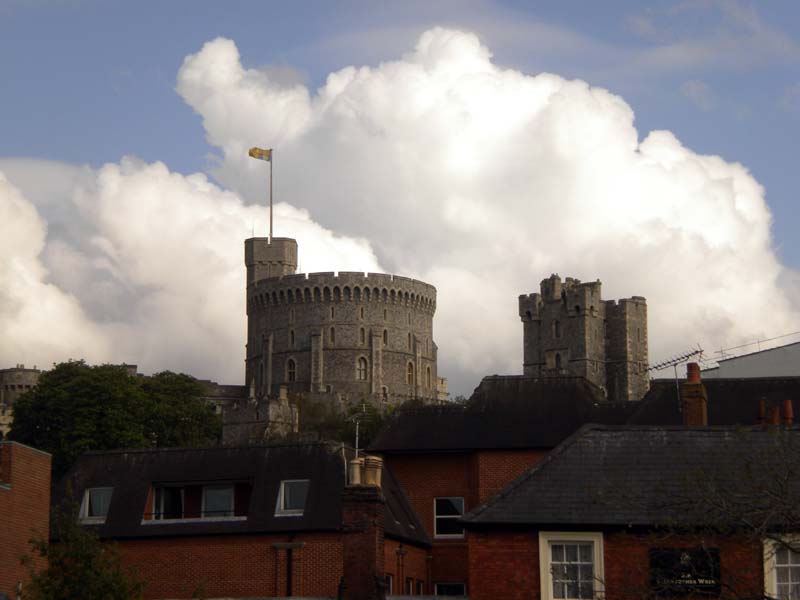
Windsor Castle’s Round Tower, with the Royal Standard flying and a beautiful blue sky and impressive clouds overhead (photo by A.J.)

.

Tomorrow, we’re going to tour Windsor Castle. And in the afternoon, the CAA group has afternoon tea not once but twice. (The group is so large that Jill’s broken it down into two smaller groups for the getting-to-know-you teas.)

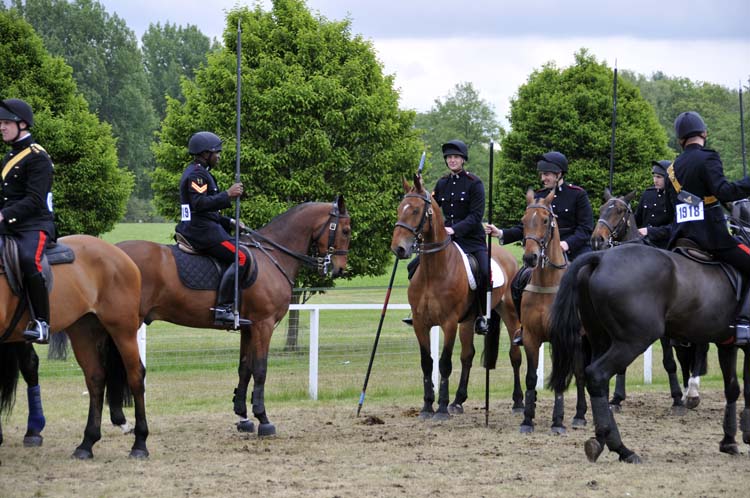
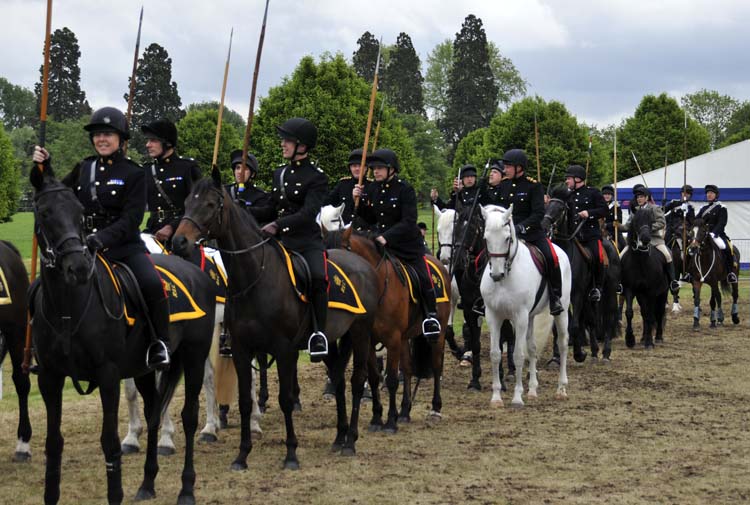
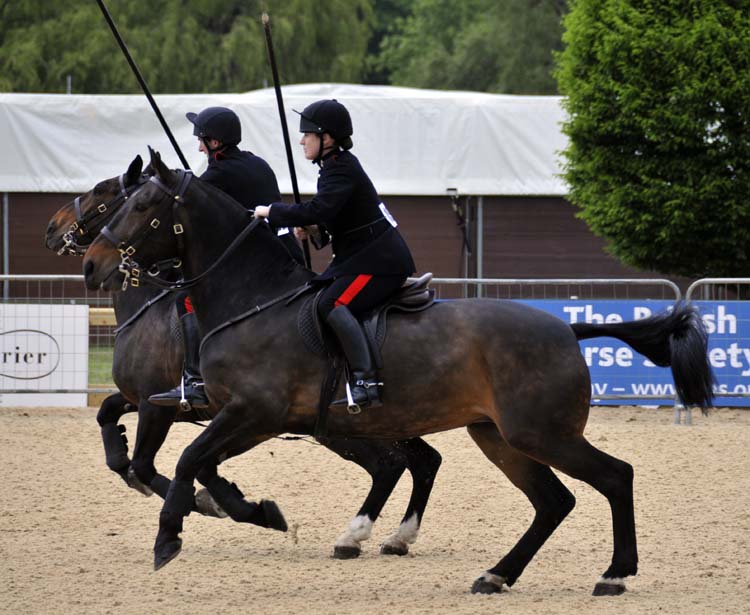
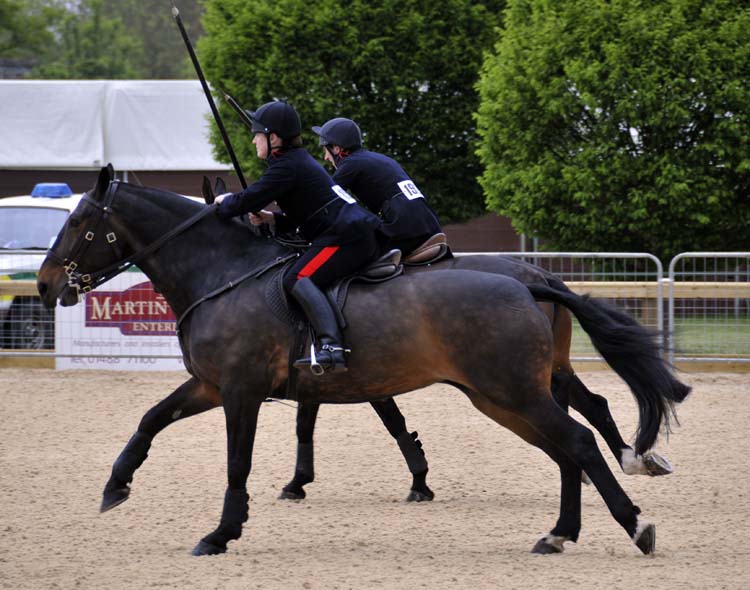
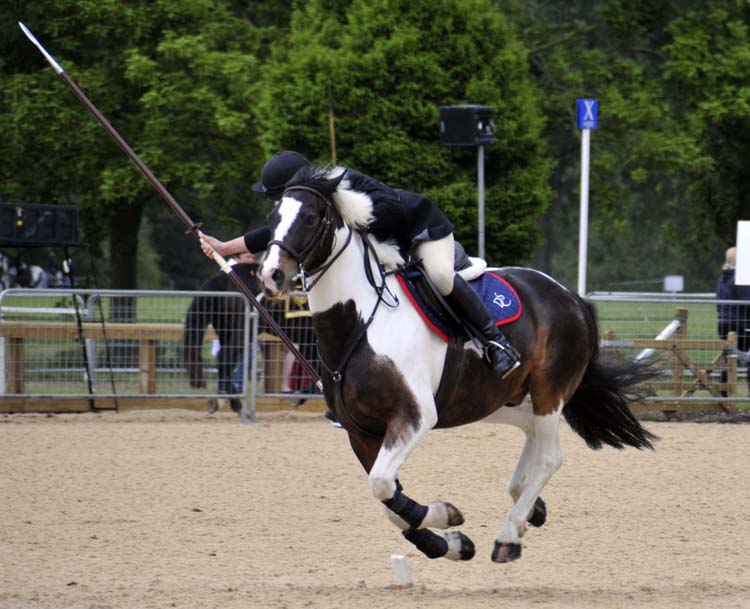
C’mon, admit it, most of you had never ever even heard of tent-pegging before reading about the 1897 Rough Riding Club of New York, right?

Well, believe it or not, the sport is still played today. It’s especially popular in Great Britain, Australia, India, Pakistan, Israel, and South Africa.

If you travel with the CAA to the Royal Windsor Horse Show in England, you can see this cavalry-inspired sport for yourself. As proof, here are a few photos from the tent-pegging competition at Windsor in 2009:

.

.

.

.

.

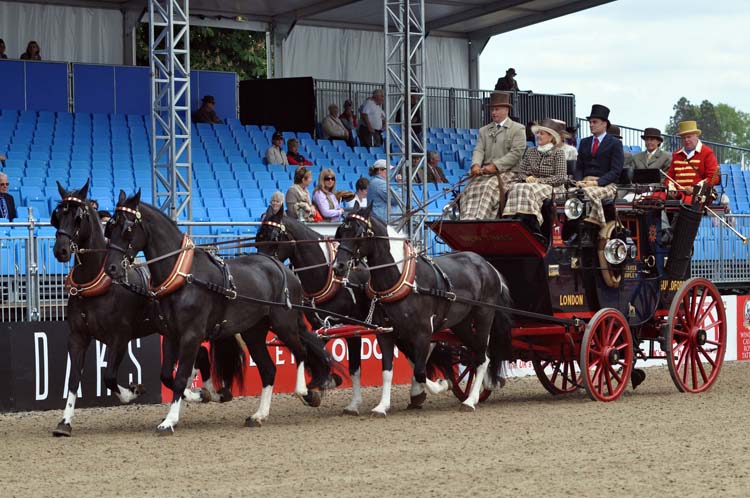
We were sent this lovely photo of CAA member Ken Ruthven, driving a team of horses and coach owned by CAA member Ian Smith. They were the winners of the Road Coach division in the coaching marathon at this year’s Royal Windsor Horse Show:

.

After the conclusion of the CAA’s trip to the Royal Windsor Horse Show, Jill and several others traveled to Norfolk to spend a couple of days enjoying coaching runs, lessons, and the neighborhood hospitality at the driving facility owned by John Parker and Susan Townsend.

Today, the travelers arrived back in Eton (where there is a working Internet connection!), and so Jill sent this report and the these photos. Tomorrow, everyone heads home.

.
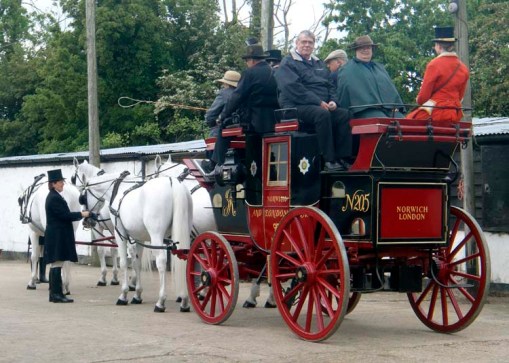
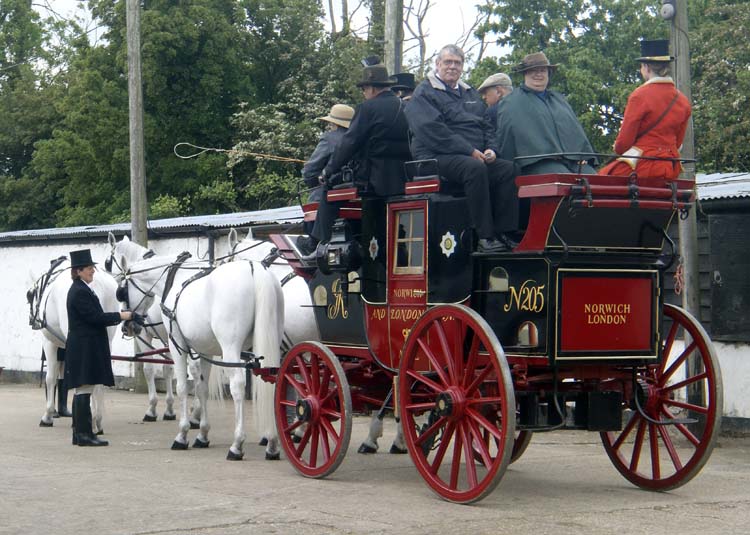
Royal Mail Coach N205 with CAA members aboard (photo by Susan Townsend)

.

N205 is probably the most famous coach in Great Britain today. The history of the N205 Royal Mail Coach can be traced back to 1870, but the coach is believed to be considerably older.

The coach weighs 1.25 tons without passengers, is equipped with wooden wheels and steel tires, and has a fifty-two-foot turning circle. It is built on a perch undercarriage with two sets of platform springs and mail axles attaching the wheels to the body.

Like all Mail Coaches, it is painted black with scarlet wheels and undercarriages. The notation “GR” identifies the reign in which it was built (that of King George IV), and the upper quarter panels feature the four stars of the Order of Knighthood. The number N205 identifies the route traveled as London-to-Norwich.

The coach was re-registered in 1969, enabling it to carry the Royal Mail. It is the only coach currently accorded this honor in the modern era.

In order to make the postal service viable, the coach was also one of the first built to accommodate passengers, and it can carry twelve plus the coachman and the guard, who protected the mail and passengers from highwaymen. The guard also acted as the horn-blower, alerting people to the arrival of the mail. Mail Coaches traveled at ten miles per hour, had right of way over everyone else on the road, and paid no tolls.

It is known that N205 was owned by James Selby, who drove it until his death in 1888. Thereafter, its career is a little unclear but records show that it was owned by Bertram Mills, who sold it in the late 1950s. In 1966, John Parker found the coach languishing behind a pub in Wales; he brought it home, and the rest is history.

James Selby himself had two entries in the record books: one for the longest distance ever driven by one coachman, and the other for the fastest time a team of horses could be changed for another — namely, 47.2 seconds, a record set in 1888.

A century later, N205, driven by John Parker, broke both those records. John’s grooms reduced the time for the team change when in a challenge on TV’s You Bet, they changed horses in an incredible 21.2 seconds!
 
In June 1996, John broke the long-distance record when he drove the coach nonstop from the Guildhall in London to Norwich Cathedral — a distance of 139 miles — in twenty-one-and-a-half hours.

.
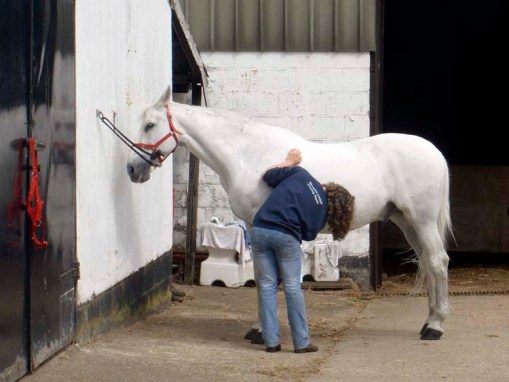
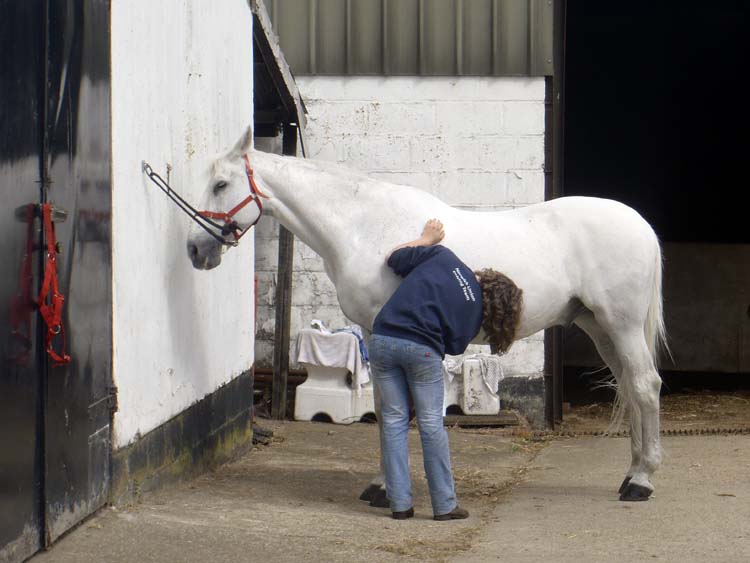
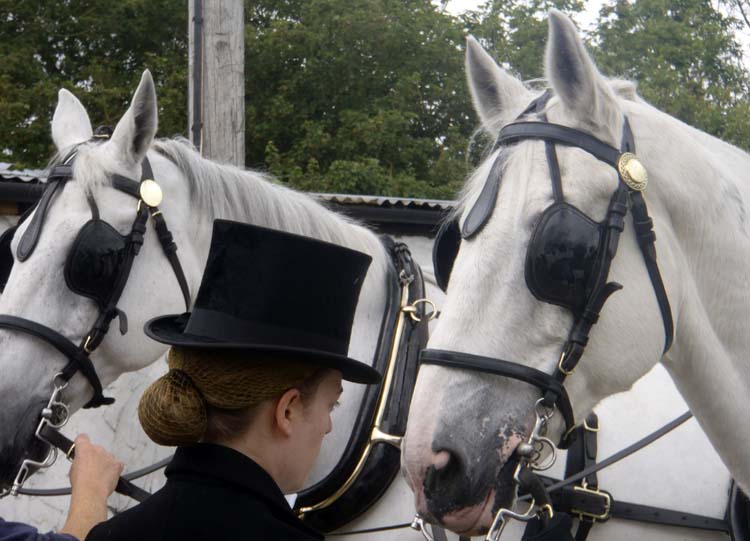
Anna grooming one of the coach horses before the group sets out on a coaching run (photo by Jill Ryder)

.
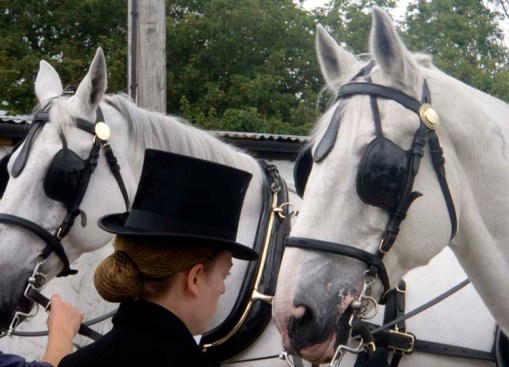
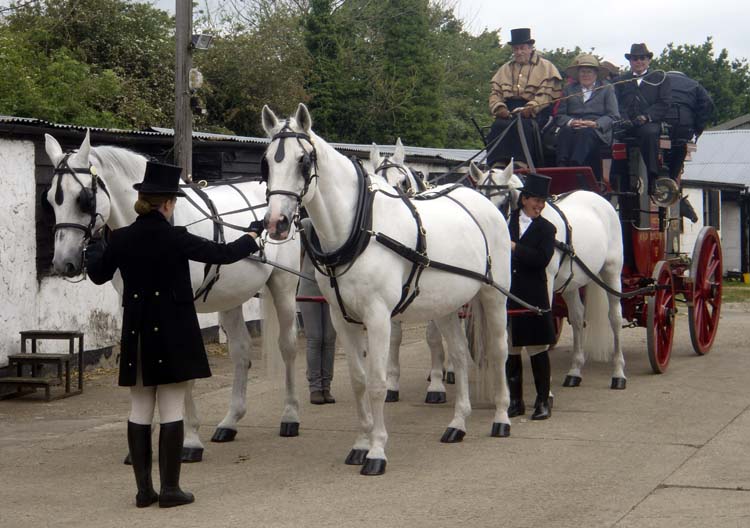
(photo by Jill Ryder)

.
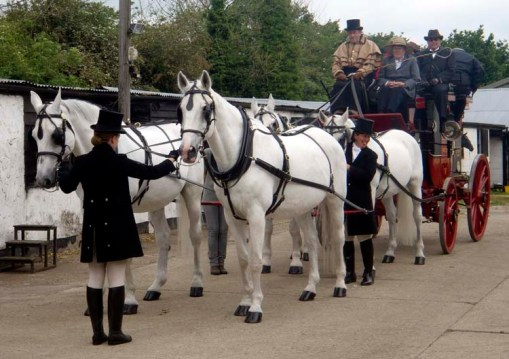
ready to head out! (photo by Susan Townsend)
Jill sent this report from the CAA group’s final day at the Royal Windsor Horse Show:

The sun shone again on Sunday morning. We were very lucky with the weather all week: sun each day and just one short shower. But yesterday afternoon, the clouds came in and the wind blew and it was cold!

Despite all that, we had a great day at the show, enjoying the BDS drive and the cones competition for the FEI driving event. Added to that were the Shetland Pony Grand National finals, the meet of the hounds, the ladies’ side saddle competition, the Alltech jumping finals, and lots of awards. Her Majesty the Queen gave out many of the trophies, including for the FEI driving.

Bruce Springsteen and his wife were there all day in the Members Enclosure supporting their daughter, who was show-jumping!

Today, a small group of us have headed off to Norfolk for three days of coaching and driving with John Parker.

 .

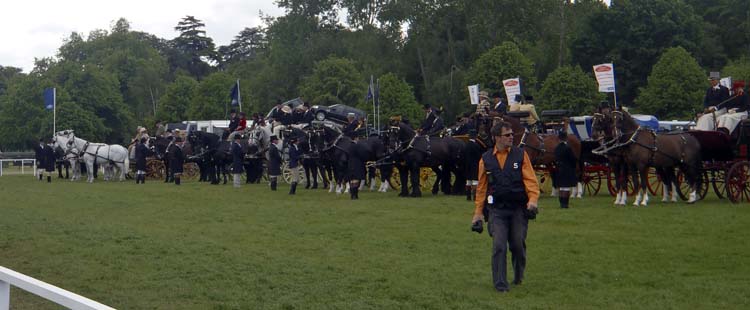
thirty-five members of the British Driving Society lined up before being led by HRH Duke of Edinburgh on a five-mile drive (photo by Jill Ryder)

.

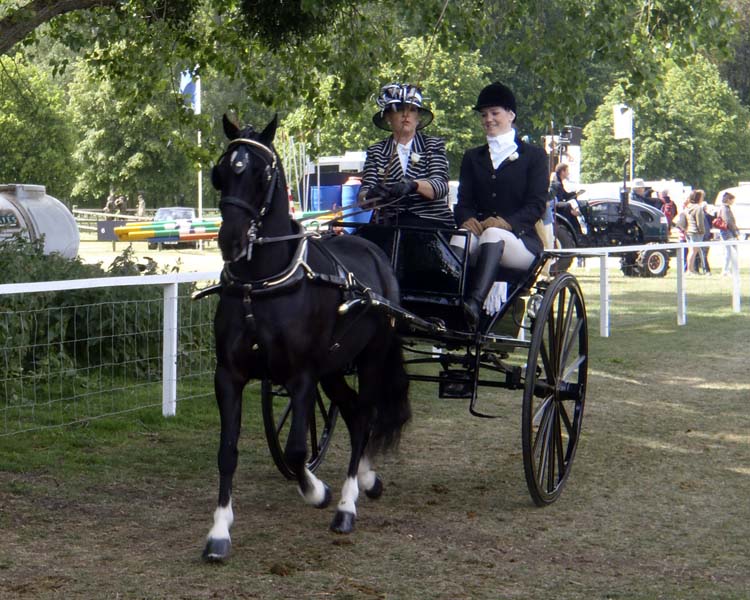
one of the participants in the BDS drive (photo by Jill Ryder)

« Previous PageNext Page »