the Bluegrass


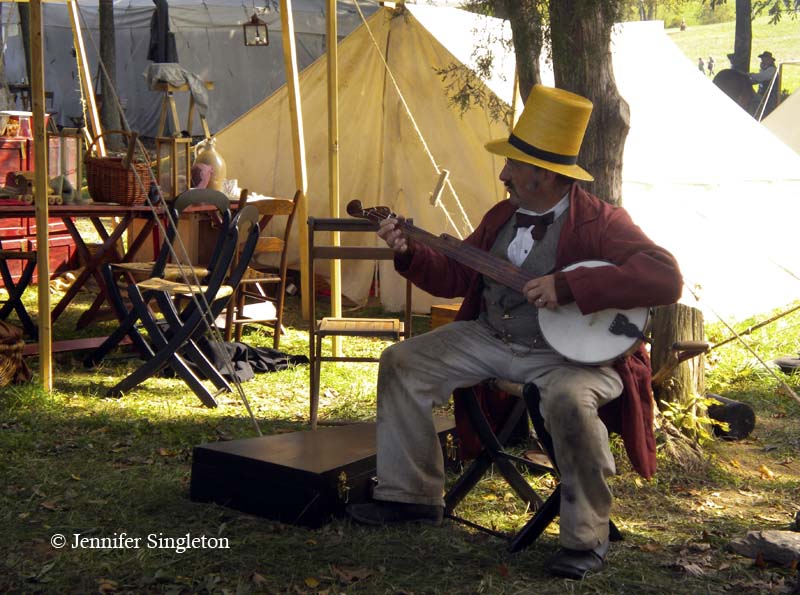
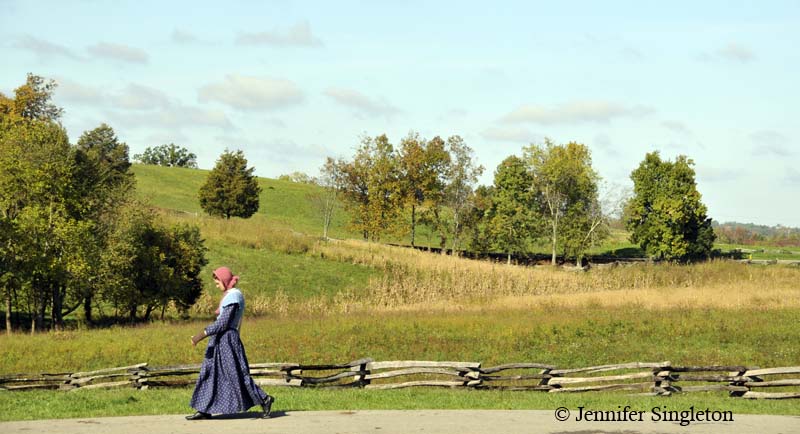
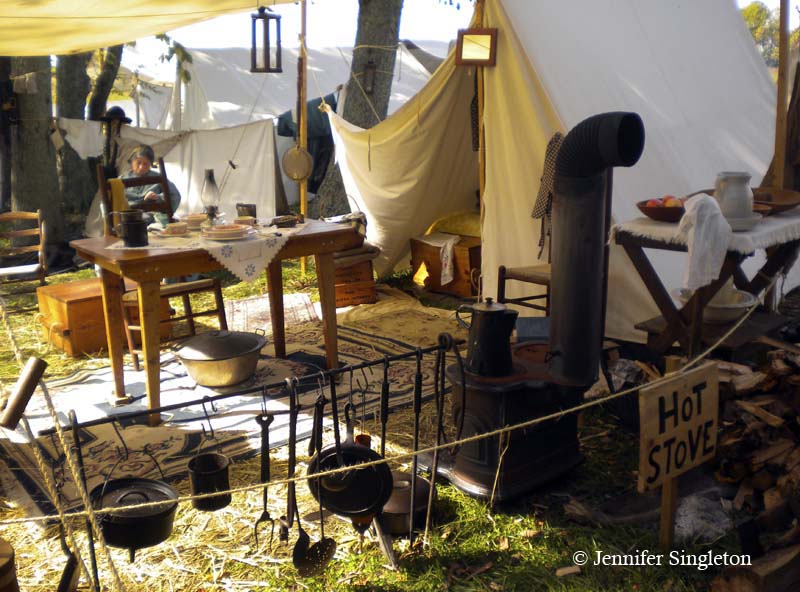
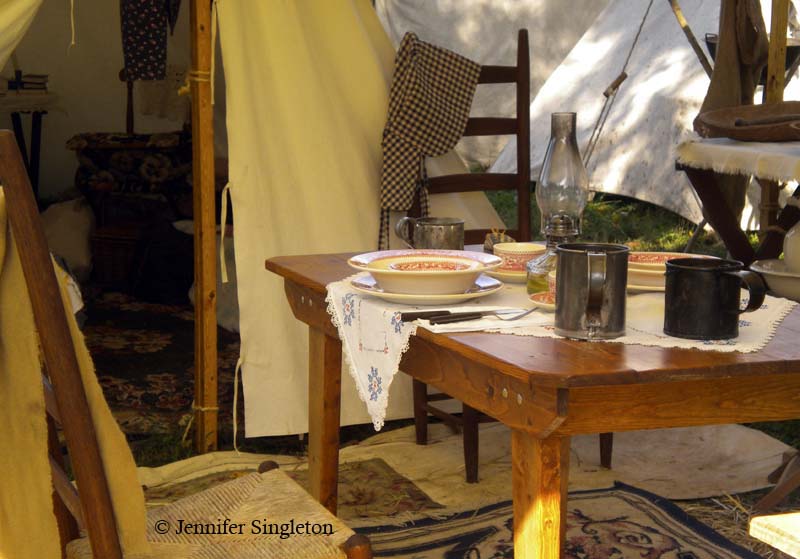
During our morning at Perryville, and after the 2 0’clock battle reenactment, we strolled through the “living history” camp. Here, people were cooking, quilting, playing music, sewing, and just hanging out and chatting with each other and with visitors.

.

.

.

.

.

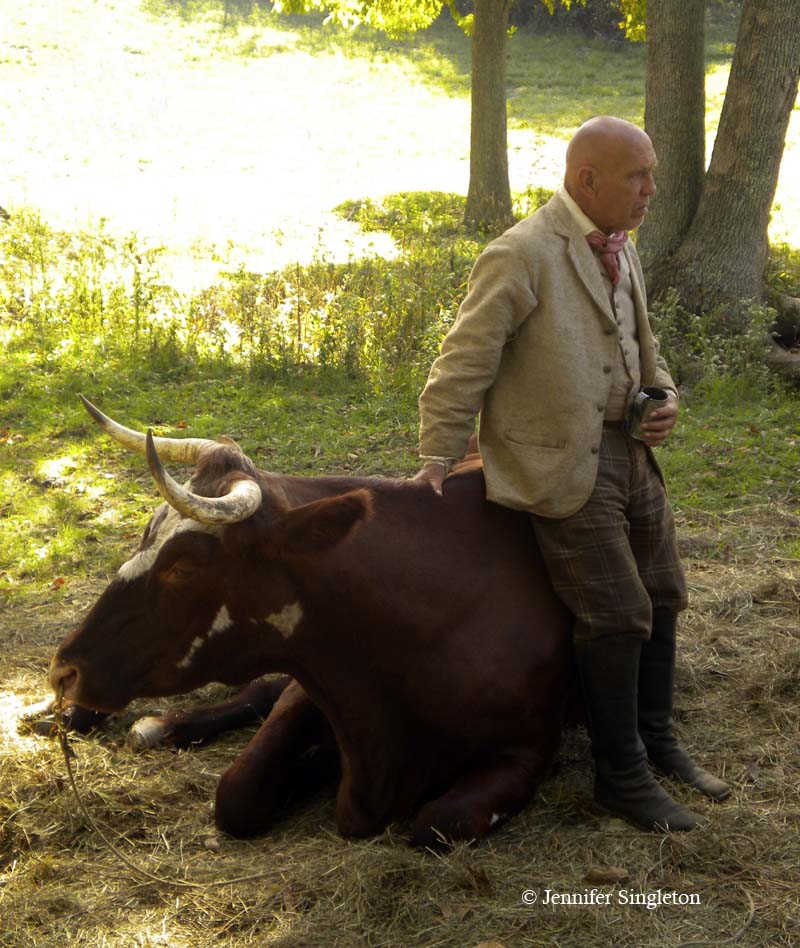
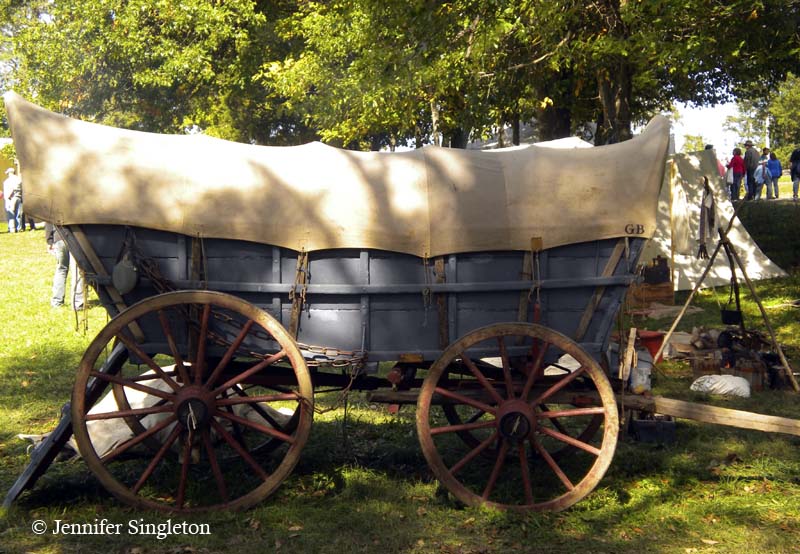
We had a nice chat with this man (below), who had four huge oxen and a replica Virginia Road Wagon that he’d built himself, by hand, using historic methods and materials …

.

.

.

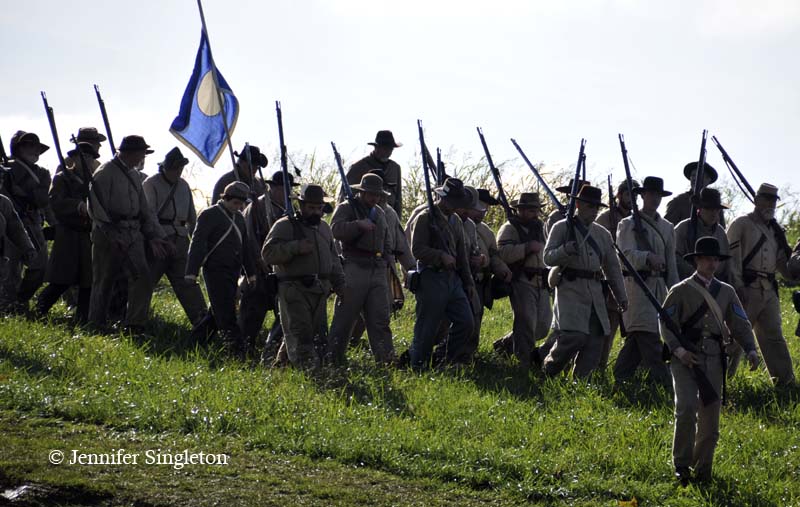
On Saturday, we arrived at Perryville around 9 a.m.: well after the sunrise skirmish, but in plenty of time to hike across the battlefield and wander around the various camps. The afternoon skirmish wouldn’t start until 2 p.m., so everyone basically had a free morning. Spectators toured the battlefield and its associated museum. Reenactors relaxed and chatted with each other. Both groups explored the era-appropriate shops. And several of the “military” units performed a variety of drills.

.

.

.

.

.

.

I realize that you haven’t seen any horse-drawn vehicles yet, but don’t worry. In the late morning, we watched a fascinating (and loud!) demonstration of horse-drawn artillery, and that’s when the real fun started!

Today is the 150th anniversary of the Battle of Perryville, which was the largest Civil War battle fought in Kentucky.

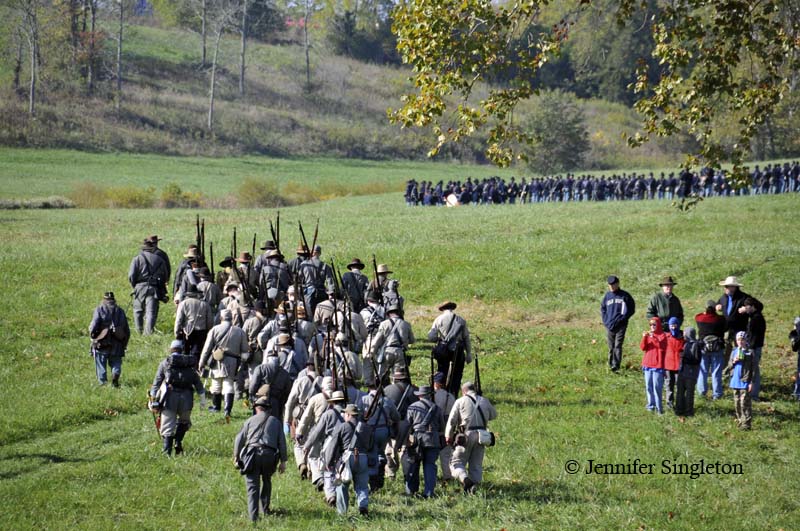
This past Saturday, A.J. and I spent all day at the Perryville reenactment. In the afternoon, we watched one of three skirmishes (there was also one at 7:00 a.m., which was a bit early for us, and a third on Sunday) as it stretched across the battlefield’s rolling hillsides. With virtually nothing built up on or near it, Perryville is one of the most pristine Civil War battlefields in the entire country.

In addition to watching the reenactment, we wandered through the “living history village” and the various camps and had a nice long chat with the members of the only horse-drawn artillery unit in attendance. Needless to say, we took a lot of photos. So I hope you won’t mind looking back to “1862” with us all this week.

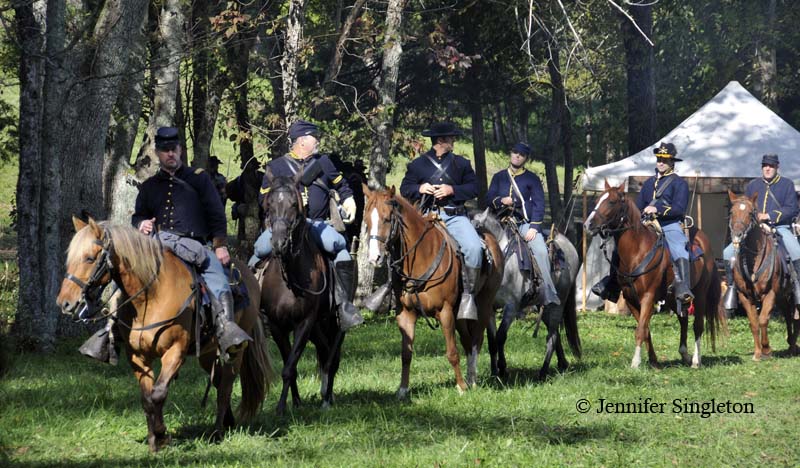
As a preview of this week’s posts, here a couple of A.J.’s photos from Saturday:

.

.

.

James Flint appears to have spent several weeks in Lexington, during the winter of 1818.

On December 5, he wrote that “Lexington is still considered the capital of fashion in Kentucky. There are here many genteel families, a few of which keep coaches. The town, on a whole, exhibits a well-dressed population.”

On Christmas Eve, Mr. Flint was on his way again:

“Left Lexington. On this occasion I was the only passenger in the mail coach. Clear frosty weather allowed the sides of the carriage to be kept open, so that I enjoyed a view of the country. The expedition in traveling is great, considering the badness of the roads. The land that was beautifully verdant a short time ago, is now withered by the cold.”

On Christmas Day, 1818, he continued his account:

“The coach stopped at Washington, from seven o’clock, last night, till three this morning. It overset on my way hither, and though I received no injury, I resolved upon going no further with that vehicle in the dark, and over such bad roads. About five o’clock I was awakened by the firing of guns and pistols, in celebration of Christmas day. I heard no one speak of the nature of the event that they were commemorating. So universal was the mirth and conviviality of the people, that I could not procure a person to carry my portmanteau to Limestone. It remained for me to stop all day at Washington, or sling my baggage over my own shoulders. I preferred the latter alternative, and proceeded on my way.”

And so we leave James Flint, walking toward the Ohio River, to make his way back to the East Coast and home again.
… Two days later (on November 27, 1818), Mr. Flint wrote:

Crossed the river Licking in a boat, at a small town called Blue Licks, from the springs in its neighborhood, from which great quantities of salt were formerly procured. The adjoining timber is exhausted, and the salt-works are abandoned.

After coming to a flooded creek, where there was neither bridge nor boat, I waited a few minutes for the mail coach. The road is in several parts no other than the rocky bed of the stream. It also crosses the same creek four or five times. After riding a few miles, I left the coach. There is no great degree of comfort in traveling by this vehicle; stowed full of people, baggage, and letter bags; the jolting over stones, and through miry holes, is excessively disagreeable; and the traveler’s head is sometimes knocked against the roof with much violence. A large piece of leather is let down over each side, to keep out the mud thrown up by the wheels. The front was the only opening, but as the driver and two other persons occupied it, those behind them were almost in total darkness. A peep at the country was not to be obtained.

I lodged at Paris, the head town of Bourbon county. A cotton-mill, and some grist-mills, are the manufactories of the place. The population is considerable. Several of the taverns are large, and, like many of the others in the western country, have bells on the house-tops, which are rung at meals.

« Previous PageNext Page »