reference


Over the next couple of days, I’ll continue to feature a few (a VERY few, mind you, there were hundreds) of the vehicles that went through last week’s auction.

Here’s a beautiful, if a bit down at the heels, butcher’s cart:

.

.

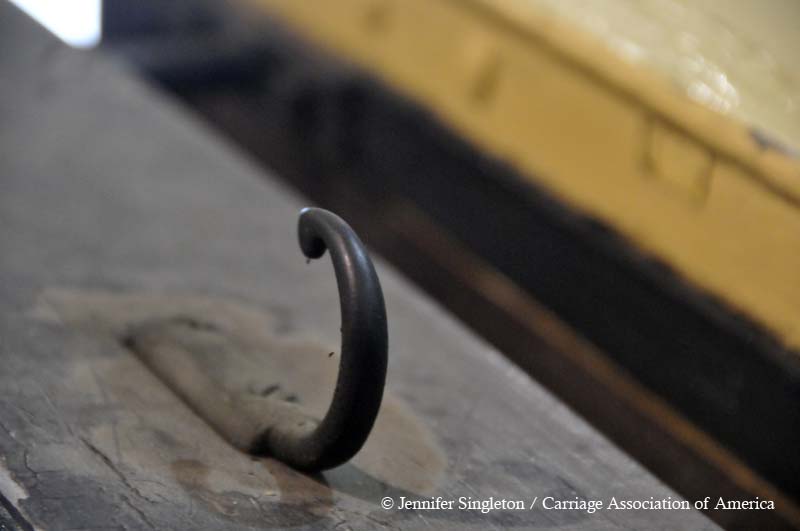
And here’s another view. See the hooks on the fender (and the close-up in the second photo)? Anyone know what these were for? There’s one on each fender, and they do appear to be original. Someone I talked with was wondering whether they might’ve been for hooking the reins out of the way while the butcher was helping his clients.

.

.

.

I’ve just returned home from my first-ever visit to the fall edition of Martin’s Auction.

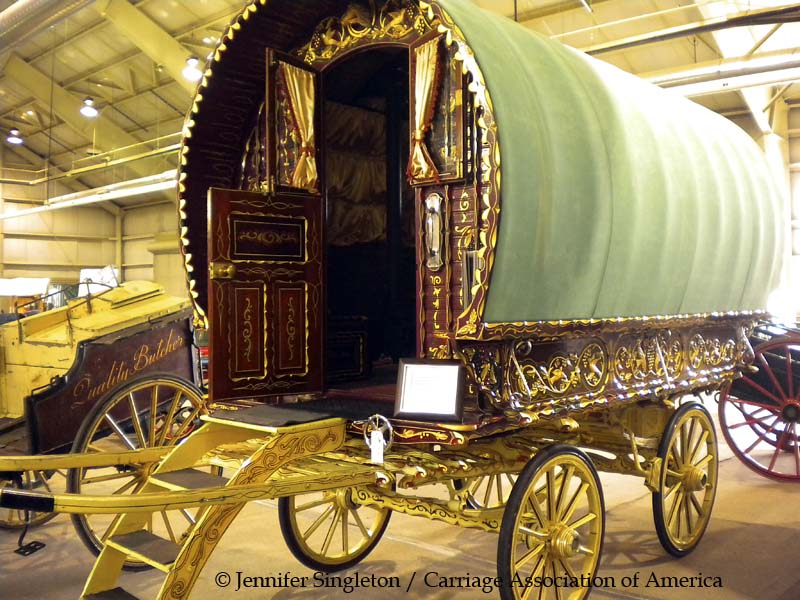
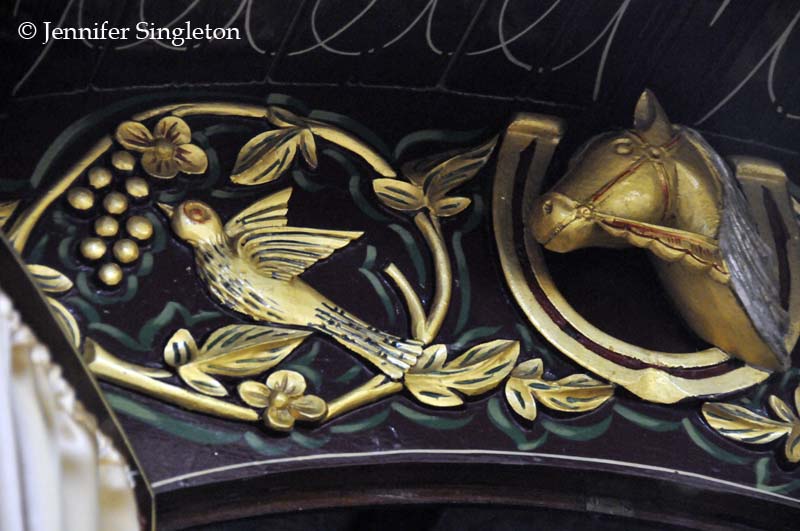
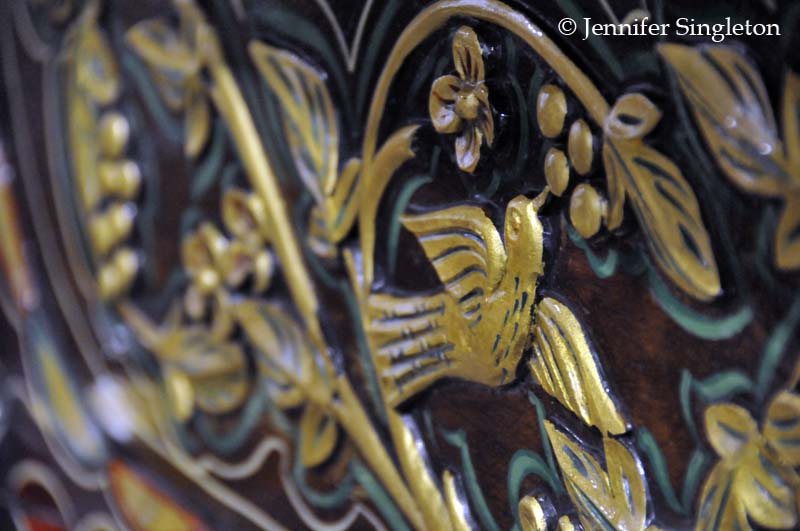
One of the stars of the auction was this gypsy wagon, which fetched nearly $30,000.

(If you have a copy of the October issue of The Carriage Journal, you can read an article on gypsy caravans.)

.

.

.

.

.

.

.

[Hey, I found an Internet connection!]

We’re (still) back at the Perryville reenactment for two more days …

While we were visiting with some of the folks in the horse-drawn artillery unit, we walked with a couple of them to meet another artillery unit and see their pieces, which were on display but not being used.

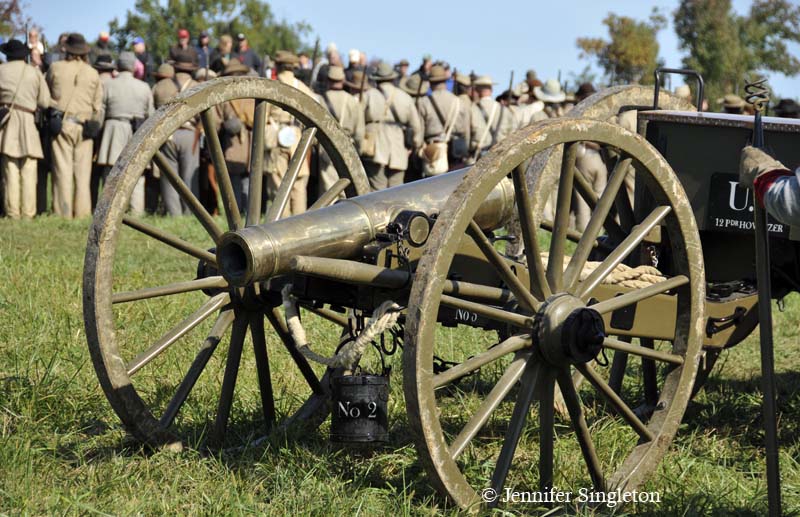
Over the course of the day, we learned that a unit of horse-drawn artillery would’ve had six or eight cannon, each pulled by six horses. As you’ve seen in the previous artillery photos, each cannon is attached to a limber (the front wheels of the four-wheeled device) with a box on top. That box carries the cannon’s ammunition (thirty-nine shells in the case of the twelve-pound howitzer we saw).

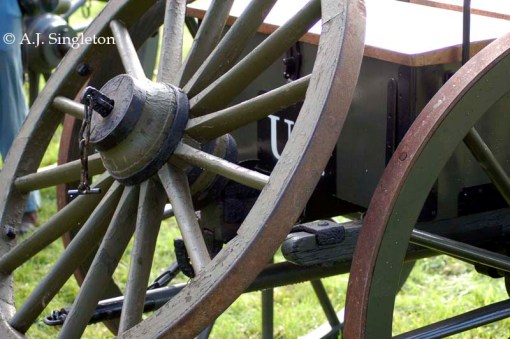
Each cannon, then, would’ve been accompanied by a second horse-drawn limber with a caisson attached, and each caisson carried another two boxes of ammunition. As you can see here, a spare wheel was carried on the back of the caisson.

.

.
.

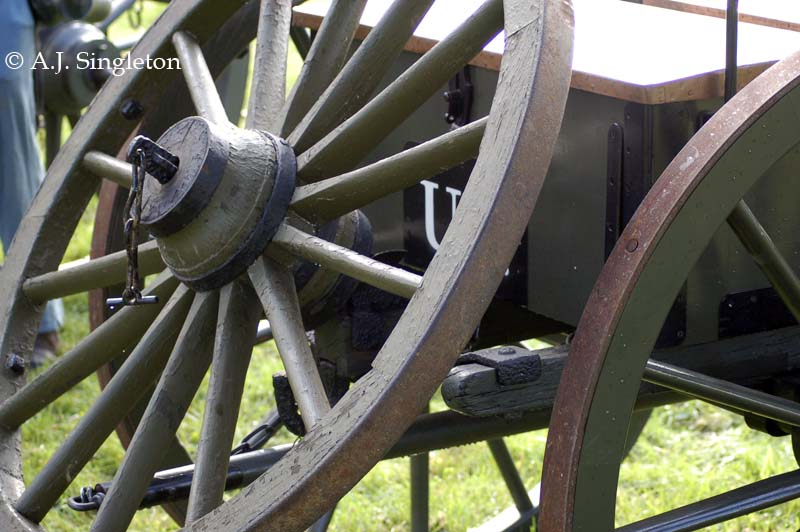
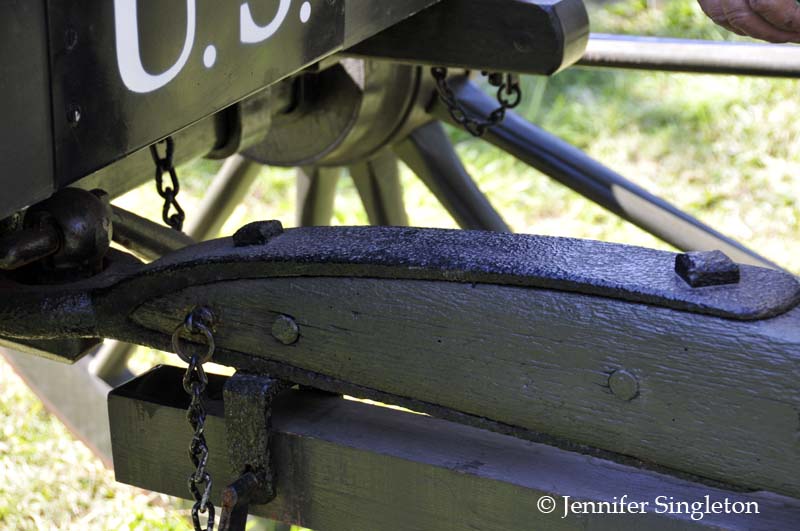
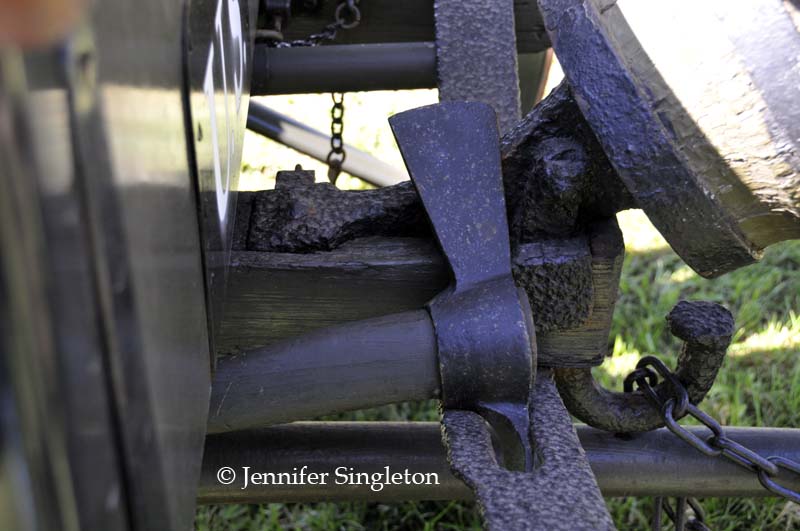
Portions of this particular limber and caisson are original, and it has all sorts of nooks and crannies and carrying cases for a spare pole, an ax, a hatchet, etc.

.

.

.

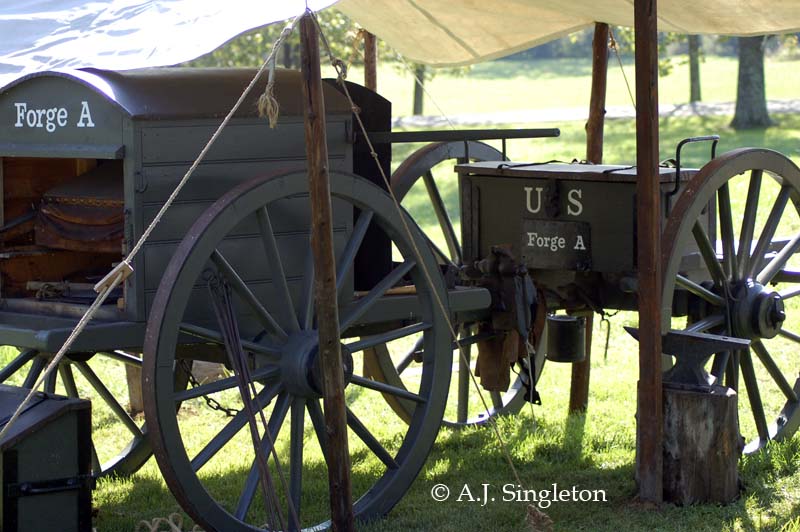
Each unit also had its own blacksmith, who would’ve had a setup like this:

.

.


Last summer, I posted a series of old (but unfortunately, I don’t know how old) hand-drawn images of artillery harness. If you missed those, you can click back to see parts one, two, three, and four of that four-part series.

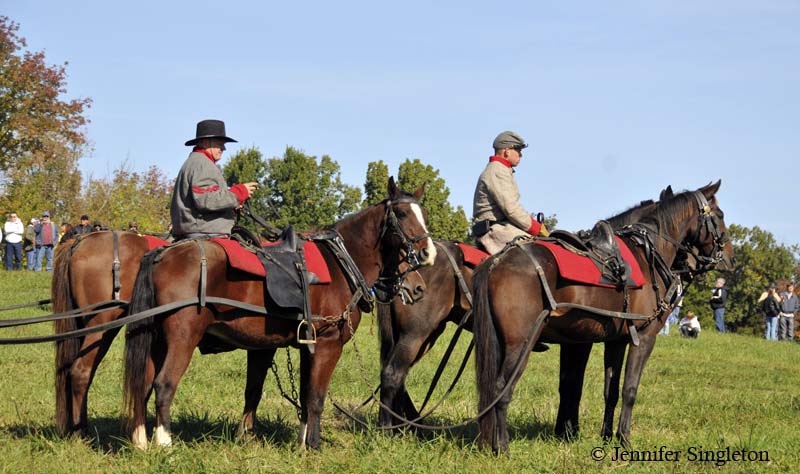
Today, I offer a few more photos from Perryville. Except for the one that is obviously a cannon, these show the Civil War-style artillery harness on the horses we met.

.

.

.

.

.

.

.

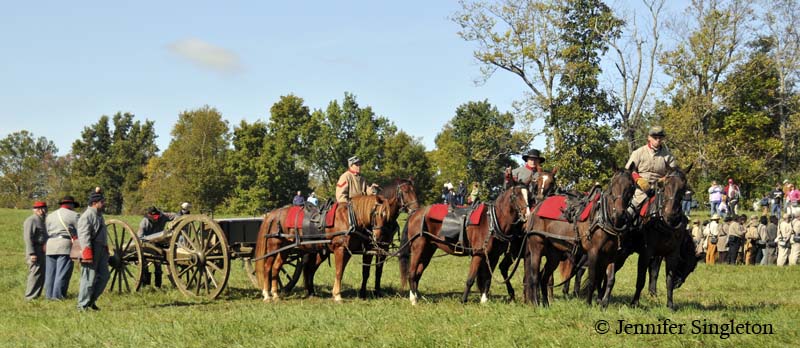
After our wander around the various camps at Perryville, we (and lots of other people) gathered in a field to watch the 11:00 a.m. horse-drawn artillery demonstration.

This was our first glimpse of the lone horse-drawn artillery unit at this year’s reenactment.

.

.

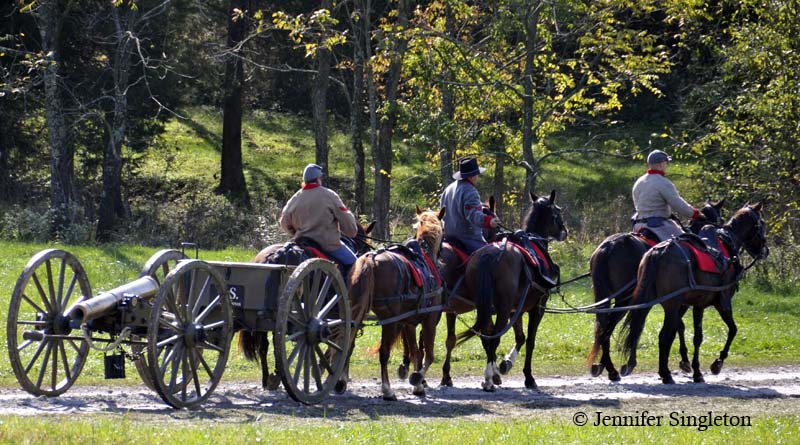
And here’s another look at the same horses and the cannon.

.

.

Over the next couple of days, look for more artillery photos and information. We had quite a nice, long visit with the members of this horse-drawn-artillery unit, and we learned a lot!

« Previous PageNext Page »