history


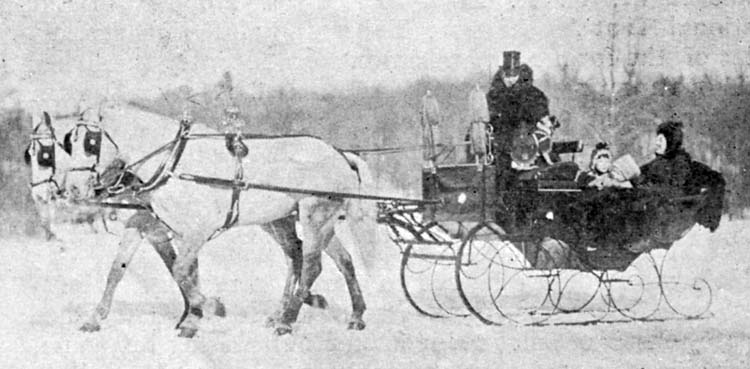
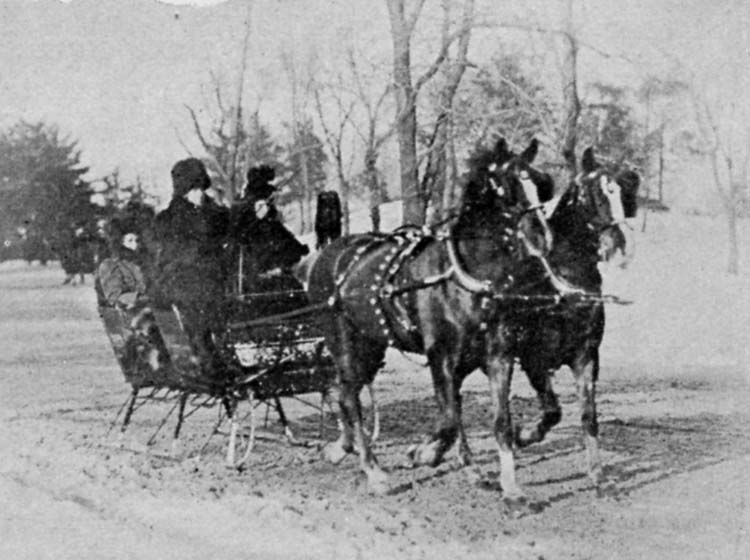
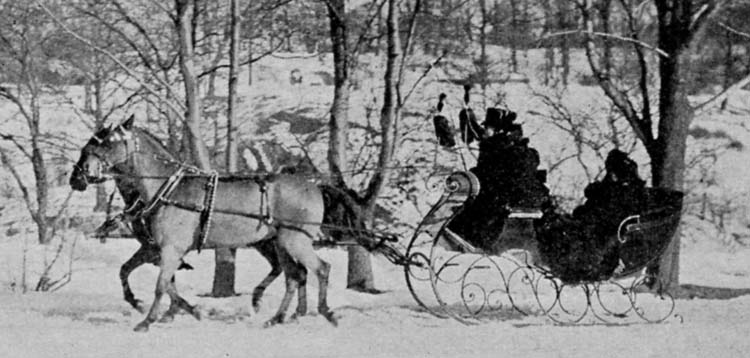
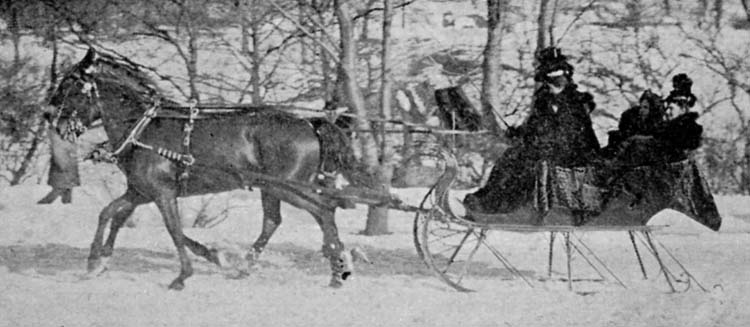
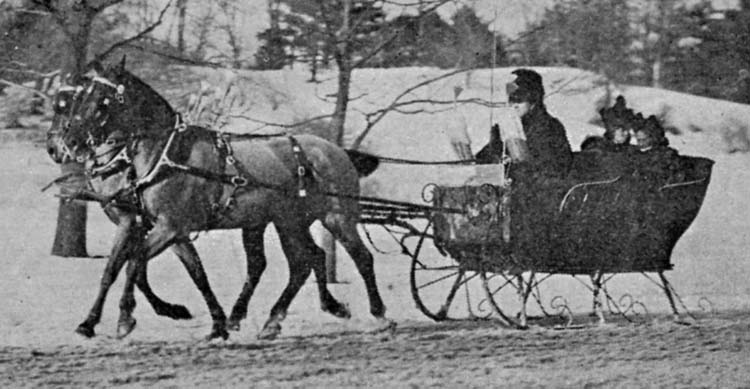
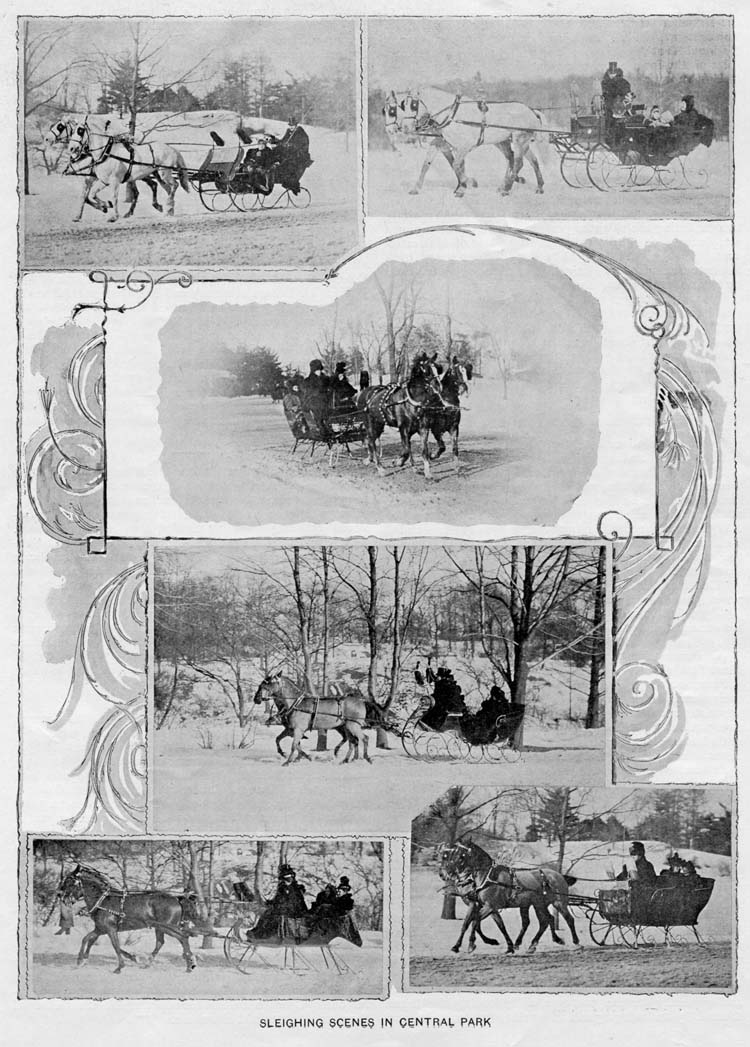
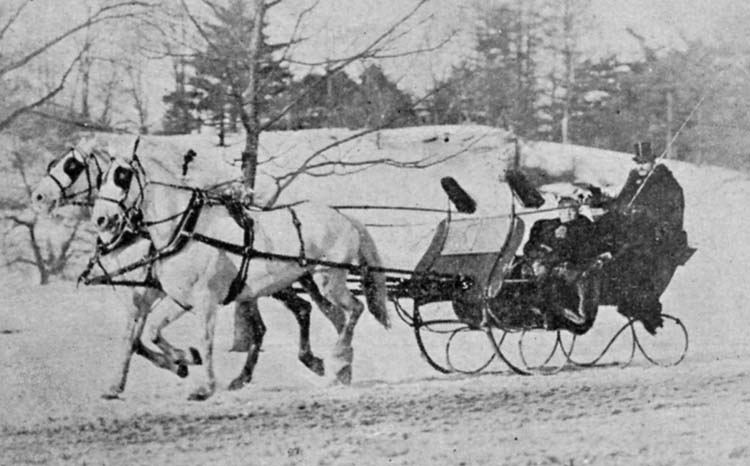
Since we’re probably not quite finished with winter (although we all certainly wish we were), here is a look back at some sleigh turnouts from New York’s Central Park in February 1895. I found these in an issue of Rider & Driver.

First, the photos as they appear on page 13 in that issue:

from the February 23, 1895, issue of Rider & Driver

.

Next, a close-up look at each one:

.

.

.

.

.

One hundred sixteen years ago this Wednesday, this story appeared in Rider & Driver:

“While the sleighing in this vicinage was at its best a few days since there started from the Suburban Club, one crisp evening, a trim cutter drawn by an equally clean-cut and racy-looking roadster. The driver, almost buried in furs, was in partial eclipse, so that his identity was completely hidden by the frost-defying robes. As the fleet-footed trotter skimmed along, setting time and the municipal limit of “seven miles an hour” at defiance, a mounted police officer came into view. Passing this living picture of an equestrian statue in a trice, the occupant of the sleigh heard the sharp command, “Pull up, you’re going too fast.” Instead of complying literally, the reins were the only part of the flying equipage that were “pulled up,” and the result was more speed. Noting the utter disregard of his mandate, the officer spurred his steed and started in hot pursuit of the offender. Another call on the nimble roadster was like pulling the throttle valve of an Empire State express engine wide open, and the galloping guardian of the peace was soon left hopelessly behind. When this phantom road driver had eluded his would-be captor he took it easier and jogged along to Van Cott’s stable on West Fifty-eighth Street. “What sort of a drive did you have, Superintendent?” was the query put to the man who had just run the gauntlet. “Out of sight,” was the appropriate response, as the mass of robes was flung aside and the stalwart form of the Byrnes stood revealed. And then the Chief of the New York police told how his trotter had “won in a walk” over one of his own patrolmen. The latter’s discomfiture would have been complete could he have got a glimpse of the quarry he had tried to run down and carry off to the station house. The Superintendent was testing the efficiency of his force. He will advocate better mounts.”

Here’s an unusual “new” sport for a Saturday, which I found in the March 18, 1893, issue of Rider & Driver:

Equestrian Football

In December 1892, five members of Durland’s Riding Academy got together and drew up preliminary rules for equestrian football.

Having no guide and no experience, the rules were necessarily very crude, but since that time they have been materially changed. Two teams of four players each were then organized, and on the 24th of December, 1892, the first game of equestrian football ever undertaken in this city was played.

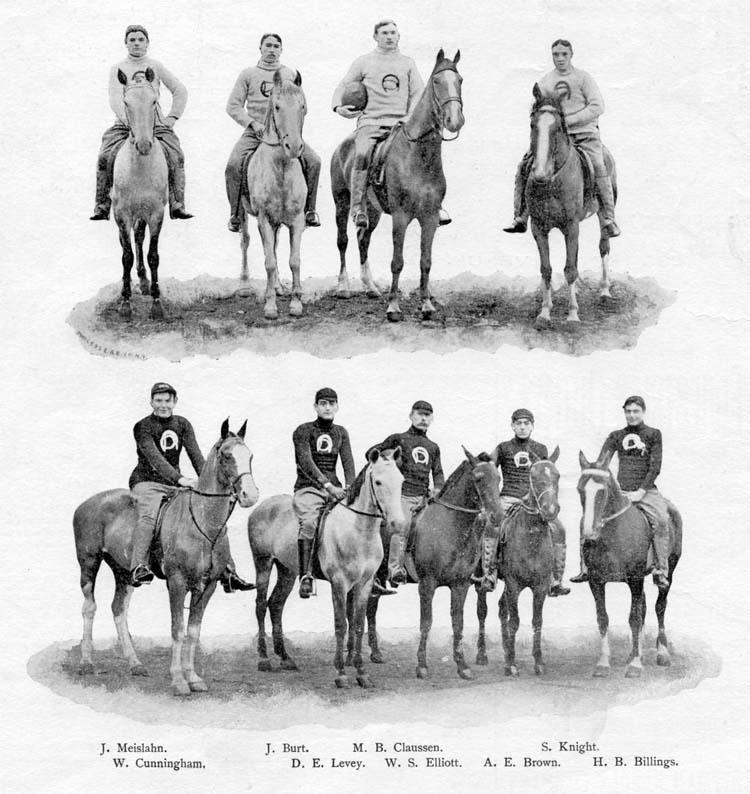
The first public exhibition game was on December 28, 1892, at Durland’s annual Christmas ride. The teams were [as follows]. Reds: W. S. Elliot, captain; A. F. Brown; D. E. Levey; and H. B. Billings. Whites: M. B. Claussen, captain; W. E. Kotman, J. Meislahn, and F. Staylor. Referee: L. E. Brown. Umpire: B. W. B. Brown. The game resulted in a victory for the Reds by a score of 3 goals to 1. It was a great success and immediately became a recognized sport at Durland’s. Since that time the teams have played at Durland’s on alternate Wednesday evenings; the Reds winning all the games, with one exception.

The game has become very popular, and the teams very proficient. So proficient, in fact, that they would like to try their skill with the Brooklyn Riding and Driving Club team, and have sent a challenge to them through The Rider & Driver.

Summarized, the rules are as follows:  The game shall consist of eight men, four on a side, and no horse over 15 hands high shall be used. The ball shall be placed in the center of the field. The game shall be started by one player on each side riding from his goal, dismounting in the center and trying to obtain possession of the ball. The remaining players stay at their own goal until the whistle is blown by the referee. The ball will not be in play until the player who obtains it has his leg across the saddle. Then the whistle shall be blown. A foul shall consist of a player grasping an opponent with two arms around the body or neck, or where the ball is passed forward. The ball can be taken by a player from an opponent if he rides up on the opposite side from that on which the ball is held. A player is not allowed to grasp another player’s bridle, except the bridle of the player holding the ball. In case of a foul, the side making it shall forfeit the ball and five yards. A goal is made by a player carrying the ball to the opponent’s goal, and when the touch is made the player must be mounted. Interference shall consist of a player riding in front of or beside one of his own players who is carrying the ball and warding off the opponents. Interference shall be allowed.

The umpire is the judge for the players, and his decision is final regarding fouls and unfair tactics; the referee is the judge for the ball, and his decision is final on all points not covered by the umpire; both umpire and referree shall use whistles to indicate cessation of play on fouls and expiration of time. The referee shall keep the time. The game shall consist of two ten-minute halves and intermission of five minutes. The goal shall be a piece of canvas twelve feet by eighteen inches, stretched at each end of the field, and shall be covered with chalk. A player shall be disqualified for unnecessary roughness, striking a player, or throwing a man from his horse. A player may throw or pass the ball in any direction except toward his opponent’s goal. A player is not allowed to run with the ball while dismounted, if he does so he forfeits the ball to his opponents. After the goal is made the ball shall be put in play as in the beginning of the game; at the end of the game the side having the most points shall be declared the winner. A player losing his horse after or while obtaining the ball forfeits the ball to his opponents.

.
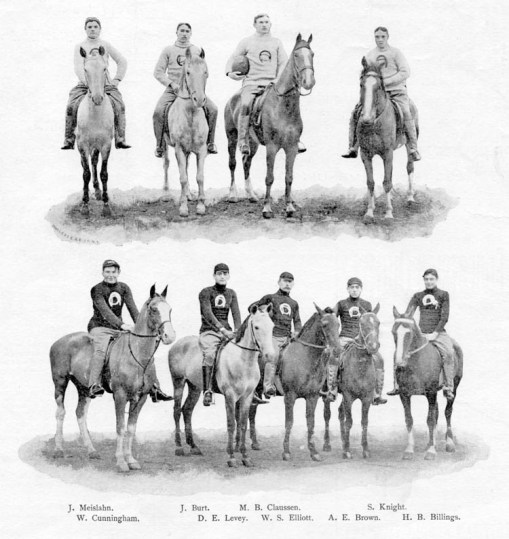
the Whites and the Reds, ready to play a game of equestrian football (from the cover of the March 18, 1893, issue of Rider & Driver)
In the October 2010 issue of The Carriage Journal, I wrote the entry for “The Last Word” (our personal-opinion column, on the last page of each issue). In it, I declared my love of history, genealogy, old photos and, especially, old photos with ancestors in them.

As I said in the column, old photographs may be beautiful and fascinating on their own, but when they have family members in them, we’re able to look our own personal history right in the eye.

I also put out a call for CAA members to share old family photos with carriages in them. We all may enjoy looking at old images of horse-drawn vehicles, but these become so much more interesting when there’s a story attached.

Here’s one I received from Kathy Graves in California:

.

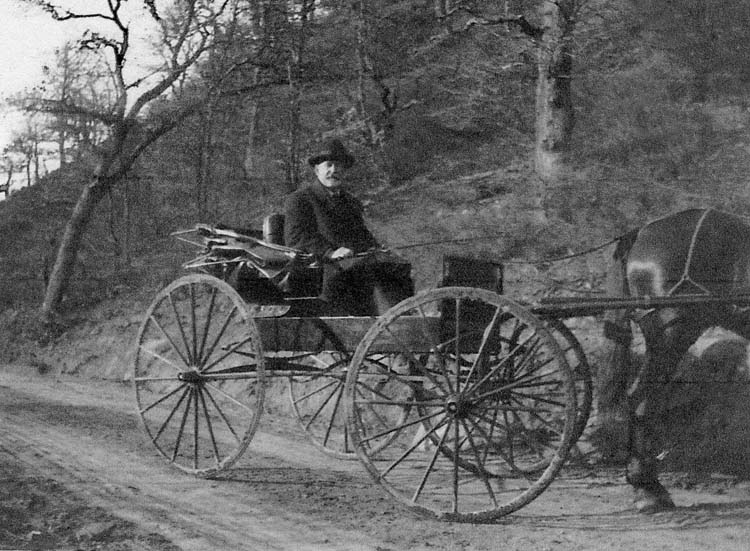
John William Lill (photo courtesy of Kathy Graves)

.

Kathy says:

“This photo is of my maternal great grandfather, John William Lill, just above the town of Hood River, Oregon. It is not known if this was a rented turnout, or if he owned it, using it to travel from his home in Hood River to his couple of acres just outside of town, where he raised chickens. The photo is undated, but it most likely was taken sometime after 1900, but before 1916, when my mother was born.”

Thank you, Kathy, for sharing this wonderful photo!

From the April 8, 1893, issue of Rider & Driver:

Charley, on the Bridge

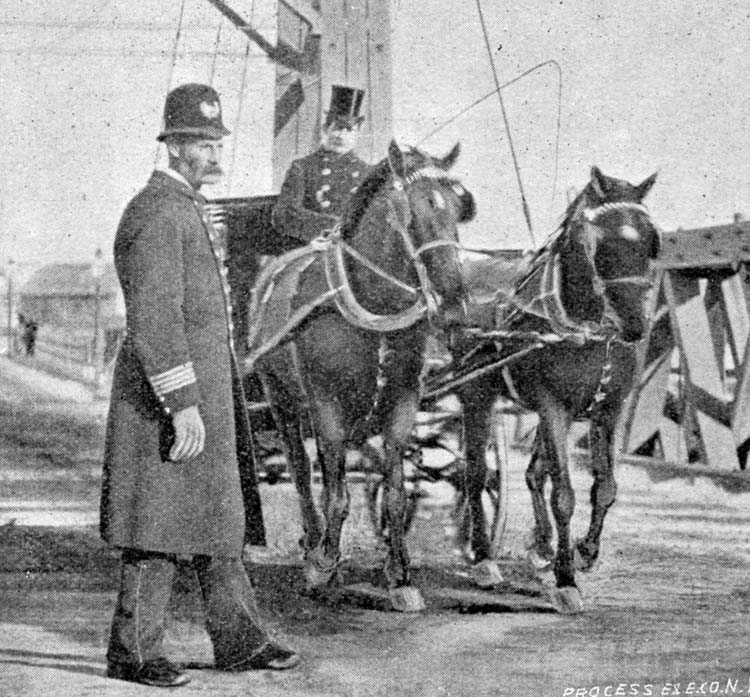
Charles H. Francis, better known as “Charley,” the policeman, at Macomb’s Dam Bridge, has stood guard over the safety of the driving public at that point for more than twenty years, hardly missing a day. He was born in what is now called North New York — Port Morris — and will be fifty years old next June. While tall and rather slender his is not at all delicate. Few men can take a frightened horse by the head with more firmness. His manner, with just the right word which he drops into the timid driver’s ear, has often proved reassuring and a lesson to the recipients for the rest of his life. The many travelers over that famous old bridge can remember Charley’s well-known figure, as he has been ever at his post, in sunshine and in storm. Charley knows all the drivers, great and small. He knows no favorites.

A driver on the road tells of seeing Charley make the late Commodore Vanderbilt keep his place at the bridge entrance. Someone, driving in company, said to the Commodore: “Don’t you think Charley is pretty strict?” “No,” said the Commodore, “he’s just right. Best man they ever had here.”

A few years ago a pair were running away, up Eighth Avenue. The driver had strength enough to steer them, but could not stop them. It was about four o’clock in the afternoon. Charley was near the west end of the bridge and as ever on the alert. He saw the pair coming and saw that they were likely to hit a carriage about to enter upon the bridge. He rushed at the carriage driver and said: “Runaway!” in a loud voice, motioning for him to turn into Johnny Barry’s shed. Then he ran the other way as fast as a deer, turning all the teams to the right side of the bridge. They just managed to give room enough to let the runaway pass. Charley reached the east end about as soon as the runaways, and commanded the pale-faced driver and paler companion to turn up the hill to the left. The driver did so and before half-way to the top he stopped his horses. It was the work of a moment to set the bridge drivers all going in order again. The runaways had been hitched too near the wagon, so that when an effort was made to stop them their heels would strike the wheels and so frightened them that they ran faster.

Charley is the right man in the right place.

Charley, the policeman, on the bridge (from Rider & Driver, April 8, 1893)

« Previous PageNext Page »