In February 2002, Bill Neel (a CAA member in Oregon) obtained a hearse built in 1854. It was made by Samuel Conners of Lowell, Massachusetts, and, much more recently, restored by Morgan Carriage Works in Ojai, California.

.
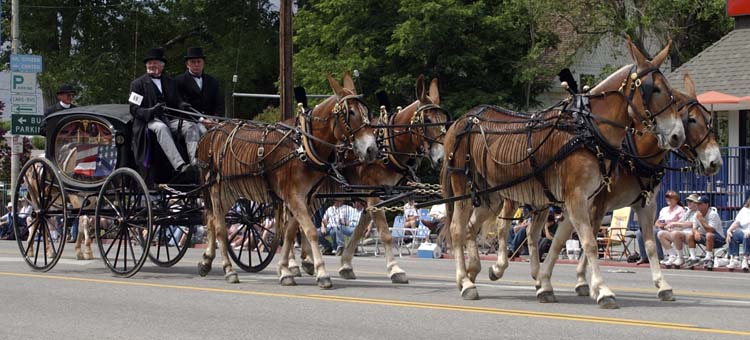
(photo courtesy of Bill Neel)

.

This vehicle is considered a “country” hearse; it is not cut under and has no elaborate urns or other decoration. It saw service during the Civil War, was sent to eastern Canada, and then returned to the U.S. in 1998. The Neels have taken the vehicle to shows (winning a number of awards with it), driven it in parades (as in the photo above), and used it for funerals.

Over the years, the Neels added a variety of ingredients to their basic lineup of hearse and four mules with funeral nets and black plumes. Eventually, their show “entry” included a preacher, a riderless horse, a bugler, and a “widow” and “mother,” all lead by a piper. Bill decided that, to complete the ensemble, he would need a family coach and a pallbearers’ coach. And so the search began.

Bill first found this Studebaker Rockaway to serve as the “family coach.”

.
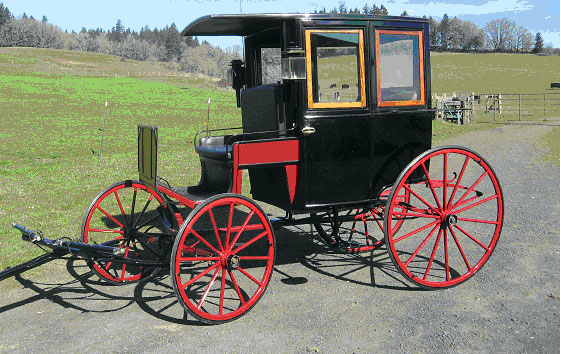
(photo courtesy of Bill Neel)

.

Then, just this year, Bill finally found a suitable “pallbearers’ coach” in New Jersey. He’s recently purchased the vehicle and had it shipped to Oregon, where it resides in the carriage house at his Copper Windmill Ranch.

.
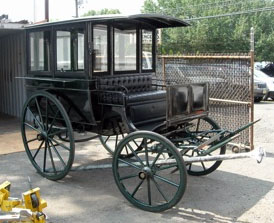
photo courtesy of Bill Neel

 .
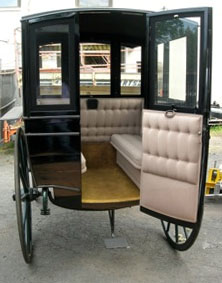
photo courtesy of Bill Neel

.

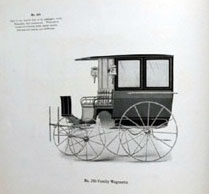
This particular vehicle was made by the Geneva Wagon Company in Geneva, New York. You can see a picture of it here, from the company’s 1906 catalog.

.
… at the Royal Windsor Horse Show, featuring young competitors, ponies, a number of marvelous-looking trade vehicles, and even the Household Cavalry, looking much the same as they do now. The “grandstands” and the main arena, however, looked much different than they do today!

This video clip is from a company called “British Pathé,” on whose website you can “view and buy films and still photographs from the entire archive of 90,000 videos covering newsreel, sports footage, social history documentaries, entertainment, and music stories from 1896 to 1976.” Most of the films are for sale (rather than being available for free viewing online), but you can watch short clips of each one online.

I can’t actually embed the video here, but you can watch it on this British Pathé web page.

… from the March 13, 1897, issue of Rider and Driver:

.

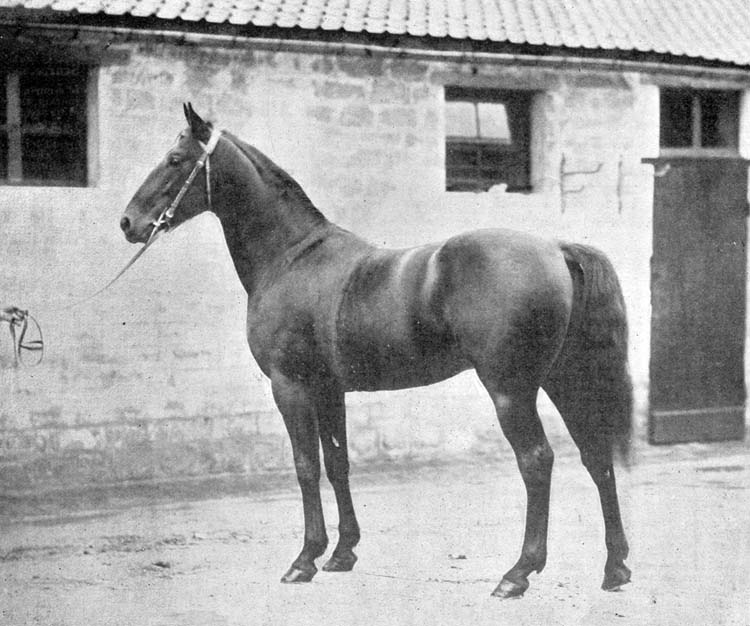
Marin, Mr. Edward Kemp's French Coach stallion (in 1897)

… in 1897??

I found this Q&A of sorts in the March 13, 1897, issue of Rider and Driver:

The Use of Rubber Tires in New York

The Rider and Driver was asked to decide a discussion and bet on the question whether in our opinion 25 percent of the first-class private Landaus, Victorias, and Broughams used in the city of New York have rubber tires [which had begun to come into vogue in the late nineteenth century]. We decided the matter in the affirmative, after investigation.

The following letters are interesting in connection with the subject.

.

FLANDRAU & CO., New York, March 2, 1897

To the Editor of The Rider and Driver: It is very difficult to answer the question exactly, but we should say that 25 percent was well within the mark of first-class private Landaus, Victorias, and Broughams fitted with rubber tires, though we certainly put more than that portion on the new ones we sell, and have put rubber tires on a number of vehicles already in use and purchased before the rubber tires were being put on, and that we think is true of all first-class houses. If such a thing as an actual count could be made we should say one-third would be found to be correct, and that of new carriages being sold, at least 25 percent of Victorias and Cabriolets, and one-half of the Broughams are being fitted with rubber tires. — Very truly yours, Flandrau & Co.

.

R. M. STIVERS, New York, March 1, 1897

To the Editor of The Rider and Driver: Your favor, February 27, just to hand. If you include Landaus, Victorias, and Broughams as comprising the vehicles lumped, I should think that 25 percent of them had rubber tires. Have never given due thought. If one stood on the avenue, he could easily count the private rigs that passed a certain point in a given time. — Respectfully, R. M. Stivers

.

BREWSTER & CO., New York, March 1, 1897

To the Editor of The Rider and Driver: In reply to your letter of the 27th, would say that we can only answer you as far as our own customers are concerned. All our Landaus and Broughams have rubber tires on for stock, as a standard requisite; of Victorias, we probably do not sell over one-quarter with them on. — Yours truly, Brewster & Co.

.

HEALEY & CO., New York, March 1, 1897

To the Editor of The Rider and Driver: Replying to your inquiry of the 27th, concerning rubber tires, we should say that 25 percent of the private Broughams and Landaus have rubber tires. We may be mistaken and over-estimate a little, but should say it was about that amount. — Very faithfully, Healey & Co.

Starting three weeks from tomorrow, here at the Kentucky Horse Park (in the *air-conditioned* indoor arena), is the CAA’s first-ever pleasure-driving show.

If you won’t be here with us for the show (July 1 to 3), you will, of course, be able to follow all the action here on the blog and on the CAA’s Facebook page.

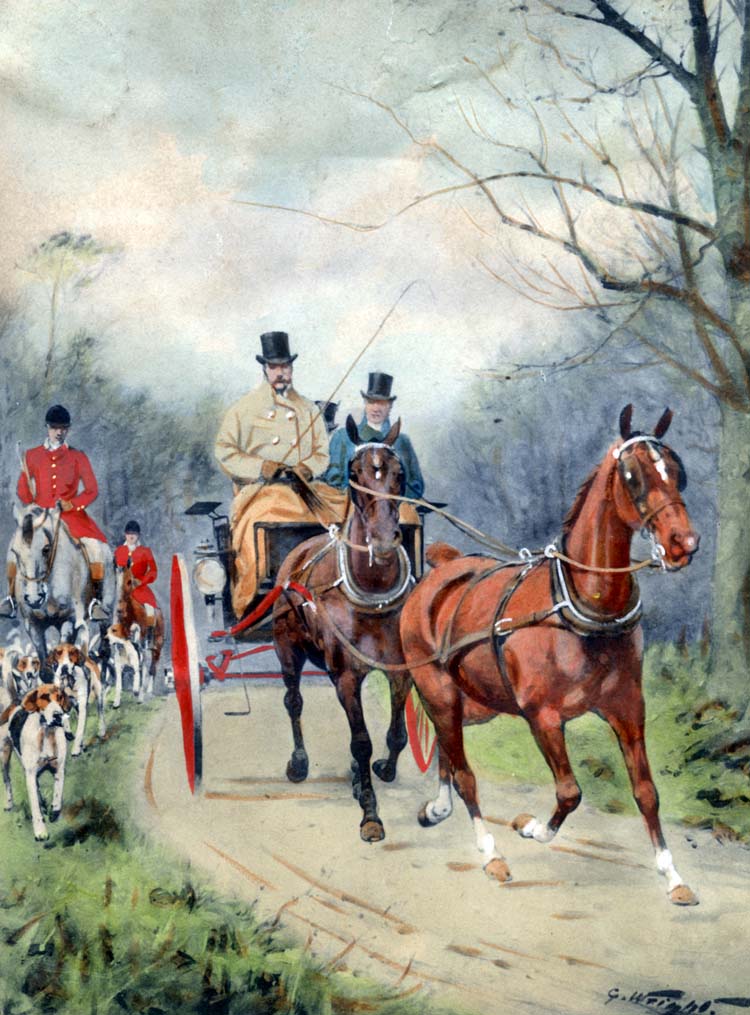
In the meantime, I wanted to share this lovely old print with you. I’m in the process of creating a commemorative poster for the driving show, and this image was one of the finalists but was, ultimately, rejected. But I think it’s too nice not to share.

.

Driving to the Meet by George Wright