Something a little different for today: a Scottish ballad and a collage of old photos showing Scottish farmers. Some of the photos feature rather enormous horses (or rather short people).
.
August 4, 2011
Something a little different for today: a Scottish ballad and a collage of old photos showing Scottish farmers. Some of the photos feature rather enormous horses (or rather short people).
.
August 3, 2011
C’mon, admit it, most of you had never ever even heard of tent-pegging before reading about the 1897 Rough Riding Club of New York, right?
Well, believe it or not, the sport is still played today. It’s especially popular in Great Britain, Australia, India, Pakistan, Israel, and South Africa.
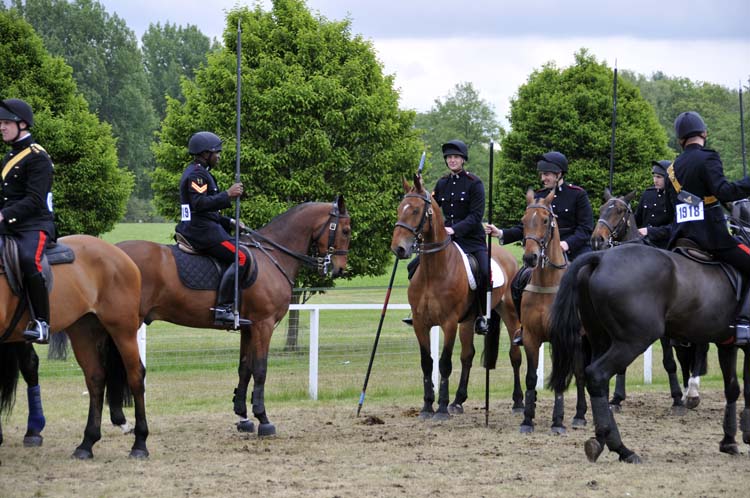
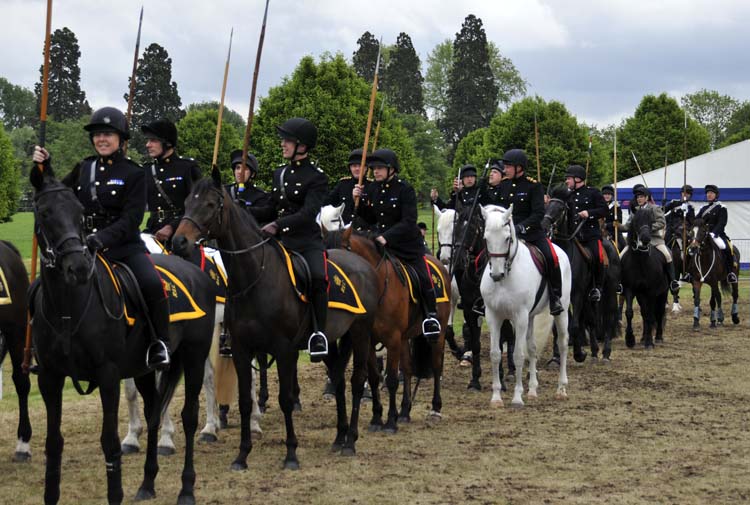
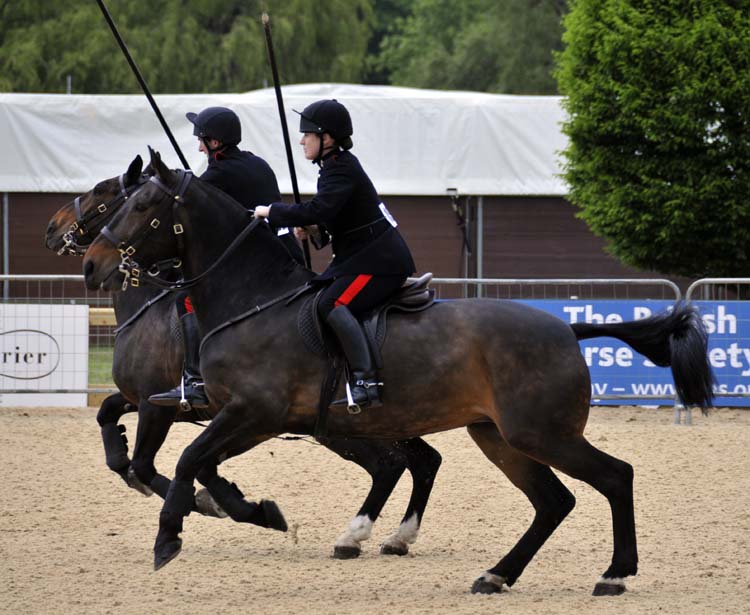
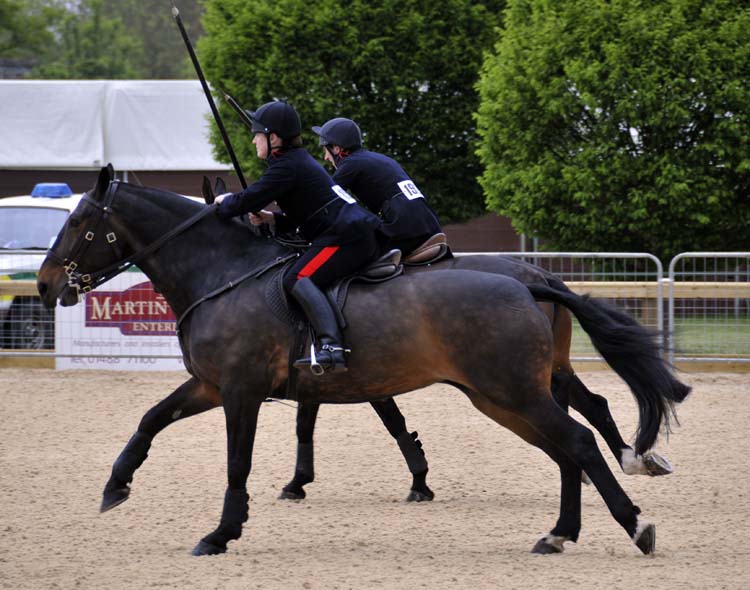
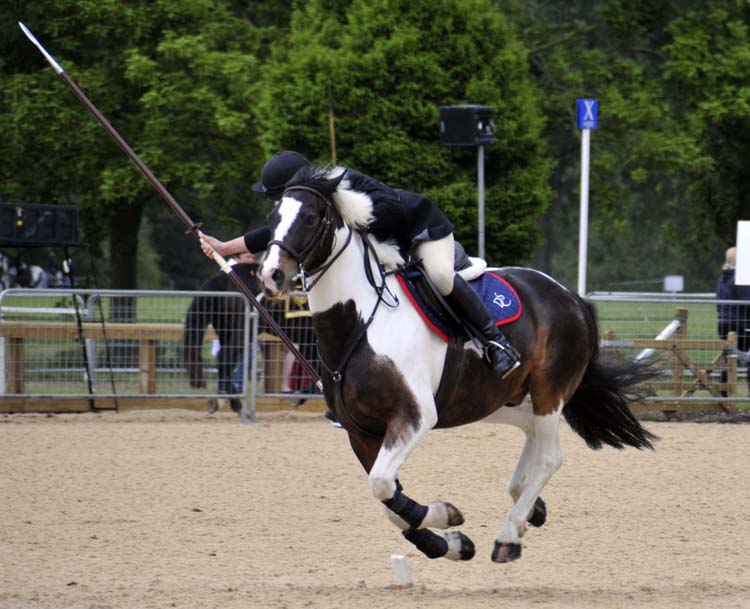
If you travel with the CAA to the Royal Windsor Horse Show in England, you can see this cavalry-inspired sport for yourself. As proof, here are a few photos from the tent-pegging competition at Windsor in 2009:
.
.
.
.
.
August 2, 2011
Do you remember the recent mention here of the [then-upcoming] tournament hosted by the Rough Riding Club of New York?
One of the events at that February 1897 event was an obscure sport known as tent-pegging.
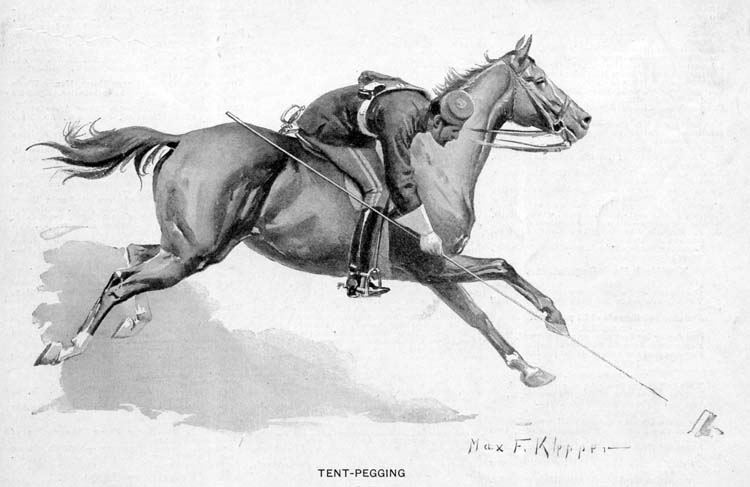
The Rider & Driver from February 13, 1897, had this image on its cover:
.
.
… and this description on page 10:
“The spirited sketch on our front page this week, by that very clever artist Mr. Max F. Klepper, shows a member of the Rough Riding Club of New York, in the act of tent-pegging with the regulation British army lance, as performed in the contest between teams from that organization and the Brooklyn Riding and Driving Club, at Brooklyn, last Wednesday evening. There is no more spirited equestrian game, and none more exciting for spectators. The pegs are made of heavy wood, and driven firmly into the ground to the depth of six inches. The lances are made of stout male bamboo, which differs from the ordinary bamboo in its wonderful strength, being at the same time comparatively light. The points are of the finest tempered steel, and nicked, so that when the peg has been pierced it may be retained. In order to take the peg, the horse must be ridden at the fastest gallop, so as to proved sufficient momentum for piercing the wood.”
August 1, 2011
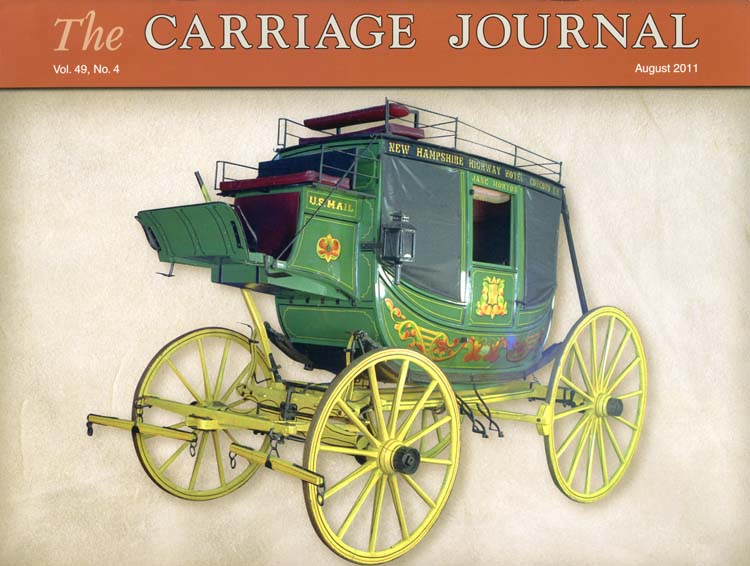
The August issue of our Carriage Journal magazine was mailed today to all current CAA members.
.
.
In this issue are the usual departments (“In the Carriage House,” “In the Stable,” “Nuts and Bolts,” “The Road Behind,” and more), plus articles on the Carriage Association’s first fifty years and the Death Valley Borax Wagons (reprinted from 1893), and a photo essay from the CAA’s 2011 trip to Sevilla, Spain.
If you’re interested in learning more about the Carriage Association of America and our publications (including The Carriage Journal), please visit our website: www.caaonline.com.
July 31, 2011
Over the past three Sundays, I’ve doled out the lower left, upper left, and upper right squares of the image featured on the cover of the August Carriage Journal.
In case you haven’t already guessed, the vehicle is a Concord Coach.
Here is the full image:
.
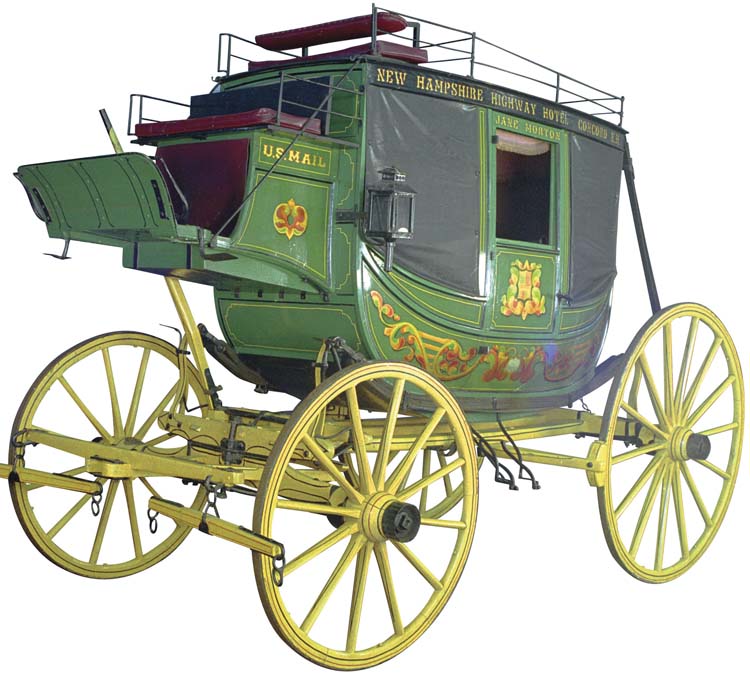
photo by Bob Mischka
.
This vehicle is owned by Sut & Margaret Marshall, and it’s one of the many in the book The Marshall Collection: Horse-drawn Commercial Vehicles.
Here is Ken Wheeling’s description of this coach, borrowed from the book:
Concord Coach #23
The small, six-passenger Concord Coach was made with one of two types of seating arrangements. A very narrow coach body has three seats, including a middle seat, accommodating two passengers on each seat. The middle seat, unlike the three-piece folding seat found in nine-passenger coaches, was either a single solid board seat which folded forward to permit entry, or a removable, two-part double seat mounted on a stanchion at the center and risers on the outside, such as this coach has. There were five different company configurations, since Lewis Downing founded his shop in 1813. The first of these was Downing & Abbot, founded in 1828. It lasted until 1847, when each of the partners, Lewis Downing and J. Stephen Abbot, founded their own companies: L. Downing & Sons and J. S. Abbot.
This coach is thought to have come from the shops of L. Downing & Sons’ new coach yards across the street from the original shop site. The identifying number “23” is carved into the outermost cross piece of the luggage rack. Since Downing bought coach bodies made in the J. S. Abbot shops and mounted them on his own carriage gear, it is quite possible that J. S. Abbot made the body, at least. The coach, which was originally painted green, was restored by James Morton, owner of the Highway Hotel, Concord, New Hampshire.
 The Slower Road