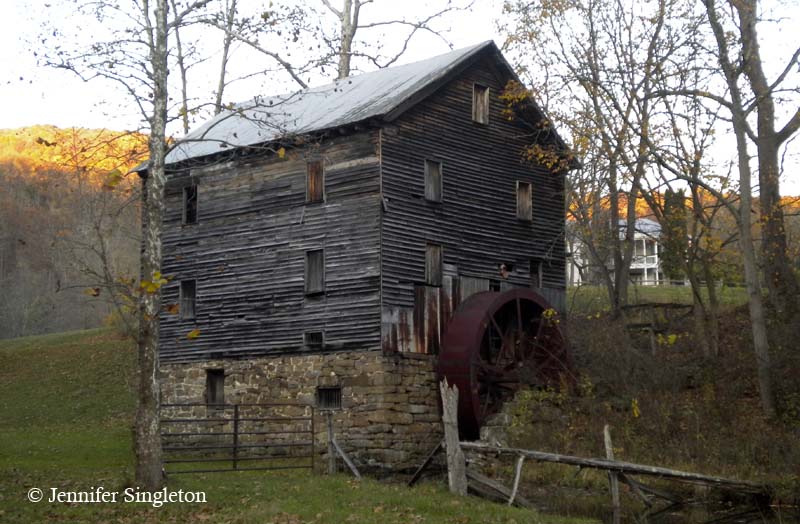
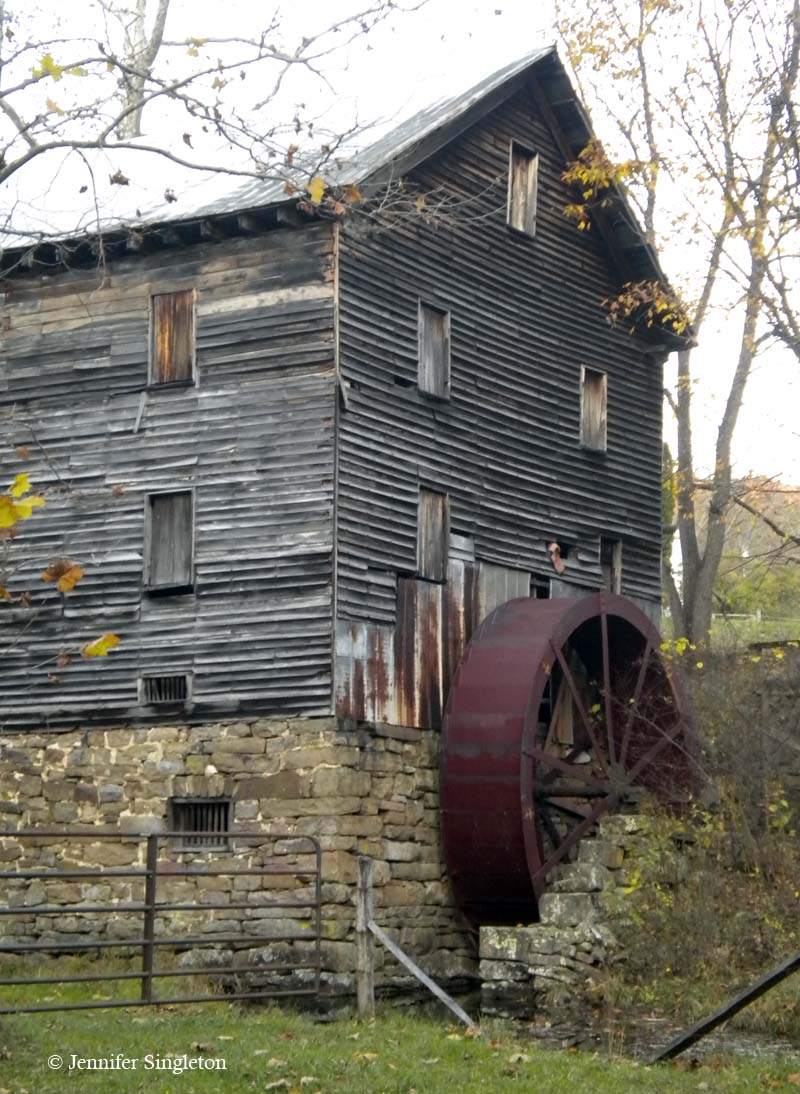
During my tour of the area around Lewisburg, WV, we visited this beautiful old mill.
.
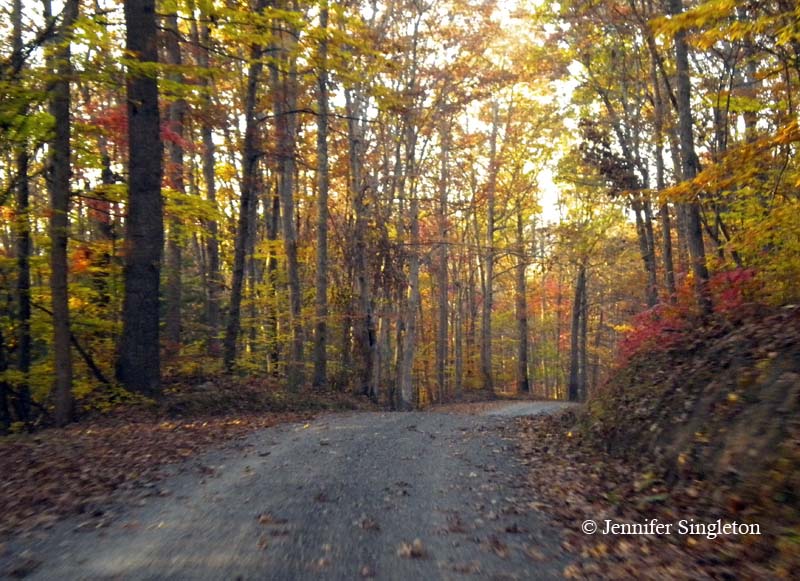
… the road down to the mill …
.
.
.

.

back when the mill was in operation, this white building was a general store
.
November 1, 2012
During my tour of the area around Lewisburg, WV, we visited this beautiful old mill.
.
… the road down to the mill …
.
.
.
.
back when the mill was in operation, this white building was a general store
.
October 31, 2012
Speaking of resorts built around springs …
On my way back to Lexington from Martin’s Auction, I stopped for an afternoon and overnight in beautiful Lewisburg, West Virginia. The mountainous area has fertile valleys, numerous caves, and several sulphur springs. In the nineteenth century, resorts were built up around these springs … the most famous of which, of course, became the iconic Greenbrier.
Besides the Greenbrier, which has obviously flourished, the evidence of the other resorts has mostly disappeared.
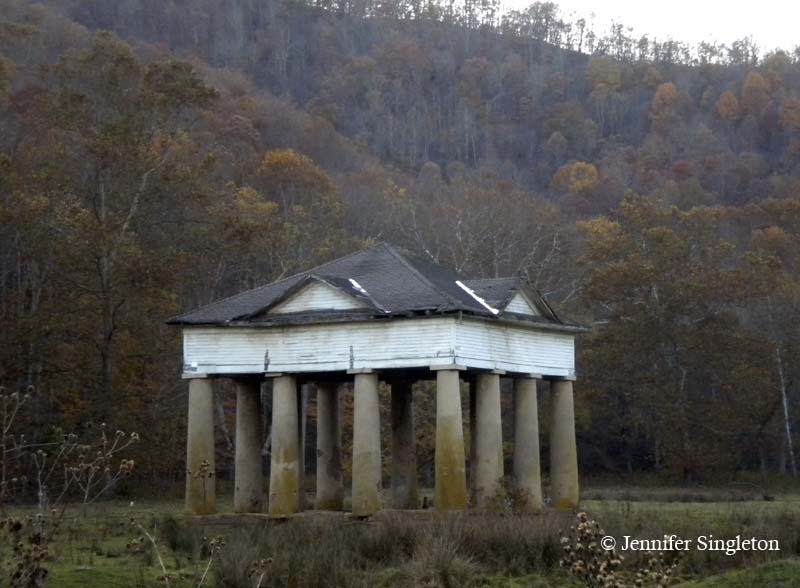
There is, however, this lovely old spring house.
.
.
Unfortunately, the structure has been neglected and cows have been able to wander through it, which surely hasn’t helped. But the local community is working to raise money to save their spring house.
October 30, 2012
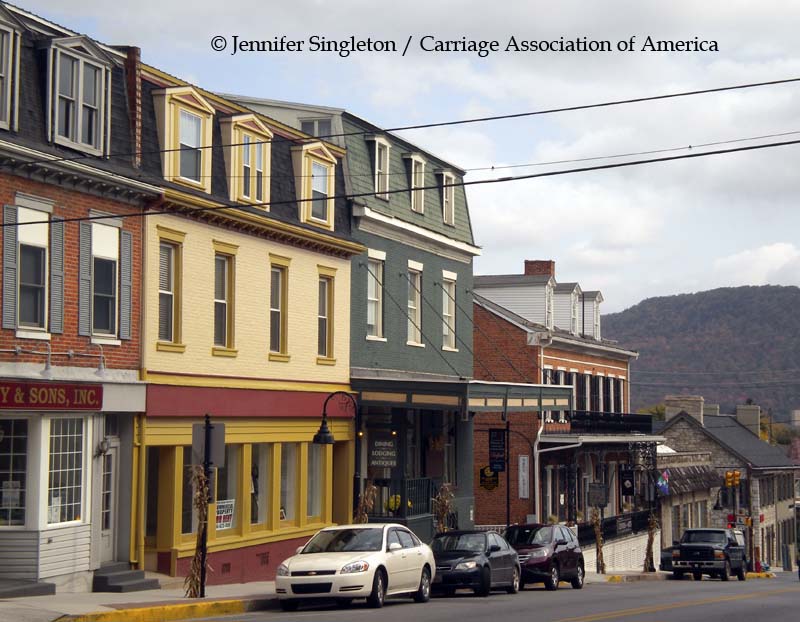
While driving toward Martin’s Auction, I stopped for lunch in Bedford, Pennsylvania. The well-preserved downtown is filled with shops and cafés.
.
.

.

.

.

.

.
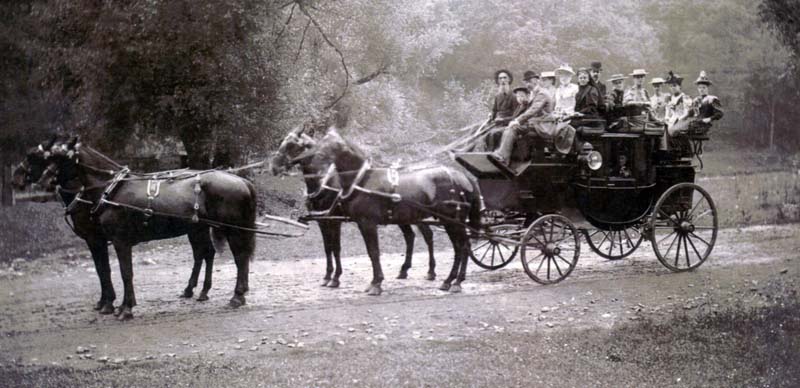
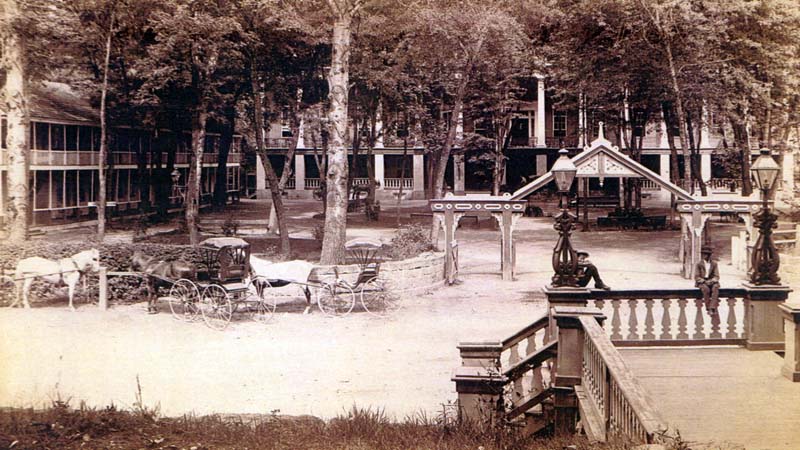
While in town, I found these wonderful postcards, with photos from the 1880s (the original photographs were found and reproduced by the owner of the local Bird’s Nest Farm). The photos show nearby Bedford Springs, which has been a resort since the early nineteenth century.
.
.
.

October 29, 2012
This beautiful natural-wood station wagon (Brewster #25724), which sold at the recent Martin’s Aucion, was completed in March 1907 and was owned by William Brewster.
.

.
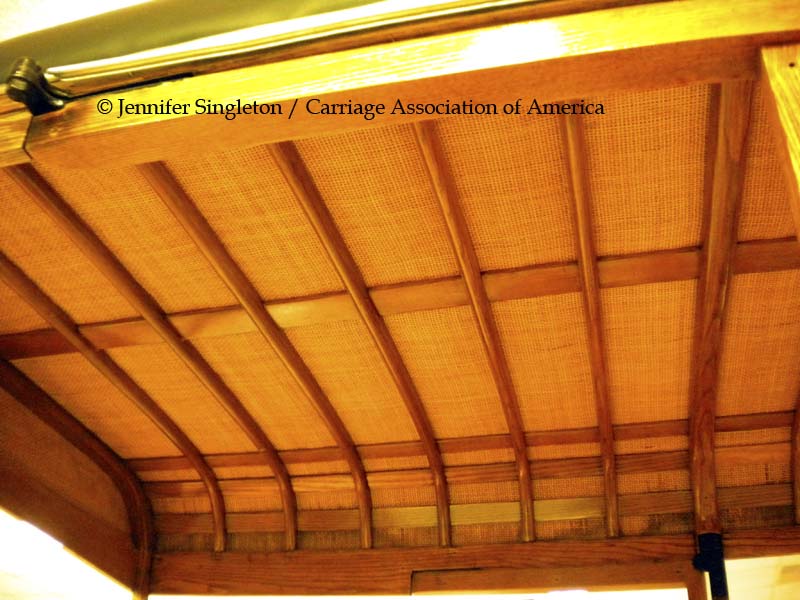
the lovely underside (interior) of the station wagon’s roof
.
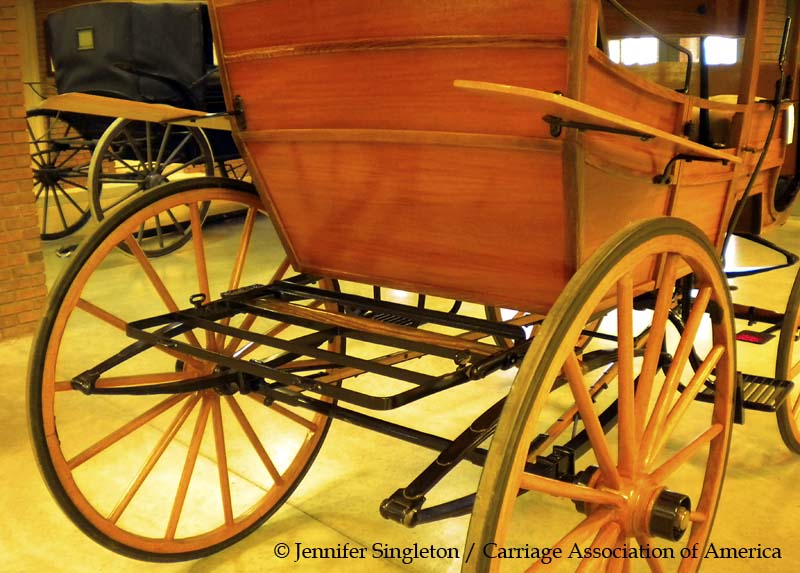
horse-drawn station wagons (unlike our cars of the same name) were usually used to transport guests from train stations to hotels, etc. … here, the luggage rack
.

.
For some reason, the Brewster records refer to this vehicle as a station wagon “prairie schooner.” The size, shape, and probable use of this Brewster vehicle bear no real resemblance to actual prairie schooners, of course. So I’m guessing the reference may have had something to do with the style and look of the sides of the vehicle’s body.
October 26, 2012
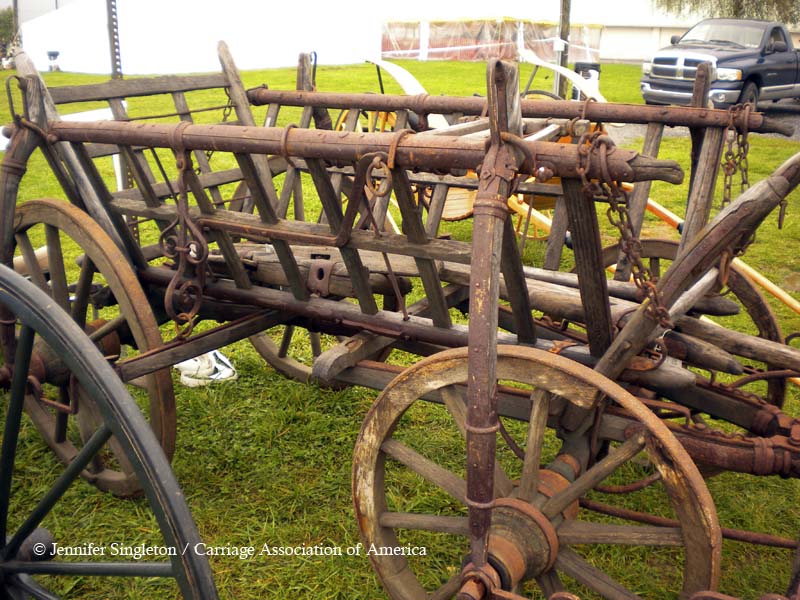
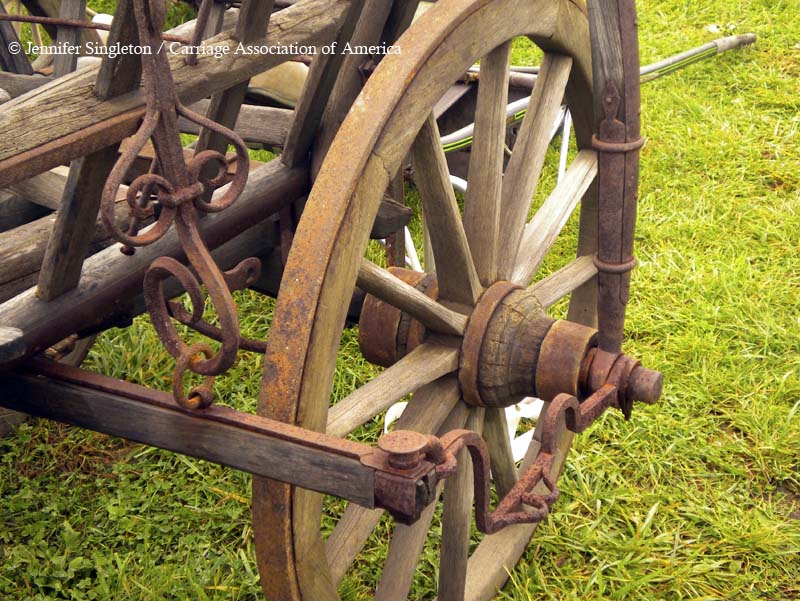
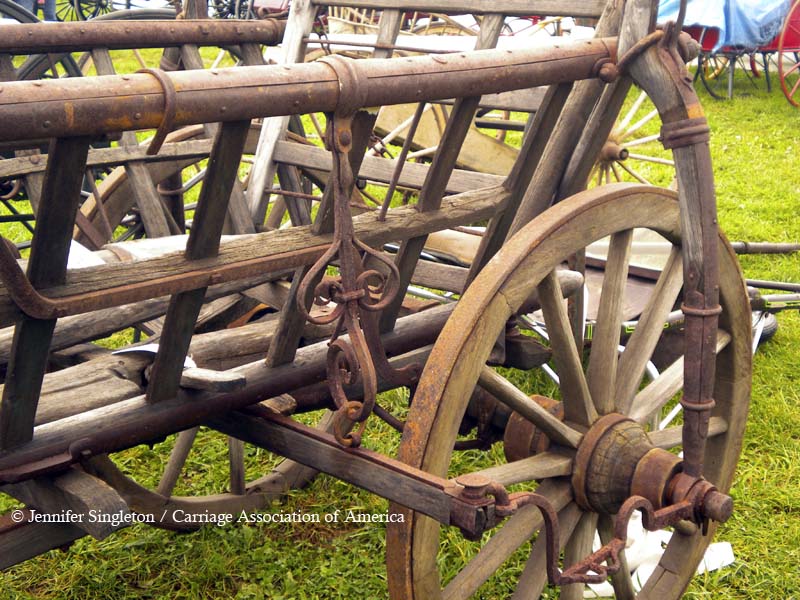
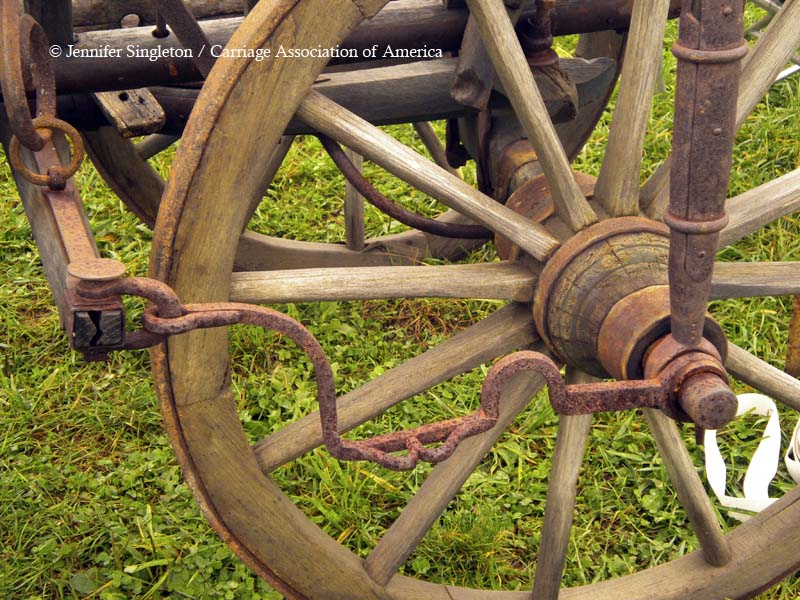
I ventured out into “the field” at Martin’s Auction only once over the course of the weekend. And I found this mysterious vehicle. It reminds me of a farm wagon, but it seems much too small.
And what on earth are all those curlicue metal connectors, and the bars (braces?) that run under the body, and the, um, braces (?) that run from the axles, outside the wheels, to the top rail and then extend beyond it??
Any ideas?
Anyone?
.
.
.
.
.
 The Slower Road