While its snowing here, and the streets are a bit icy, how about a rare look inside a horse-drawn ice wagon?
This photo, c. 1925, was taken in New Orleans and also features some really lovely wrought-iron balconies.
.
January 17, 2014
While its snowing here, and the streets are a bit icy, how about a rare look inside a horse-drawn ice wagon?
This photo, c. 1925, was taken in New Orleans and also features some really lovely wrought-iron balconies.
.
January 15, 2014
I posted this photo yesterday on my personal Twitter page (not the CAA’s Twitter page, at right, which is also “mine” but … as you might image … more driving-related than my own). But I thought you might like to see it here as well.
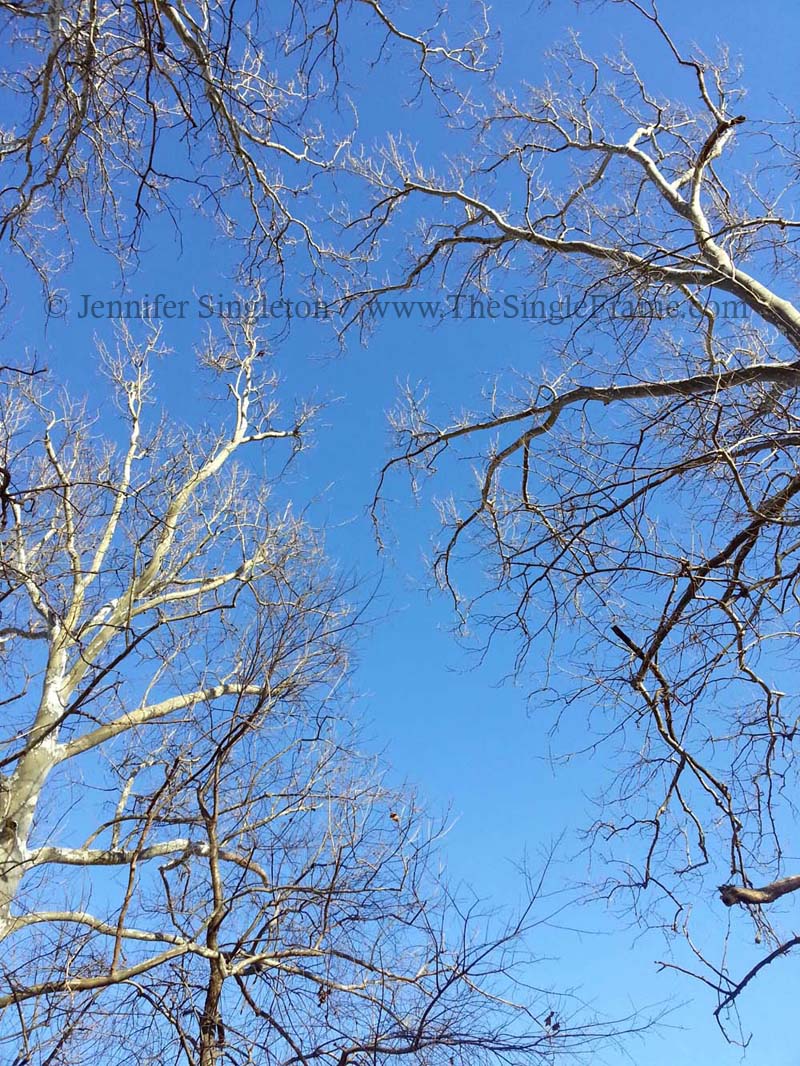
After our descent last week into the dreaded polar vortex, we were back up near the 50-degree mark over the weekend. And the sun came out yesterday. As I noted when posting the photo, I adore the “leafy” seasons, but I also love bright winter days, when the Kentucky Horse Park’s trees get a chance to show off their underlying structures.
.
.
Of course, it was snowing today.
January 13, 2014
The last time we checked in with Mr. Johnson was back in October. Like us with our re-reading of his journey, he was obliged to spend the winter in one place, spending several months waiting for the mountain passes to clear. …
“I left Ogden [Utah] on May 14, 1883, for the East, and made Weber the same day, a distance of twenty-five miles. I followed the Union Pacific Railroad most of the way to Omaha. Leaving the city I left the railroad to my right. My direction was south to Uintah, about eight miles. There I crossed the railroad and the Weber river also. Following the river and railroad to the canyon I am on the right of both, the three running parallel for many miles. Crossing the river on the railroad bridge, I now follow on the left and enter the Weber Valley. This canyon that I have just passed through is most wonderful. There are places that are not sixty feet wide, from rock to rock, and the road is very narrow in places, not more than eight feet. On my right is a wall of solid rock, hundreds of feet perpendicular; on my left is the river, down to its waters are many feet. There are many rocks in the river that would weigh thousands of tons. Waters are dashing and roaring against these rocks that make one feel awful.
“As I was about to cross the river, I heard the sound of an engine’s whistle. I stopped, looking up and down the railroad, but could see no cars. I was sure that I heard a whistle and soon came the train. The roar of the water was so great among the rocks that I could not hear the train as it passed. Soon after entering this canyon I came to a company of men, who were building a flume to carry the waters of the river into a canal, which had been made for miles on the plains, south and west of Ogden; between the Wahsatch Mountains, Salt Lake, and Salt Lake City. I was informed by the superintendent of these works, Mr. Brown, that this enterprise would cost over one hundred and thirty thousand dollars. The bridge on which I crossed is one of the best I have seen on my way, thus far. My road is now on the east side of the valley, winding around its foothills. On the west side of this valley is a place called Peterson, a telegraph station.
“Before leaving Ogden I got my cattle shod; the horse was well done, but the cow was not, and she was troubled to travel. On arriving at Weber, I called on a blacksmith to ascertain if I could get the cow shod and learned that I could. The blacksmith said he could shoe her and would do so at five o’clock the next morning.
“On the morning of the 15th I was up early; fed my cattle, got breakfast, and made everything ready for a start, and waited for the blacksmith till five a.m., the time set for shoeing the cow. He was on time, saying it would be a hard job. ‘I think you are going to be mistaken; she will behave like a lady. Won’t you, Bessie?’ I said. ‘We will soon know,’ said the blacksmith. I led Bessie into the brake, and the blacksmith was about to sling her up, but I told him not to do so, but put the slings under her and let her stand on her feet. I said I would show him how when she was in the brake. The sling was then drawn tight under her, but not so tight as to lift her from her feet. A rope was then passed around both legs, below the fetlocks, and drawn tight so that it would not slip, and made fast to the brakes. The front right foot was taken up and the nail clinches cut, the pincers were put to the shoe for its removal, and after a strong pull it was quickly off all right. The other shoes were removed in a like manner. The shoes were then cut and made one-half inch less in length and replaced; this made a good job. In traveling, there was no friction of the shoes, and they were evidently easy to the feet of the cow.”
January 10, 2014
January 8, 2014
Some CAA members have already received their mailed copy of the January issue of The Carriage Journal, but the folks who bring us our mail here at the Kentucky Horse Park have just today “found” our extra copies of the magazine. So I’m finally able to post an image of the cover here. Ta daaa …
.

.
This issue features articles on sleigh types, harness makers Mark W. Cross & Co., the Butterfield Overland Trail in southern California, and much, much more.
Not yet a CAA member or CJ subscriber? Visit the Carriage Association online to learn more!
 The Slower Road