It’s been rather cold here, lately. Quite a bit colder than usual for us … and lasting longer than normal, as well.

So to alleviate the chill … or just to lighten the gray mood … or perhaps just to have some fun and make people smile … “guerrilla knitters” have been hard at work here in Lexington. Early yesterday morning, A.J. and I drove through downtown on Main Street. At the intersection with Midland Ave. is Thoroughbred Park, which features statues of grazing mares and gamboling foals on a small hill, and a group of race horses, going all out down the stretch.

And yesterday:

.
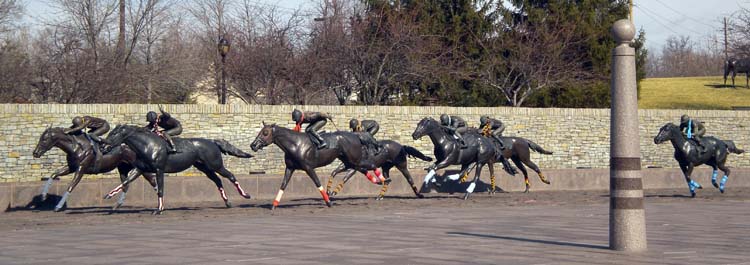
hmmmm ... things look a bit different than usual here ...

.

So, naturally, given the sunshine, I walked back down to Thoroughbred Park later in the day to take some pictures for you!

.

each jockey sports a hand-knitted scarf, and each horse is wearing hand-knitted racing boots, er, polo wraps, um ... well, leg sweaters is what they really look like, and each one is buttoned on

.
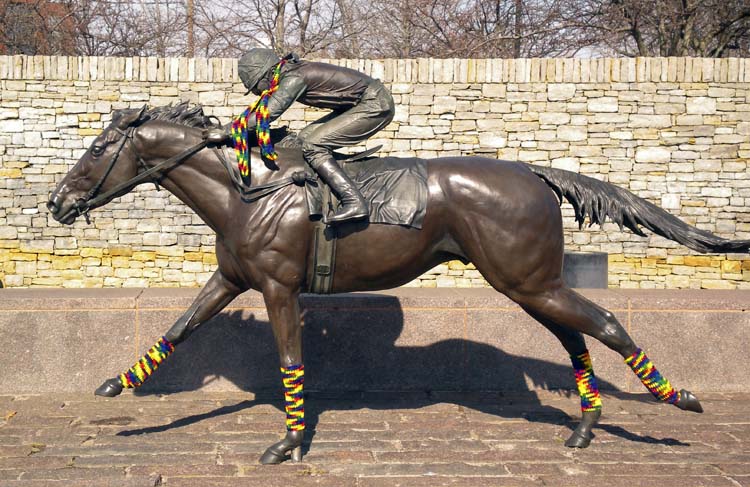
don't they look wonderfully colorful and, um, warm?

.
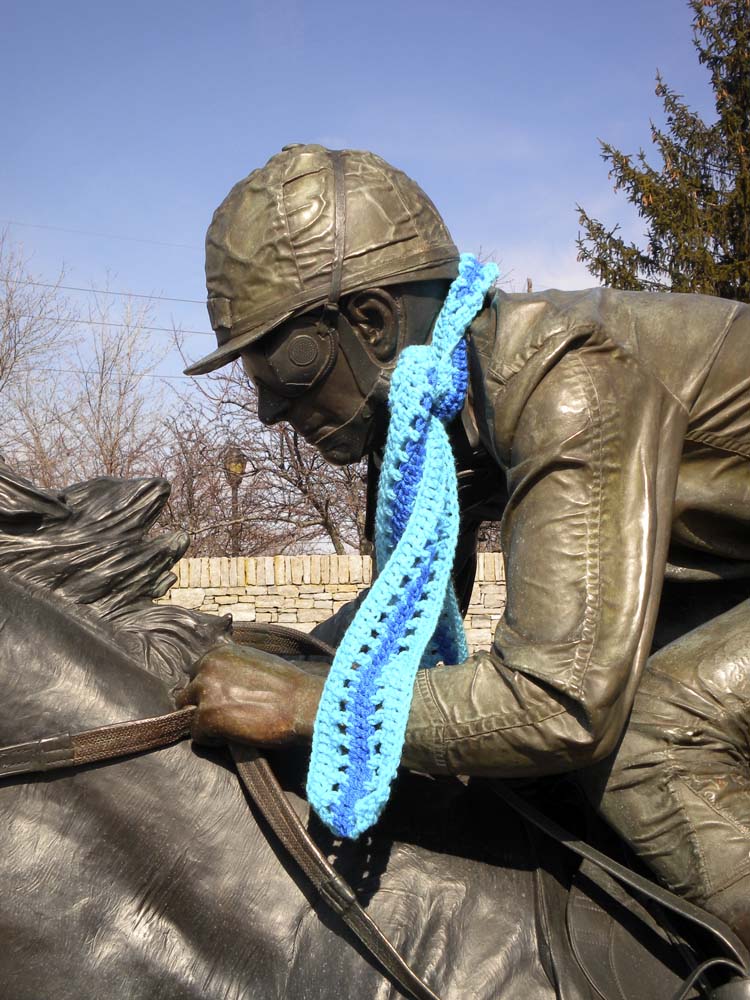
this poor jockey is perpetually in last place ... but he has a lovely blue scarf now!
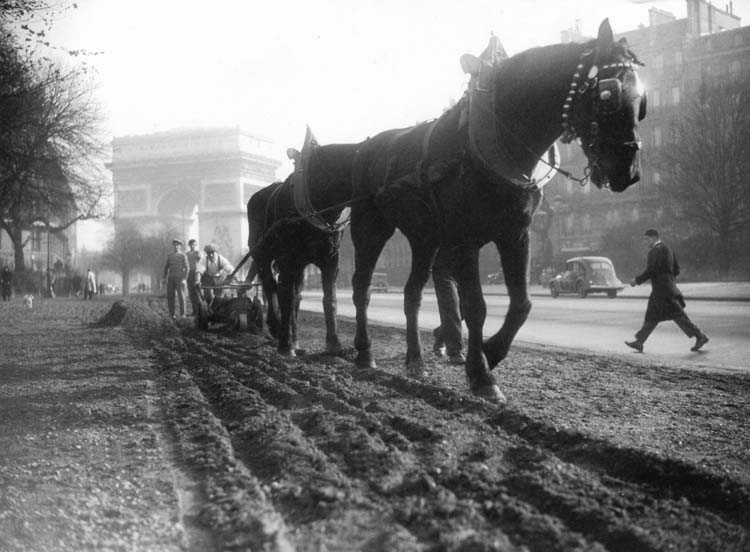
… and now, let’s head over to Avenue Foch, near the Arc de Triomphe, where …

.

... horses helped to plow the bridle paths in 1935

Let’s travel to Paris this weekend, shall we?

And, yes, I do mean Paris, France … not Paris, Kentucky.

.

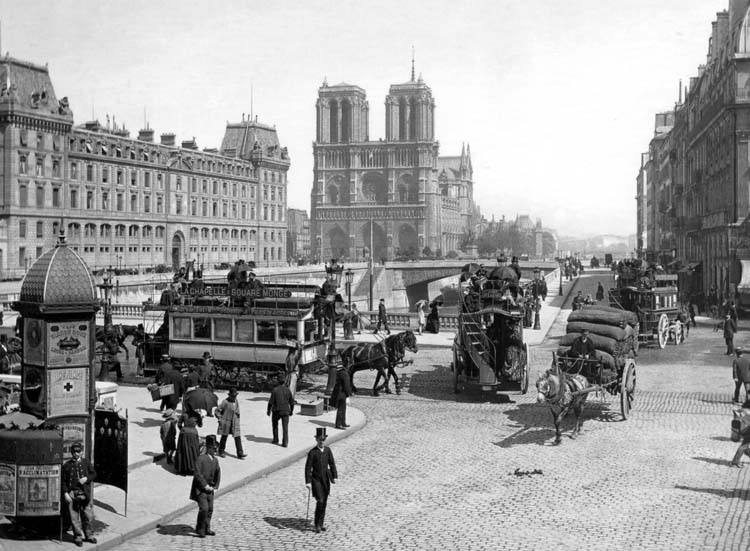
a view of the Saint-Michel bridge and Notre Dame, c. 1900

In response to yesterday’s post, Margot Clark sent me two photos and the following story.

“This ‘modern-day’ photo of a Governess Cart was taken at a Picnic Drive held by Old Chatham Hunt in the late seventies. The girls are my daughters, Robin and Jennifer Moran, ages nine and twelve. They are driving their treasure, Aladdin, who was a Welsh cross. He was their fox hunter, show pony, and all-around pal. He never took a wrong step! (The pony looks improperly harnessed, but if you’ll note, the traces are slack; he’s just not up in his work.)” 

.

Robin and Jennifer Moran with Aladdin in the 1970s (photo courtesy of Margot Clark)

.

Margot is not in the photo, but she was with her daughters when it was taken. She was driving her horse, Captain Jack, to an antique natural-wood Road Cart.

She says, “Captain Jack was probably the best horse I ever owned. He was a 16.2-hand Thoroughbred-cross; I fox hunted and evented with him, and my daughters showed him in hunters and Medal-Maclay! He was, without a doubt, a truly unique horse.”

.

Captain Jack and twelve-year-old Robin Moran (photo courtesy of Margot Clark)

This past weekend, A.J. and I watched the final episode of Downton Abbey, the BBC’s most recent “costume drama.” Did you see it?

This particular BBC miniseries took place at the end of the Edwardian era, just before the First World War. The storyline begins with the sinking of the Titanic in April 1912 and ends with England’s declaration of war with Germany in 1914.

Being a fan of history, I must admit that I just love these sorts of movies or miniseries … when they’re done well. (If I have actually studied the era in question, I must also admit that I will do a lot of grumbling if the movie / show is NOT done well.)

Generally speaking, though, I think it’s wonderful to see a bit of life in an earlier era, rather than having to rely only on old images and descriptions and my own imagination.

In this particular show, the house is magnificent, the costumes are sumptuous, the acting is good, and the storyline engaging.

That being said, however, I do have one quibble.

In one episode, the family’s youngest daughter, Sybil, asks her father if she can use “the Governess Cart” for a supposed errand.

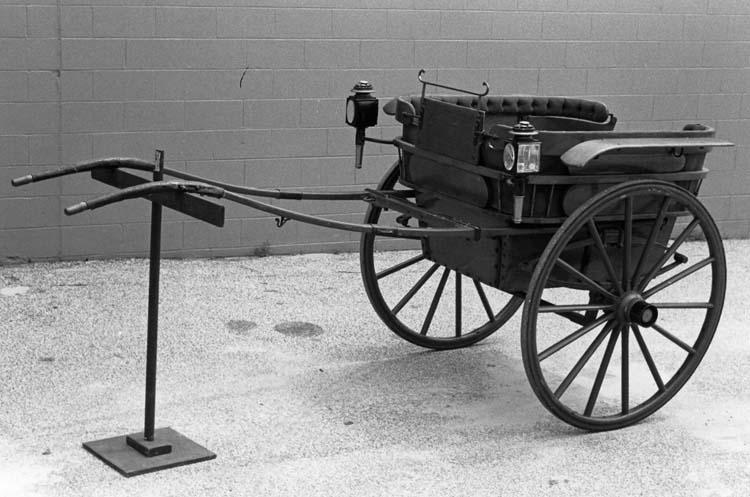
But instead of driving a pony hitched to a Governess Cart, Sybil showed up in the next scene driving something more like this:

.

a Stanhope Gig built c. 1905 (image courtesy of the CMA Archives)

.

Of course, what we should’ve seen Sybil driving (based, at least, on her request) was something along these lines:

.

a Governess Car made by Guiet et Cie., Paris (image courtesy of the CMA Archives)

.

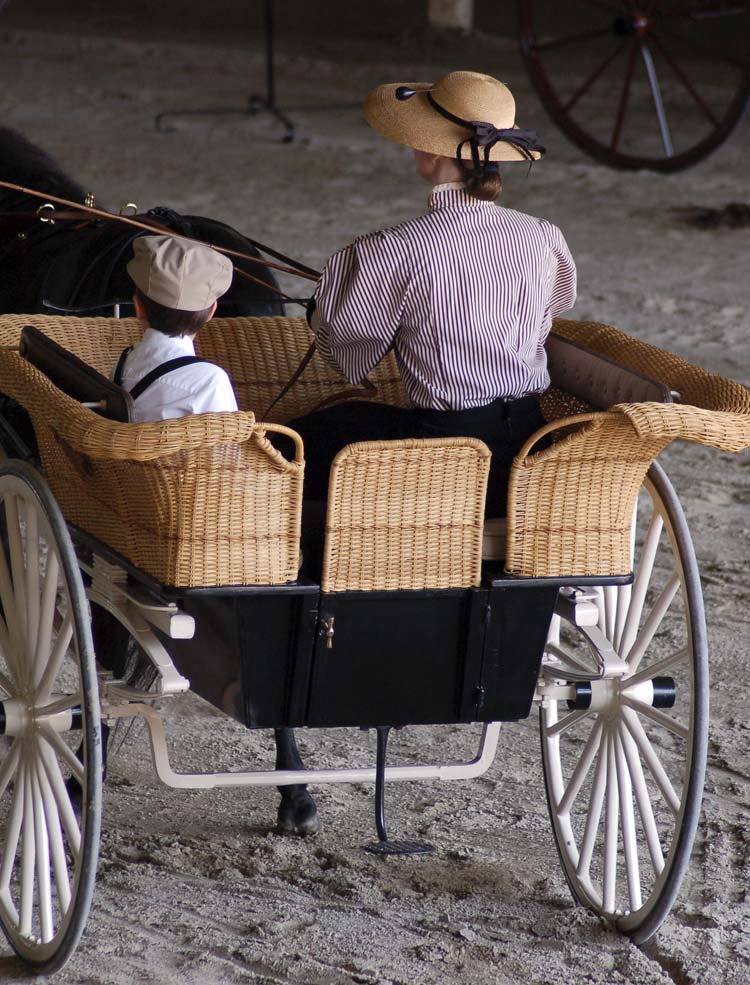
A Governess Car has two inward-facing seats and a door at the back, usually with a latch (on the outside) placed low enough to be out of reach of the children that may have been riding in the vehicle. In an article that the late Tom Ryder wrote some time ago for The Carriage Journal, he said that this type of vehicle “seemed so safe and ideally suited for carrying young children that it was often the only carriage owned by families living in the country.”

.

another Governess Car, with the solid sort of reliable pony that would typically have been used with this vehicle (image courtesy of the CMA Archives)

.

wicker Governess Cars were also popular; this one was at the 2006 CAA Conference