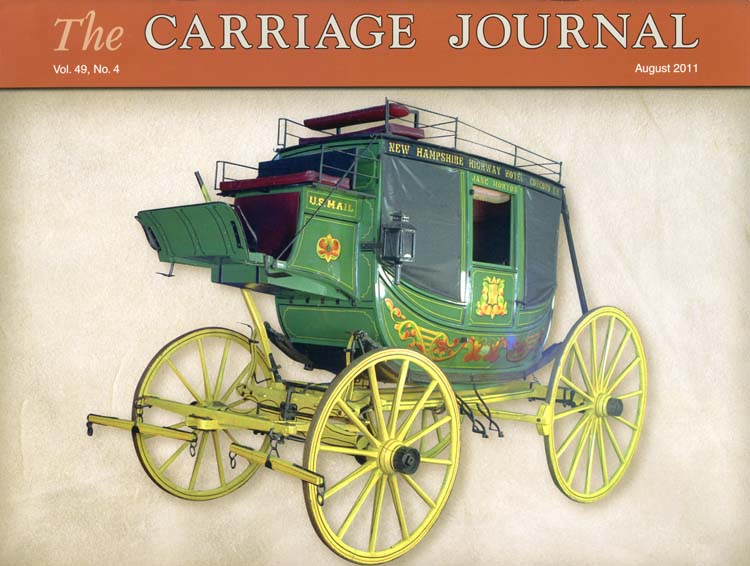
Today, something even more different …

This video clip features two brothers — both farmers in England — talking about their memories of “life on the farm” with their father … and it features some lovely footage of horse-drawn farming equipment and hay wagons.

.

.

This one is silent and in black-and-white, but it has some fascinating footage — from 1904 — of a variety of machinery being used to cut and prepare hay, hay wagons with enormous loads, and a group of children who are, um, “helping” with the haying.

.

Something a little different for today: a Scottish ballad and a collage of old photos showing Scottish farmers. Some of the photos feature rather enormous horses (or rather short people).

.

C’mon, admit it, most of you had never ever even heard of tent-pegging before reading about the 1897 Rough Riding Club of New York, right?

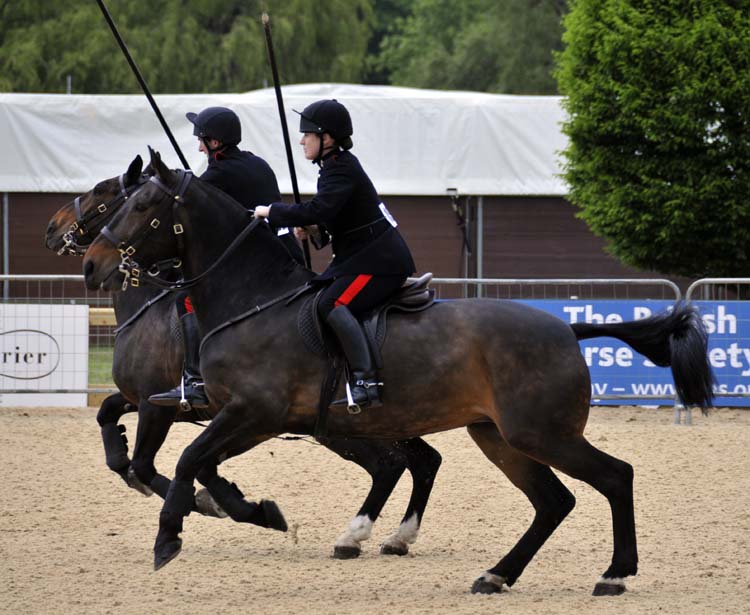
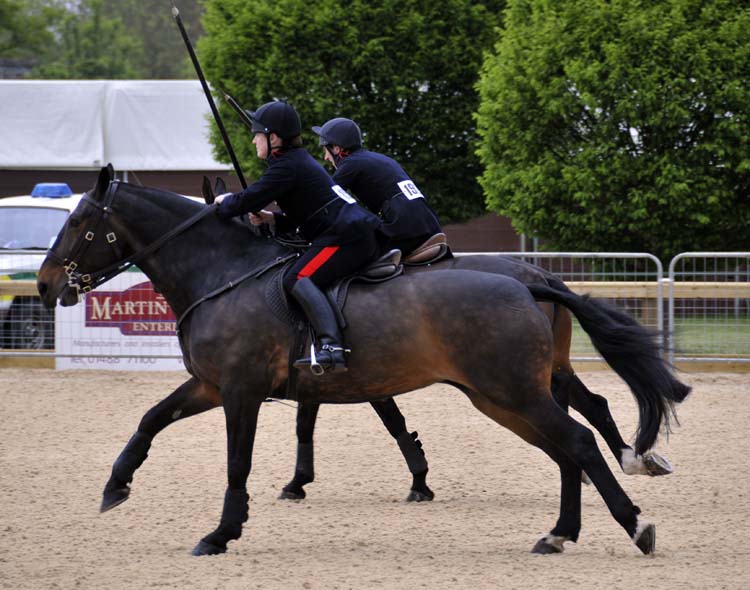
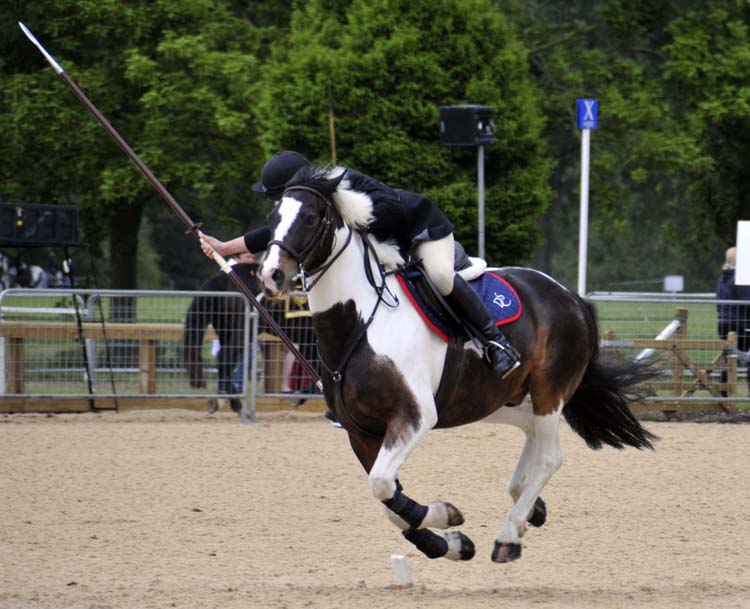
Well, believe it or not, the sport is still played today. It’s especially popular in Great Britain, Australia, India, Pakistan, Israel, and South Africa.

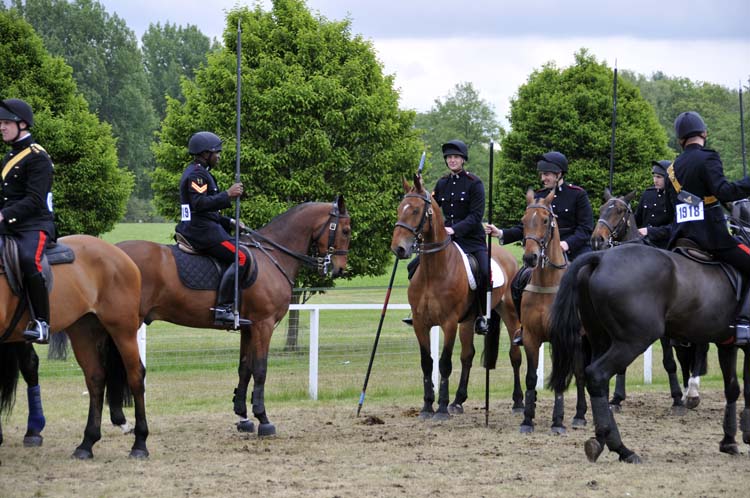
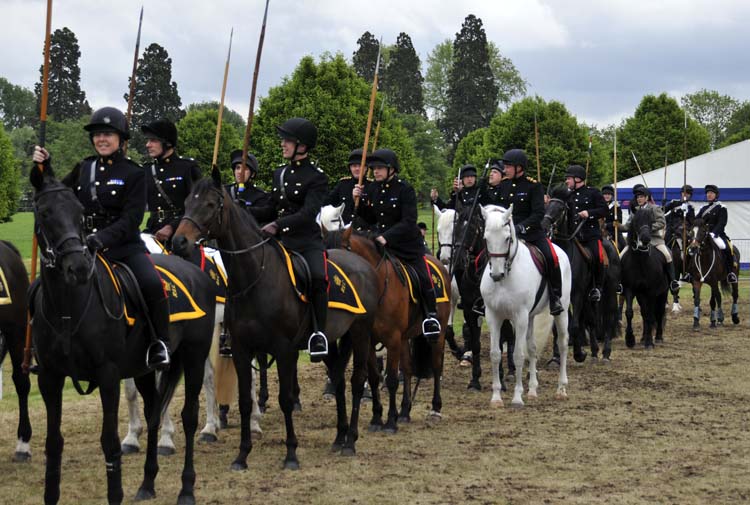
If you travel with the CAA to the Royal Windsor Horse Show in England, you can see this cavalry-inspired sport for yourself. As proof, here are a few photos from the tent-pegging competition at Windsor in 2009:

.

.

.

.

.

Do you remember the recent mention here of the [then-upcoming] tournament hosted by the Rough Riding Club of New York?

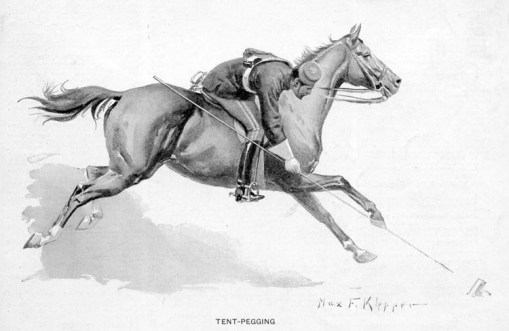
One of the events at that February 1897 event was an obscure sport known as tent-pegging.

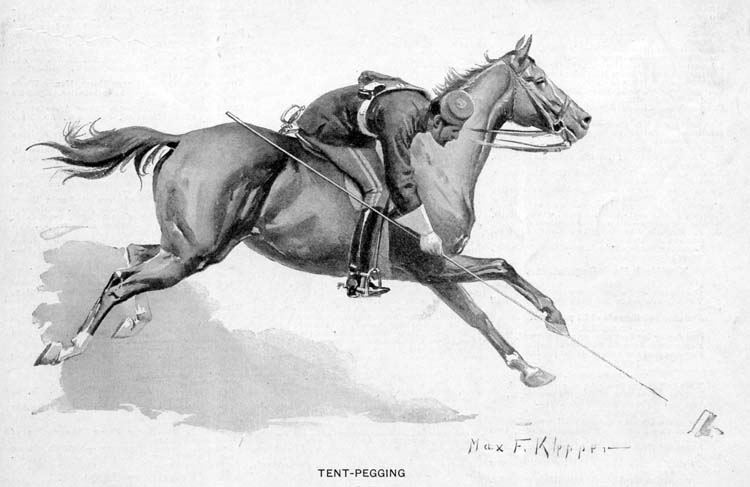
The Rider & Driver from February 13, 1897, had this image on its cover:

.
.

… and this description on page 10:

“The spirited sketch on our front page this week, by that very clever artist Mr. Max F. Klepper, shows a member of the Rough Riding Club of New York, in the act of tent-pegging with the regulation British army lance, as performed in the contest between teams from that organization and the Brooklyn Riding and Driving Club, at Brooklyn, last Wednesday evening. There is no more spirited equestrian game, and none more exciting for spectators. The pegs are made of heavy wood, and driven firmly into the ground to the depth of six inches. The lances are made of stout male bamboo, which differs from the ordinary bamboo in its wonderful strength, being at the same time comparatively light. The points are of the finest tempered steel, and nicked, so that when the peg has been pierced it may be retained. In order to take the peg, the horse must be ridden at the fastest gallop, so as to proved sufficient momentum for piercing the wood.”
The August issue of our Carriage Journal magazine was mailed today to all current CAA members.

.

.

In this issue are the usual departments (“In the Carriage House,” “In the Stable,” “Nuts and Bolts,” “The Road Behind,” and more), plus articles on the Carriage Association’s first fifty years and the Death Valley Borax Wagons (reprinted from 1893), and a photo essay from the CAA’s 2011 trip to Sevilla, Spain.

If you’re interested in learning more about the Carriage Association of America and our publications (including The Carriage Journal), please visit our website: www.caaonline.com.