For a lazy winter-time holiday, here are some scenes from Colonial Williamsburg. I took these in the late afternoon last Friday.
.

.

.

.

.

.

.

January 16, 2012
For a lazy winter-time holiday, here are some scenes from Colonial Williamsburg. I took these in the late afternoon last Friday.
.
.
.
.
.
.
.
January 15, 2012
On our free afternoon, several symposium attendees made their way to the wheelwrights’ shop to meet the artisans and see what they were up to.
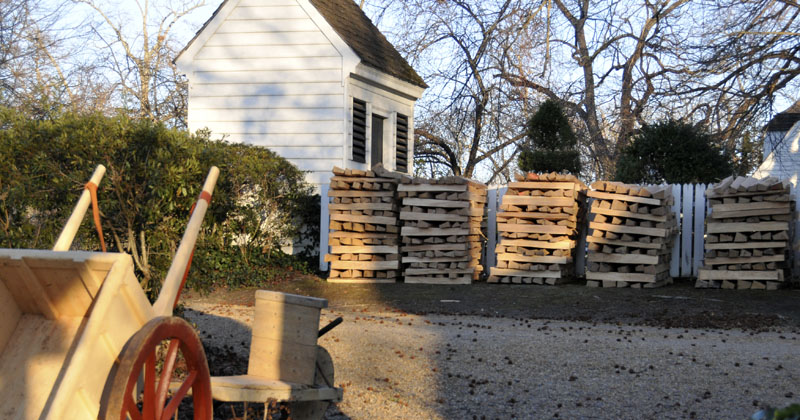
On this day — and for quite a number of days lately — they were splitting white-oak logs for spokes. Several big trees had come down on Williamsburg-owned land during a recent hurricane, and the wheelwrights were the lucky recipients of this unexpected bounty. There are so many logs that they will apparently have enough split wood to last through several years’ worth of spokes.
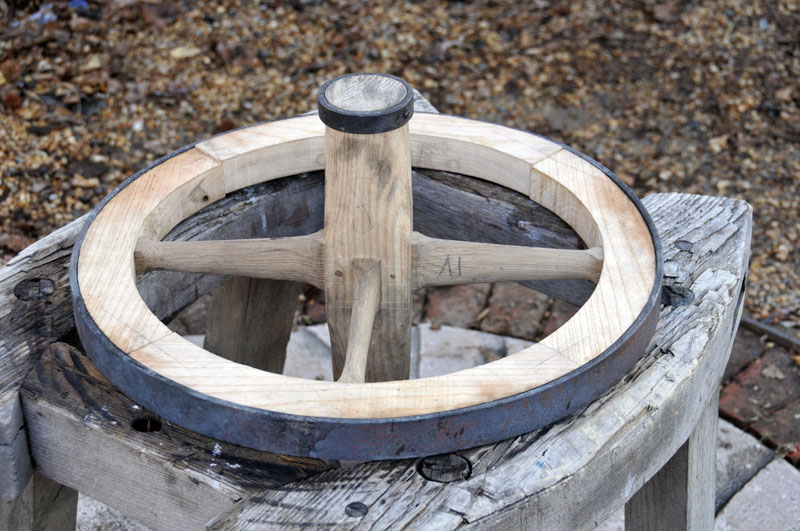
They explained to us that they use white oak for spokes and ash (from the center of the logs) for hubs. Once split, each piece of wood has to dry for one year per inch of thickness, so a twelve-inch chunk of ash must dry for an astonishing twelve years before it can be made into a hub.
In the lean-to next to the wheelwrights’ workshop is the blacksmith’s shop, and we were able to peek in there as well.
.

.

.

.

.
.

.
.

.

.

.

.
January 14, 2012
Yesterday morning featured several fascinating lectures, which I’ve summarized on Twitter (here).
During the morning’s breaks, everyone gathered for snacks and drinks and another stroll through the trade fair.
.
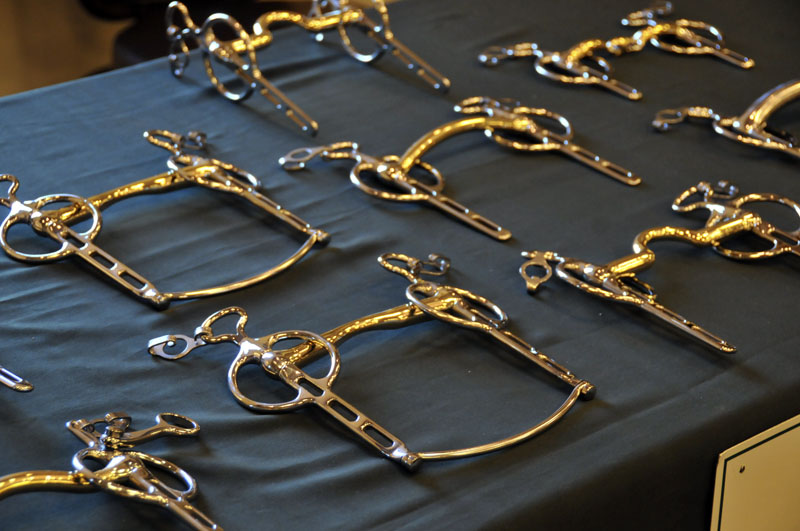
Bowman Leather (Dan and his son Jacob) have a display of their lovely harness, and these handmade bits
.

Louise Ellis makes beautiful jewelry from antique buttons, bridle rosettes, and poker / game pieces ... and braided horsehair (shown here)
.
After the morning’s final lecture, we all had a free afternoon to visit the Colonial Williamsburg stables and the Historic Area and its trade shops.
.
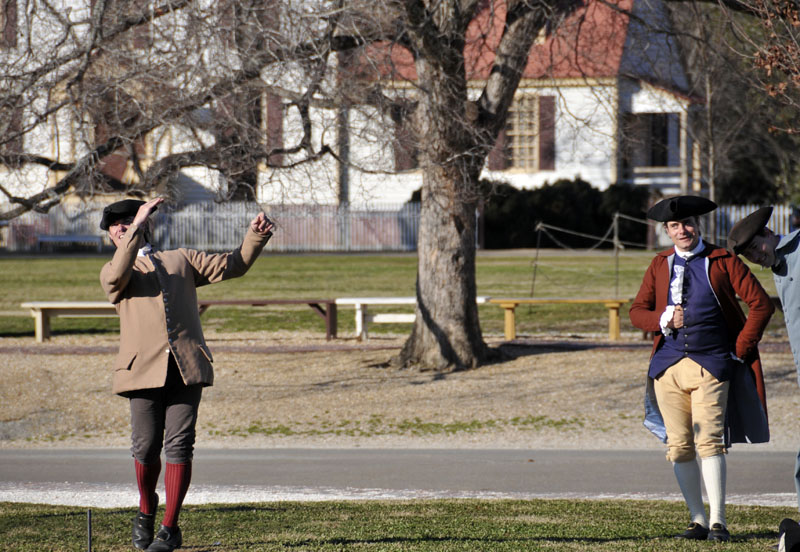
On my walk to the stables, I passed these 18th-c. men playing a game of horseshoes
.

this Landau was built by Colonial Williamsburg in 1960; it was used (driven by Richard Nicoll) for HM The Queen's visit to Williamsburg in 2007
.

this Demi-Landau was probably built in Philadelphia sometime between 1818 and 1840; it can be driven by a coachman or, with the coachman's seat removed, by a postilion
.

... a close-up of the Demi-Landau
.

the Riding Chair was basically just that: a chair on wheels
.

in the harness room, I met this sweetie, who was lying on top of a bucket full of towels
.

detail of a driving bridle in the harness room; I assume these bridles go with the Landau above, as the squirrel on the panels (below) is repeated here on the blinkers
.

the Landau's squirrel
.
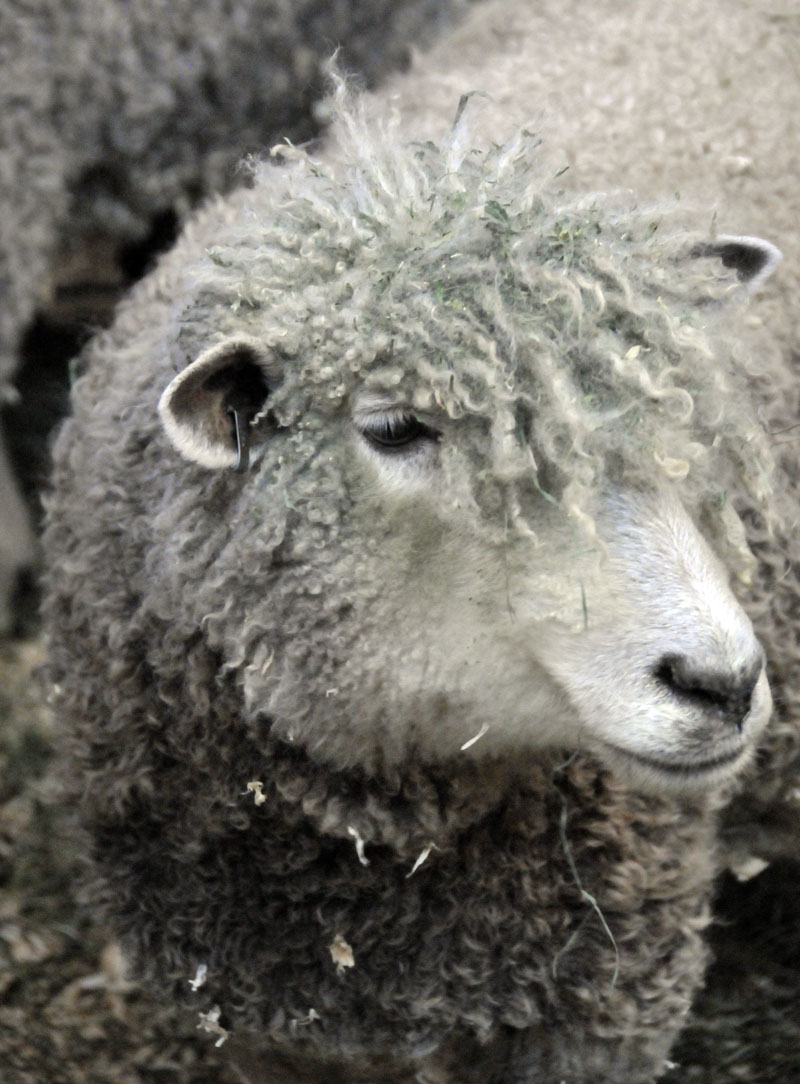
in the aisleway of the stables was a display with information on Colonial Williamsburg's important rare-breeds program, including a live appearance by this, and one other, Leicester Longwool sheep, and several rare breeds of chickens
.
After leaving the stables, I walked through town to the wheelwrights’ shop. I’ll post photos from that visit tomorrow.
January 13, 2012
Yesterday evening, we gathered for a dinner / party to celebrate the CAA’s 50th anniversary …
.

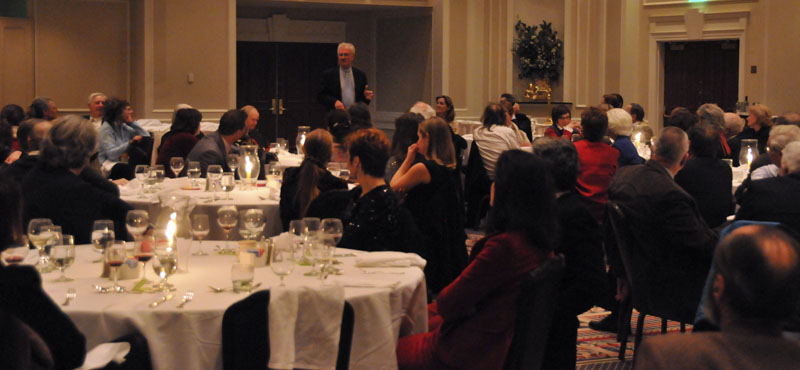
After dinner, Colonel Davis and then Ken Wheeling and then other members stood up to recount stories and tell everyone what they have enjoyed most about the CAA; Richard Nicoll (shown here) shared a funny story of how he was apprenticed to Tom Ryder
January 12, 2012
As you’ve gathered by now, today was the first full day at this year’s International Carriage Symposium.
Rather than try to recap today’s outstanding lectures, I encourage you to review some of the highlights here. Or, better yet, follow me on Twitter! Then you’ll be able to keep up with my “live tweeting” during the remaining two days of the symposium.
Just a couple of photos from this afternoon:
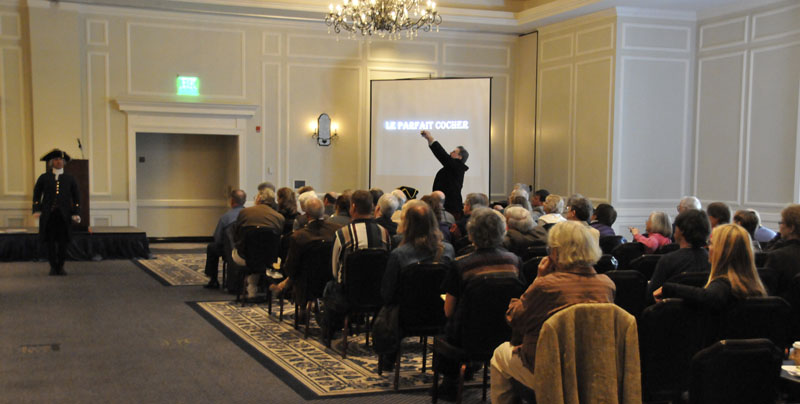
Mark Schneider wins the award, I think, for the best entrance of all the speakers so far. He’s an interpreter here at Colonial Williamsburg and he usually portrays Frenchmen. To begin his talk, he strode dramatically into the room (in costume) and, just as dramatically, began his introduction in fluent French. He was speaking about a 1744 book called Le Parfait Cocher, or The Perfect Coachman, and he was clearly channeling the book’s eighteenth-century author. Immediately, a multitude of cell-phone cameras started clicking, and Andres Furger (a fellow speaker) stood up to record the proceedings.
.
.
After the day’s final speaker, everyone gathered in the trade fair room, first to admire and then to queue up for a piece of cake, which the hotel had kindly provided in honor of the CAA’s fiftieth anniversary.
.

everyone admired the three-dimensional wheels on the chocolate carriage
.


