reference


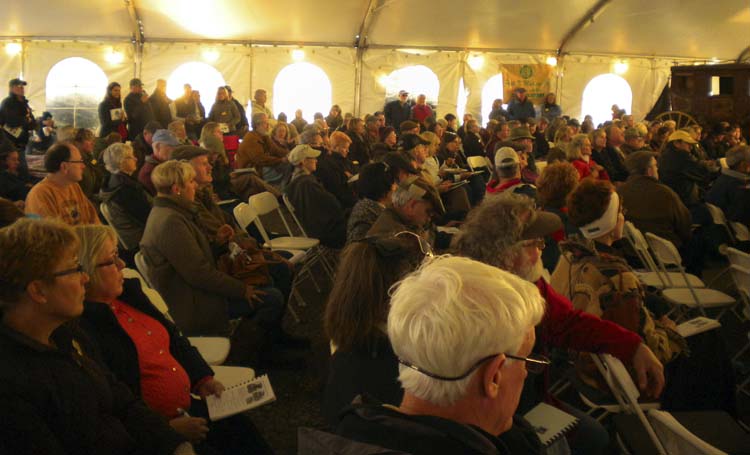
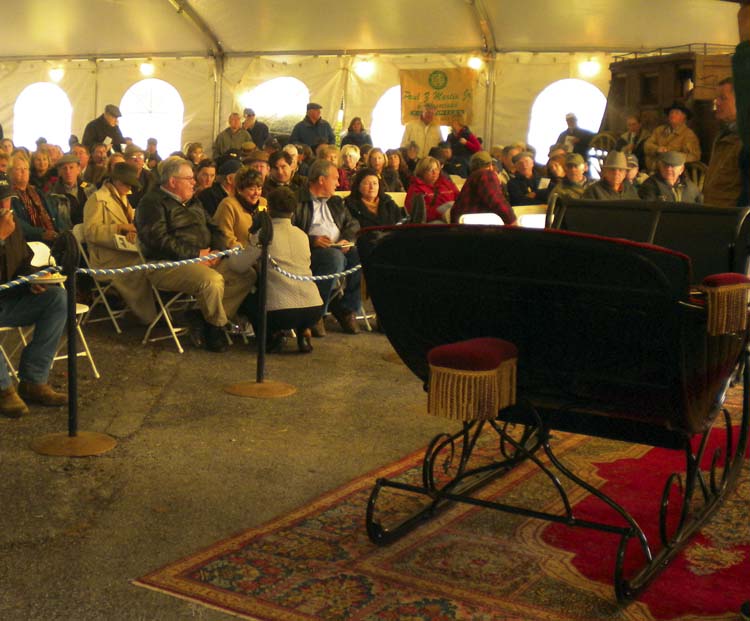
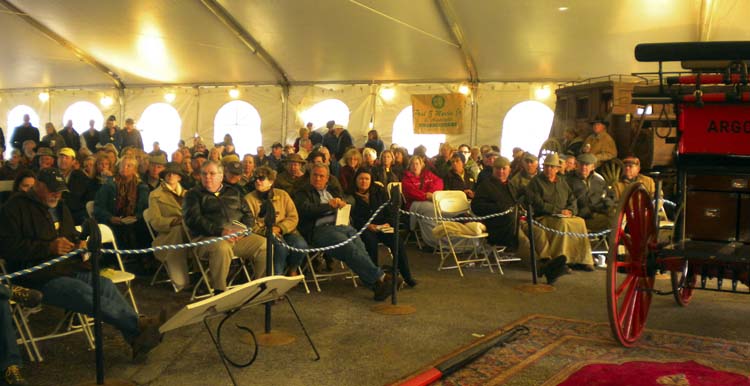
On Saturday, a carriage auction drew hundreds of visitors — carriage drivers, carriage collectors, and the merely curious — to the farm formerly owned by Elizabeth Lampton, just  a couple of miles from the Kentucky Horse Park.

.
.

There were about sixty carriages in the sale and several hundred other items, ranging from harness, whips, and hats to prints and massive, carved wardrobes.

.
.

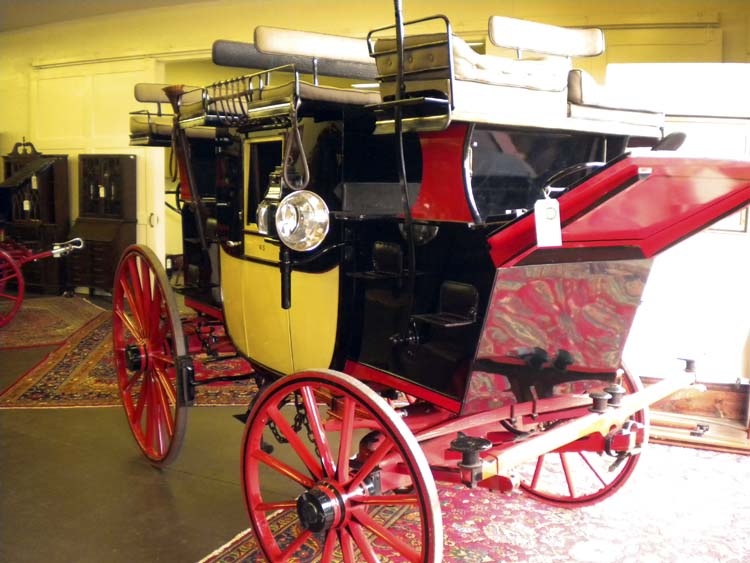
The item with the best known history — and the one that fetched the highest price — was this beautiful little coach:

.
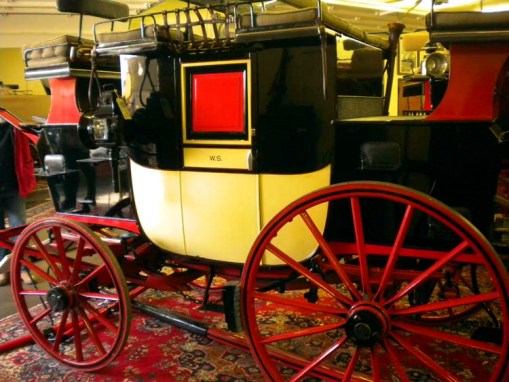
the near side of the pony coach

.

... and the off side

.

This coach was built in the style of a Park Drag, but sometime during its lifetime was converted to the brighter colors and the look of a Road Coach. It was built to be pulled by a team of Hackney ponies, so it’s three-quarters the size of regular coach.

It was custom-built in 1910 for America’s great coaching enthusiast of the day, Alfred Gwynne Vanderbilt, by Mills & Sons of London. The finished coach was shipped to New York aboard the British luxury ocean liner, the Lusitania. When the coach arrived in New York, the Brewster Co. unpacked it and hurried it off to Madison Square Garden, so that Mr. Vanderbilt could show it with his new team of Hackney ponies at the National Horse Show.

Sadly, A. G. Vanderbilt was later one of the Lusitania’s many passengers who died when the ship was torpedoed by a German submarine in May 1915. The story goes that he was last seen putting a life vest on a woman holding a baby.

.
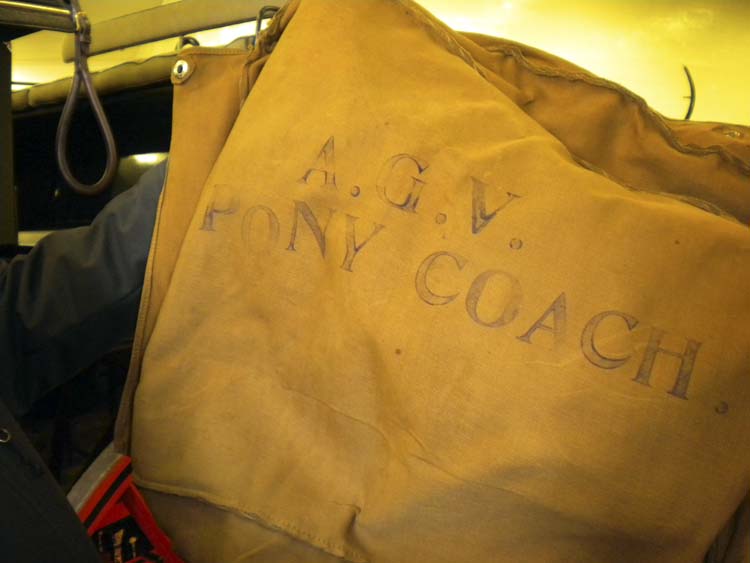
the coach's original seat covers, with Alfred G. Vanderbilt's initials

.
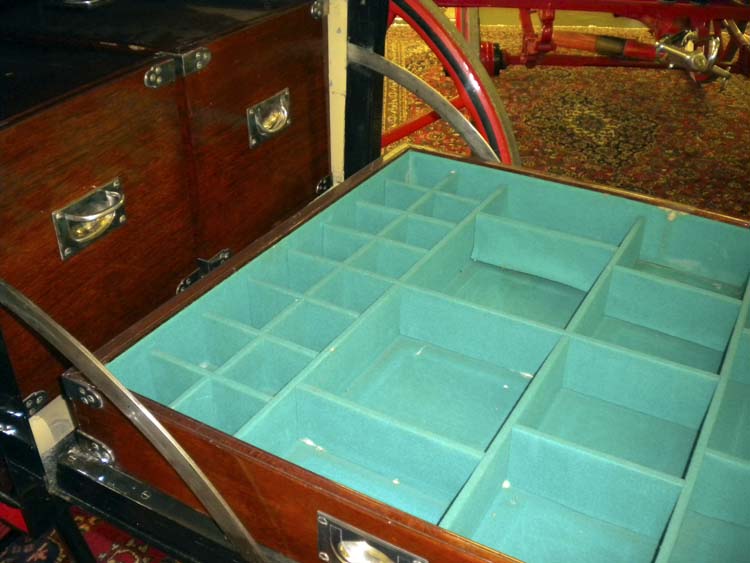
this tray and the two to the left sit in the coach's boot; this one would've held glassware, plates, etc. and the two to the left look like they would've held bottles ... A. G. Vanderbilt preferred "white" metal on his vehicles, instead of brass, so all the silver is sterling

.

When it was time for this coach to be auctioned, the bidding was fierce, and everyone not bidding was listening and watching rather intently to see what would happen. In the end, it sold for $140,000.

.


While in the office yesterday, we spied an absolutely enormous pair of wheels being unloaded from a flatbed trailer. So of course, I went out to get some photos.

It turns out they belonged to a device known by a variety of names: high-wheel logging cart, high wheels, logging wheels, and more.

.

the enormous pair of ten-foot-tall wheels, after they were unloaded from the trailer but before they were separated and attached to their equally enormous axles

.

a close-up of one of the two wheels after the entire contraption was put together

.

This logging cart was brought to the KY Horse Park by the restorers: an Amish family (and their driver) from northern Indiana. According to the sign now attached to one of the wheels, the tires, spoke rings, and boxing in the wheels are original (from Michigan’s Upper Peninsula), and the wooden parts are either ash or oak. These types of vehicles were used from the late nineteenth century through the early twentieth century for getting logs out of forested logging areas. You can read more about these vehicles, and see some fascinating old photos of them in use, here.

… in living color, with steam and water and galloping horses, and a Dalmatian!

This video was a hit on the CAA’s Facebook page. If you haven’t already seen it, enjoy!

… but check out this totally different sort of championship.

Yesterday’s post featured a description (from 1832) of what the author believed to be the first steam coach in Britain.

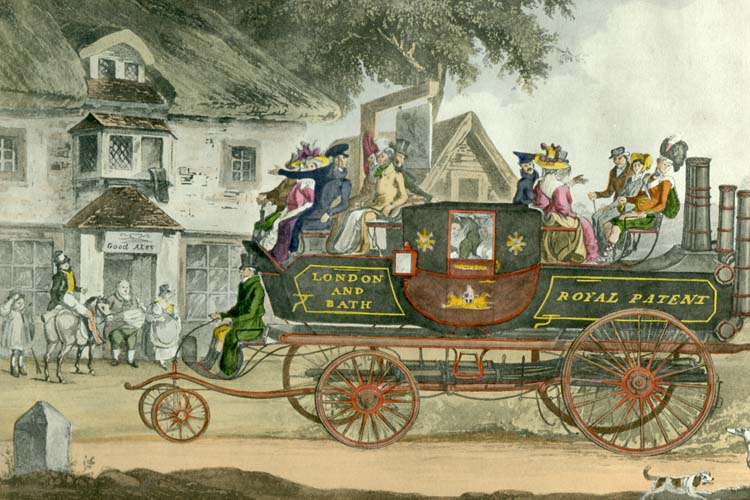
Here, however, we have an engraving of a steam coach that was used in and around London in 1827.

According to the caption on the image itself:  “The Guide or Engineer is seated in front, having a lever rod from the two guide wheels to turn and direct the Carriage and another at his right hand connecting with the main Steam Pipe by which he regulates the motion of the Vehicle. The hind part of the Coach contains the machinery for producing the Steam, on a novel and secure principle, which is conveyed by Pipes to the Cylinders beneath and by its action on the hind wheels sets the Carriage in motion. The Tank, which contains about 60 Gallons of water, is placed under the body of the Coach and is its full length and breadth. The Chimneys are fixed on the top of the hind boot and as coke is used for fuel, there will be no smoke while any hot or rarified air produced will by dispelled by the action of the Vehicle. At different stations on a journey the Coach receives fresh supplies of fuel and water. The full length of the Carriage is from 15 to 20 feet, and its weight about 2 tons. The rate of traveling is intended to be from 8 to 10 miles per hour. The present Steam Carriage carries 6 inside and 12 outside Passengers. The front Boot contains the Luggage. It has been constructed by Mr. Goldsworthy Gurney, the Inventor and Patentee.”

.

« Previous PageNext Page »