reference


I recently found an interesting blog, in a roundabout way, through Twitter. It’s all about the life, times, and books of Jane Austen, whose works I adore.

The blog in question, Austenonly, recently featured a series of posts on livery and, among other things, how the colors were derived from each family’s coat of arms.

For a look at this fascinating subject — and some information on the subject as it relates to Jane Austen’s own family and her books — follow the links for part 1, part 2, part 3, part 4, and part 5 of the series.

For an interesting discussion of a Landaulette mentioned in Austen’s novel Persuasion, click here.

Are you a member of the Carriage Association of America? If you are, and if you’ve given us your email address, you’ll know that we send out a popular e-newsletter each week. And, if you read the weekly e-news, you’ll know that we like to include newsy tidbits from CAA members.

In response to our standing request for news from association members, Dale Orr (Indiana) sent me an email that had far too many photos for the newsletter. So I thought I’d post them here.

Here’s what Dale had to say, and the photos he sent:

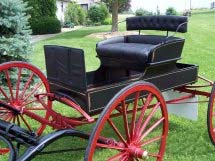
“I am a cabinet maker and a horseman with a keen interest in building and restoring vehicles. One of my recent projects was a Runabout that was originally built by the Atwood Buggy Co., in my hometown of Albion, Indiana, in the 1890s. There was very little left of this buggy, but I had a catalog image and enough left of the box to duplicate the body, and I restored the gear. I drove it once in our hometown parade then donated it to our local history museum.”

.

.
.

.

.

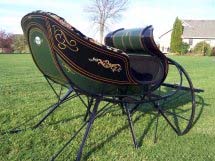
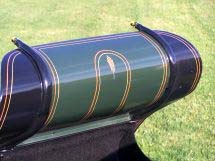
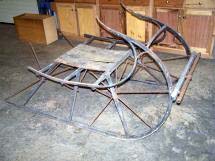
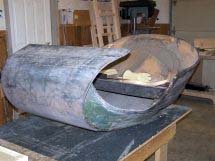
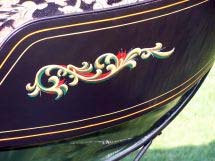
“The second piece is an Albany Cutter originally built by the Page Brothers Buggy Co., in Marshall, Michigan. I believe it to have been built sometime around 1876 to 1890. All the striping and art work was very faint, but we were able to trace it onto acetate before restoration began. This sleigh was in very poor condition, and I had to build a new dash and completely disassemble all the wood and metal parts and start over. I reused all the original bolts and screws.”

.
.
.

.

.

.
.

.

Thanks for sharing these photos with us, Dale.

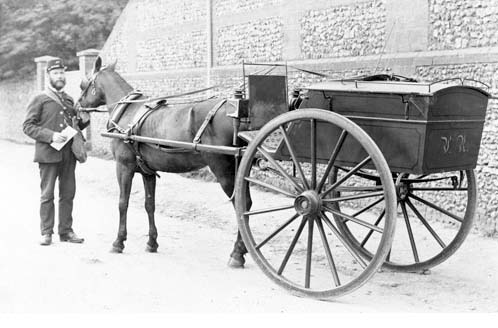
A member sent this photo, from 1894, showing a British postman with his horse and mail cart.

.

.

The photo’s caption reads as follows:

“The last London-based mail coach, between London and Norwich, ceased running in April 1846. However, the use of horses by the Post Office continued for another hundred years. The photograph shows a postman, horse, and cart used on a rural delivery route in 1894. From the 1840s, railways carried the mail across the country. But local delivery needed an efficient road service, still driven by the efforts of horses. The Post Office preferred not to run its own service; instead, the individual routes were contracted out. Successful applicants provided horses, vans (to Post Office specifications), and driver, who were provided with a Post Office uniform.”

Bob (who sent us the photo) also reports that, according to Post office specifications, the horses should be “… from 15 to 16 hands, … clean-limbed trotters, rising five …”

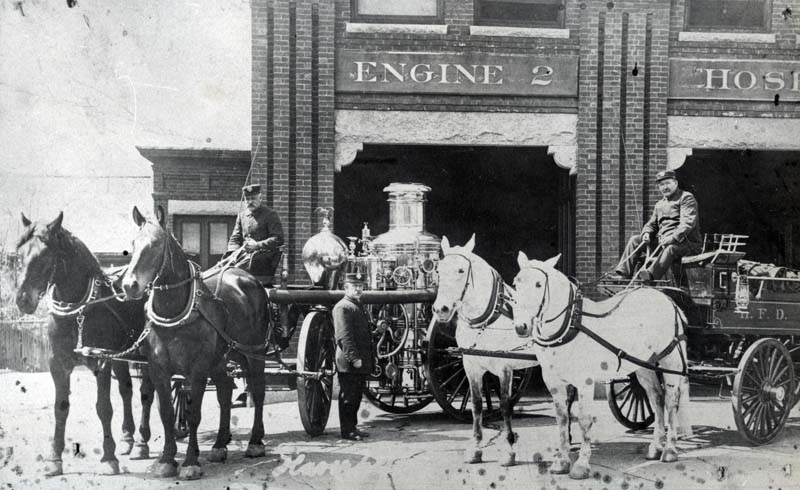
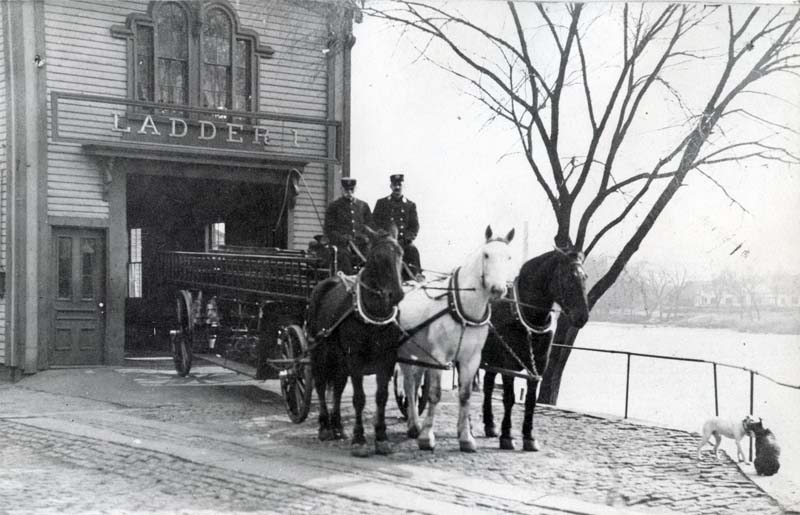
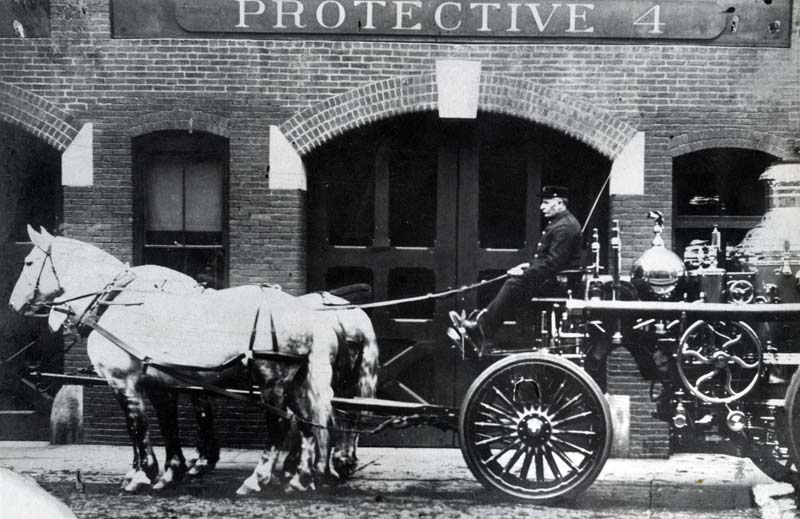
I don’t know when or where these photos were taken, but they make a nice collection of portraits — of firemen, horses, fire-fighting equipment, and even a couple of dogs.

.

(from the Jack and Marge Day collection)

.

(from the Jack and Marge Day collection)

.

(from the Jack and Marge Day collection)

.

(from the Jack and Marge Day collection)

.

(from the Jack and Marge Day collection)

.

(from the Jack and Marge Day collection)

.

(from the Jack and Marge Day collection)

.

(from the Jack and Marge Day collection)

.


The notation on the back of this portrait reads, “Engine No. 7, Syracuse Fire Department, in front of the engine house at E. Fayette St., June 6, 1909.” Andy Schaffer was the driver and the horses were (left to right) Walter, Ottowa, and Jimmy.

.

(from the Jack and Marge Day collection)

« Previous PageNext Page »