carriages / carriage types


This year marks the twenty-sixth carriage exhibition for the R.C.E.A. (Royal Andalusian Carriage Club). If you’ve been following this blog for a while, or flipping back through the posts in the “Spain” category, you’ll know that the twenty-fourth and twenty-fifth exhibitions never actually took place. They were, in fact, rained out.

Sadly, the forecast for this weekend is yet more rain. But, perhaps, if we all think sunny thoughts, the rain will hold off, and our CAA group can (finally!) see the exhibition, which promises to be spectacular.

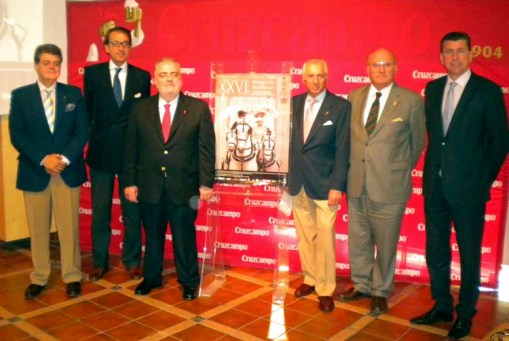
Early this afternoon, I attended a press conference about this weekend’s event.

.
.

I learned, among other things, that more than seventy turnouts have signed up to participate in this year’s event. These represent a variety of carriage types and driving styles. About half the turnouts will be using English harness, and about half will be in traditional Andalusian-style harness and livery.

.

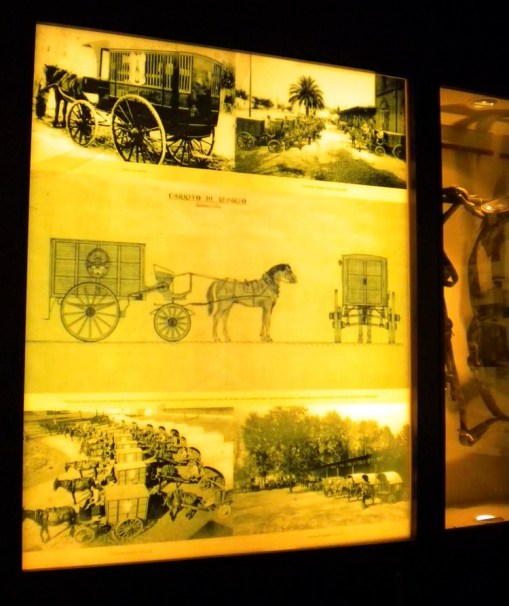
On a slightly related note, the press conference was held at the Foundation Cruzcampo building, which was originally a brewery and now houses offices, a conference room, and a small museum dedicated to the local beer. Among the pictorial displays in the museum area is this collage of several old horse-drawn beer-delivery vehicles:

.
Our “sister” organization, the Carriage Museum of America, is generally known as a (fantastic!) library & archives focusing on the history of horse-drawn transportation, carriage builders, and the like. But the CMA also has a collection of actual vehicles. The vehicles are in off-site storage, while the library and archives reside here in the CAA headquarters building.

Included in this year’s 40th Anniversary Carriage Auction, held by Martin Auctioneers in Lebanon, Penn., April 29-30, will be four vehicles that the CMA is deaccessioning from its Robert Fletcher collection. These four vehicles are a Brewster-made Skeleton Boot Victoria (c. 1890); a Brewster-made Bronson Wagon (1906); a Tandem Gig (c. 1895); and a Stanhope Gig (c. 1895).

The money raised from the sale of these four vehicles will go toward the conservation of a Chaise, built c. 1820.

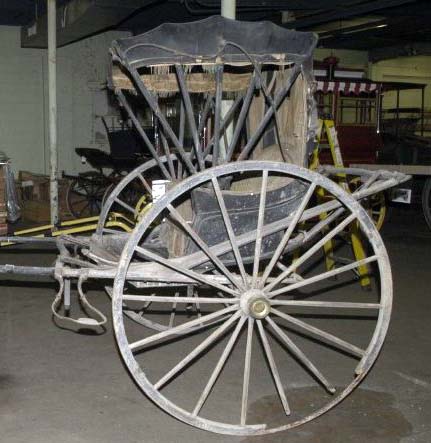
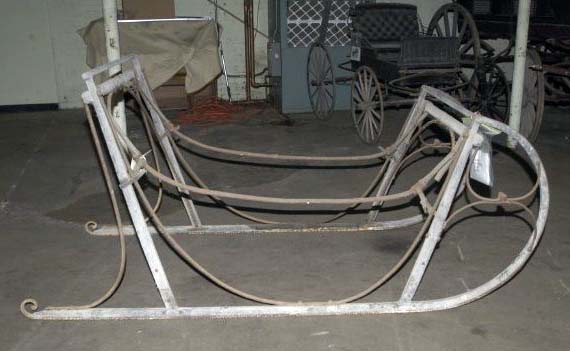
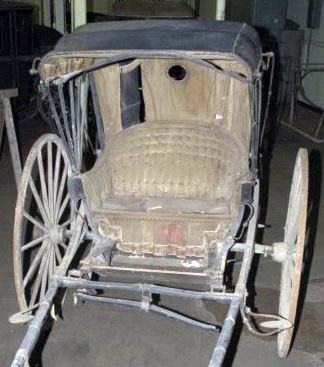
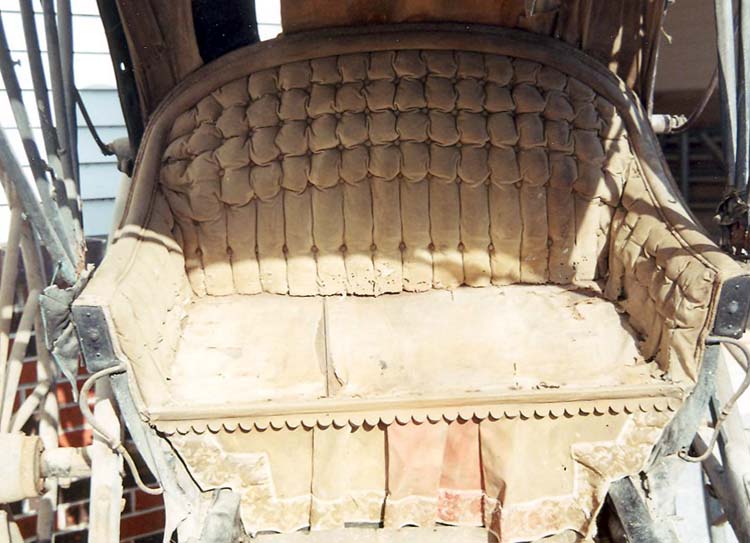
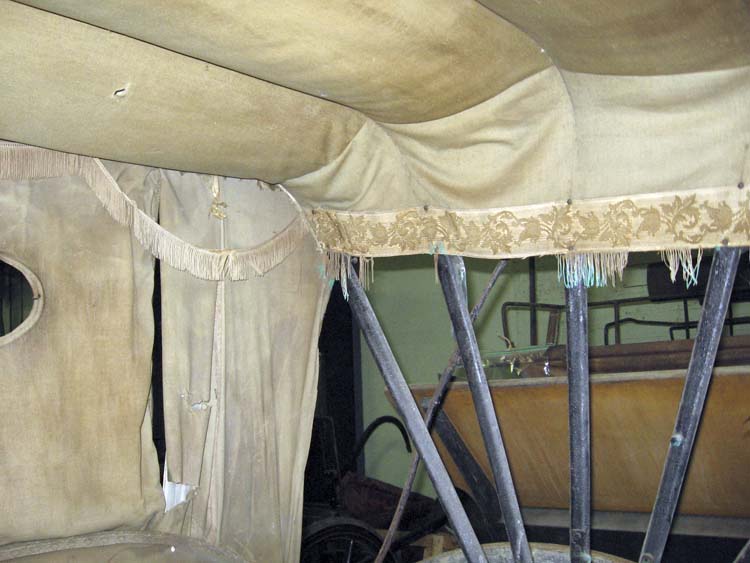
This vehicle — one of the rare gems in the CMA’s permanent collection — was the two-wheeled version of a Booby Hut Sleigh. The body could be detached and used with the specially made sleigh cradle. Both pieces are currently being assessed by conservator Brian Howard.

.

this Chaise was built c. 1820 and could be used as a wheeled vehicle ... (photo courtesy of the CMA)

.

… or, set on this cradle, as a sleigh (photo courtesy of the CMA)
.

... it's in the CMA's permanent collection (photo courtesy of the CMA)

.

... and it's currently being assessed for conservation (photo courtesy of the CMA)

.

... four vehicles will be sold at Martin's Auction (this month) to fund the vehicle-conservation effort (photo courtesy of the CMA)

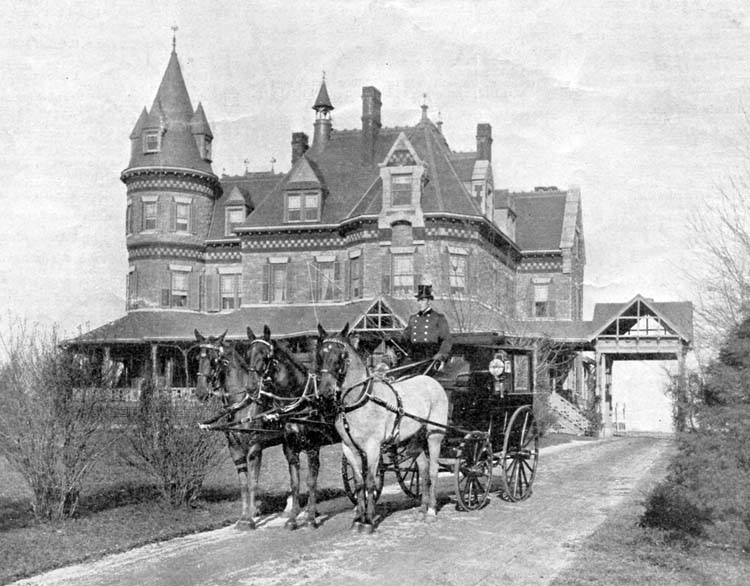
This image, of Mr. Edwin Gould’s Depot Omnibus (“in front of his suburban residence”), appeared on the cover of the December 25, 1897, issue of Rider and Driver. According to the information included with the photo, this sort of vehicle was “also suitable for holiday house parties and the theater, the coachman usually to be, properly, accompanied by a second man.”

.

As you may have guessed from a few recent blog posts, I’m perusing old issues of Rider & Driver again.

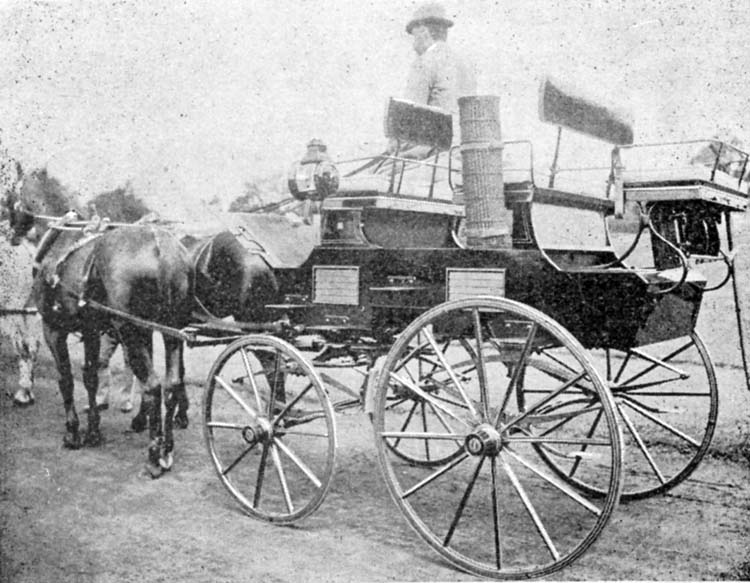
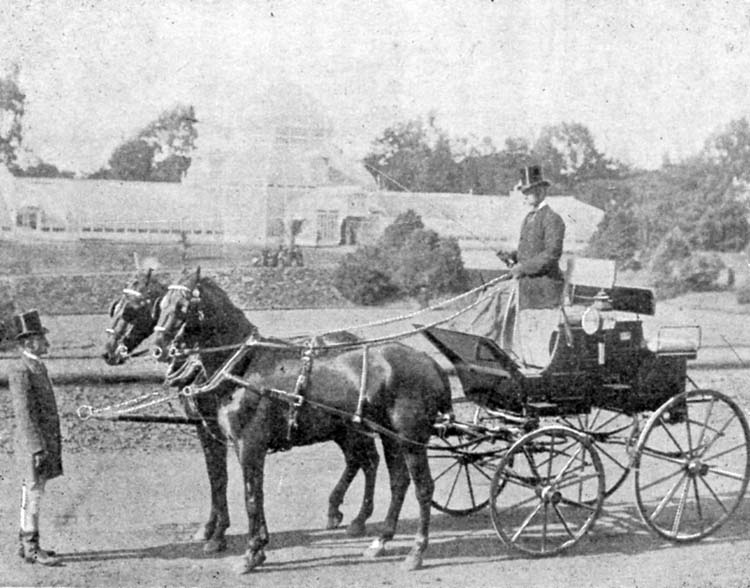
I found these two photos of “an ingenious California trap” in the December 26, 1896, issue:

.

Mr. M. Theodore Kearney's Combination Break, open

.

Mr. Kearney's Combination Break, closed

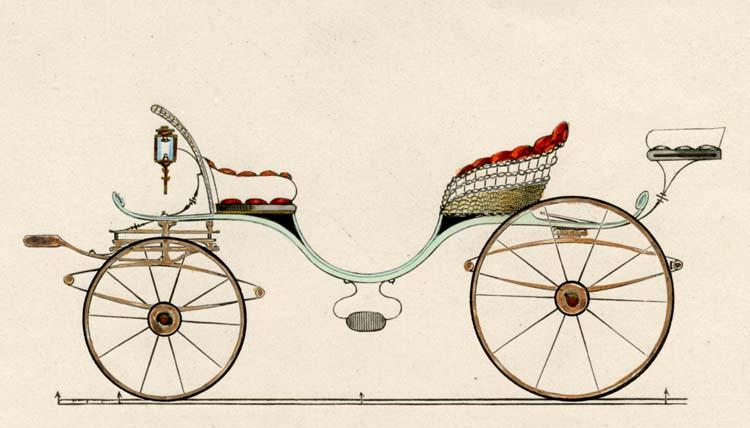
For today: a beautiful (undated) French drawing of a design for a Vis-a-Vis du Prince Imperial.

.

.

UPDATED to say that according to one of our CAA members in the Netherlands, this drawing is probably from about 1860 to 1865 (see Bart’s note in the comments).

« Previous PageNext Page »