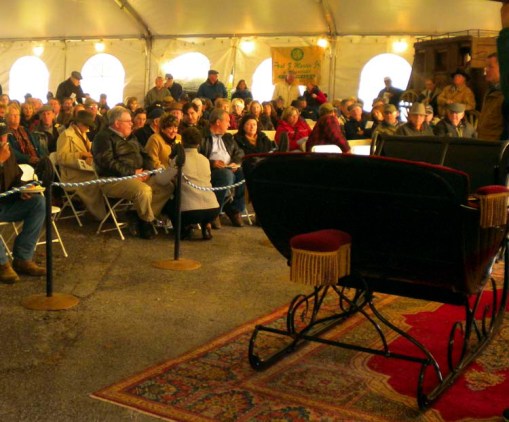
On Saturday, a carriage auction drew hundreds of visitors — carriage drivers, carriage collectors, and the merely curious — to the farm formerly owned by Elizabeth Lampton, just a couple of miles from the Kentucky Horse Park.
.

.
There were about sixty carriages in the sale and several hundred other items, ranging from harness, whips, and hats to prints and massive, carved wardrobes.
.
.
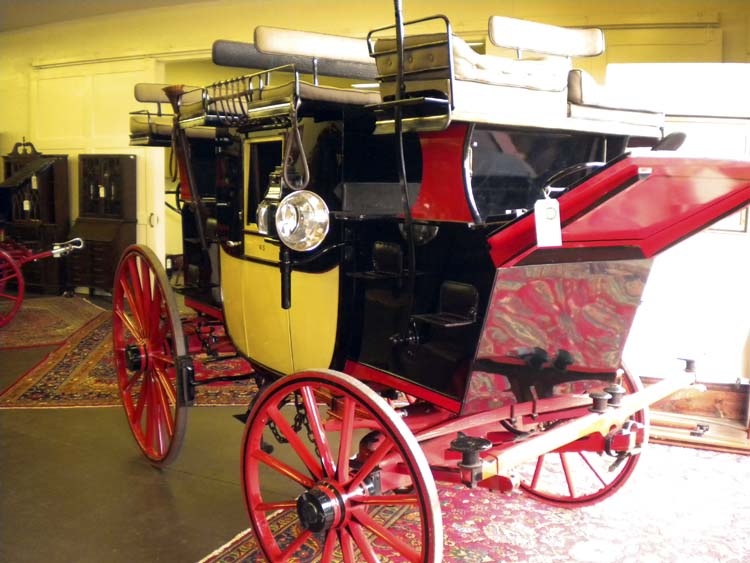
The item with the best known history — and the one that fetched the highest price — was this beautiful little coach:
.
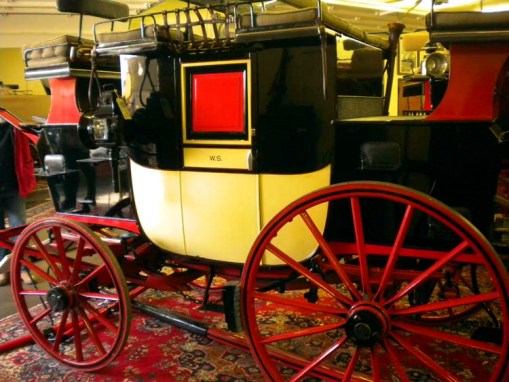
- the near side of the pony coach
.
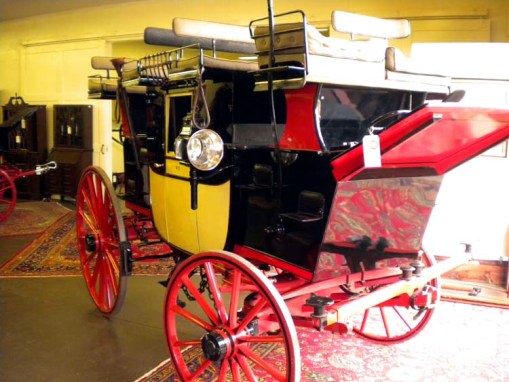
... and the off side
.
This coach was built in the style of a Park Drag, but sometime during its lifetime was converted to the brighter colors and the look of a Road Coach. It was built to be pulled by a team of Hackney ponies, so it’s three-quarters the size of regular coach.
It was custom-built in 1910 for America’s great coaching enthusiast of the day, Alfred Gwynne Vanderbilt, by Mills & Sons of London. The finished coach was shipped to New York aboard the British luxury ocean liner, the Lusitania. When the coach arrived in New York, the Brewster Co. unpacked it and hurried it off to Madison Square Garden, so that Mr. Vanderbilt could show it with his new team of Hackney ponies at the National Horse Show.
Sadly, A. G. Vanderbilt was later one of the Lusitania’s many passengers who died when the ship was torpedoed by a German submarine in May 1915. The story goes that he was last seen putting a life vest on a woman holding a baby.
.
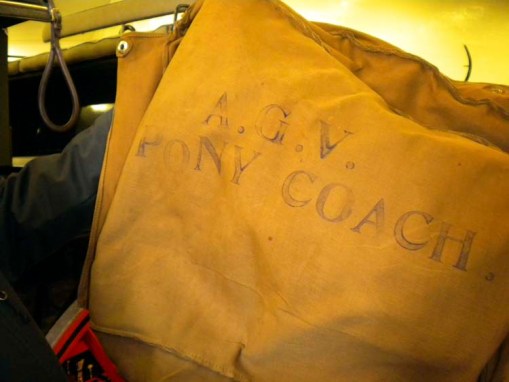
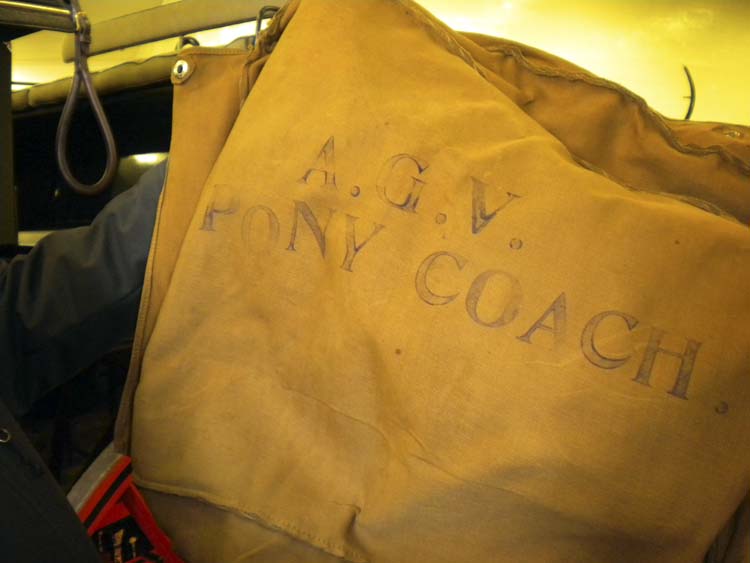
the coach's original seat covers, with Alfred G. Vanderbilt's initials
.
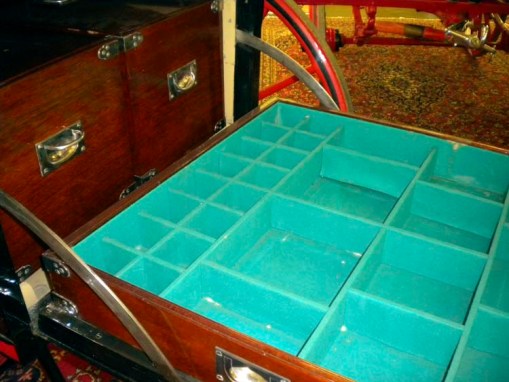
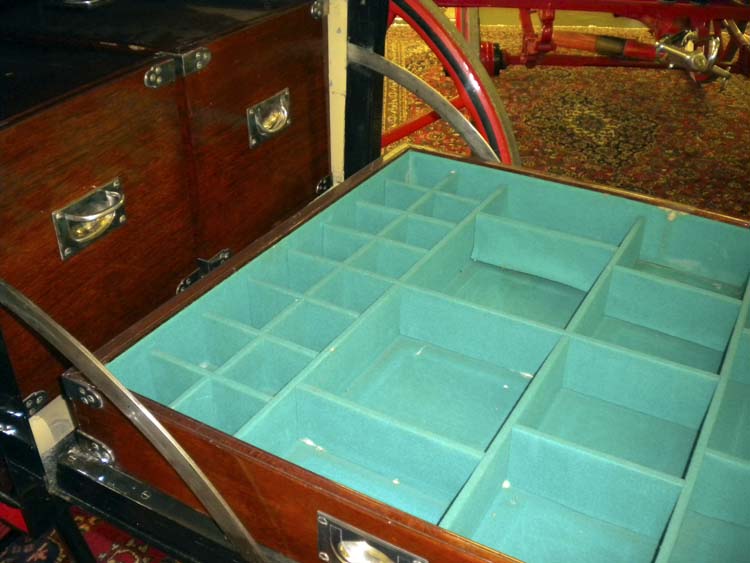
this tray and the two to the left sit in the coach's boot; this one would've held glassware, plates, etc. and the two to the left look like they would've held bottles ... A. G. Vanderbilt preferred "white" metal on his vehicles, instead of brass, so all the silver is sterling
.
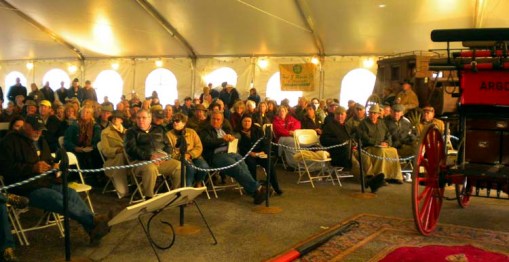
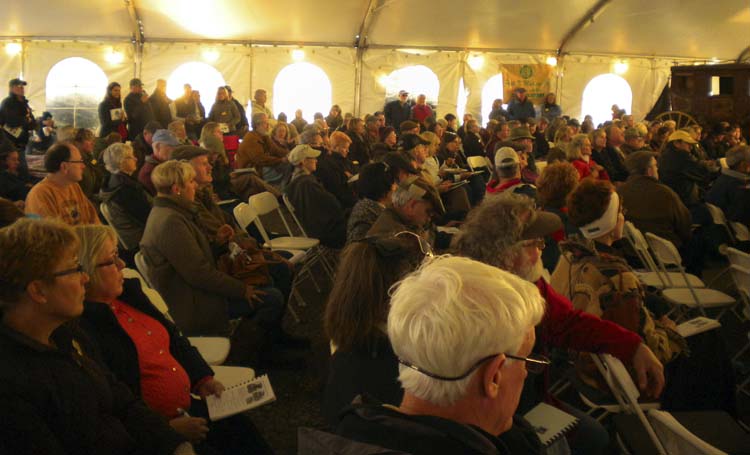
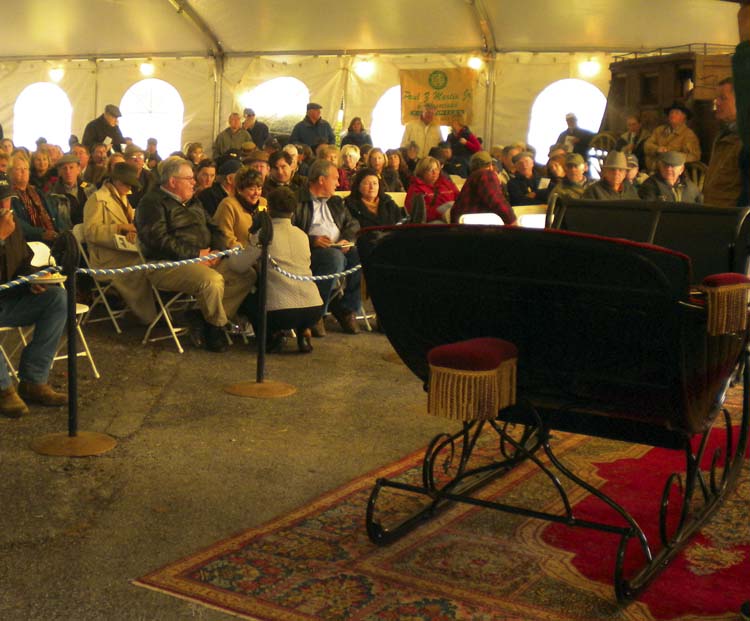
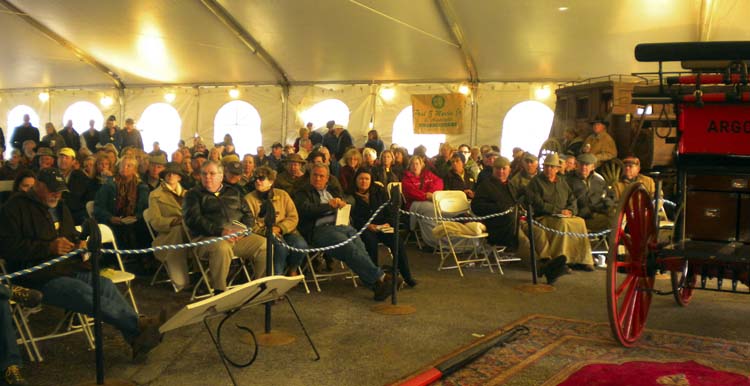
When it was time for this coach to be auctioned, the bidding was fierce, and everyone not bidding was listening and watching rather intently to see what would happen. In the end, it sold for $140,000.
.




 The Slower Road