carriages / carriage types


Shall we go shopping on this Saturday? Here’s the corner Market and 8th Streets in Philadelphia, in front of Gimbel Brothers’ department store, c. 1900. In addition to a lot of pedestrians, there are a number of commercial vehicles pictured on this busy street.

.

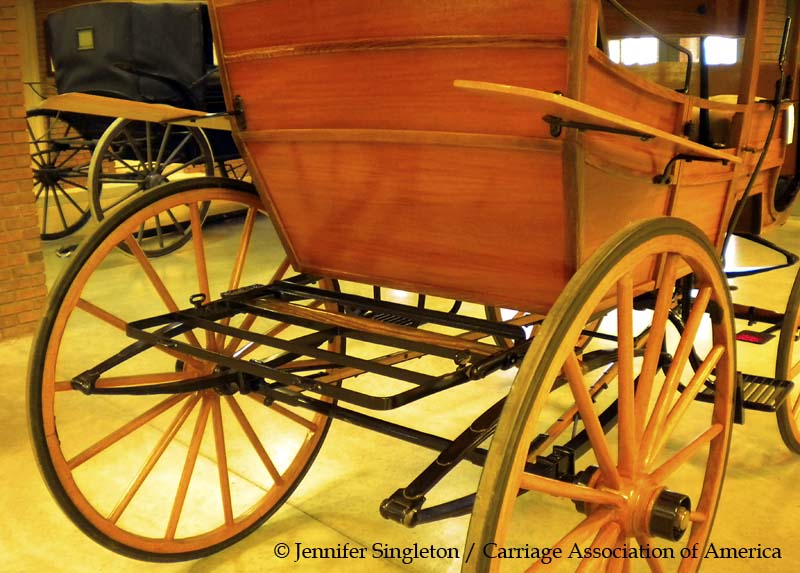
This beautiful natural-wood station wagon (Brewster #25724), which sold at the recent Martin’s Aucion, was completed in March 1907 and was owned by William Brewster.

.

.

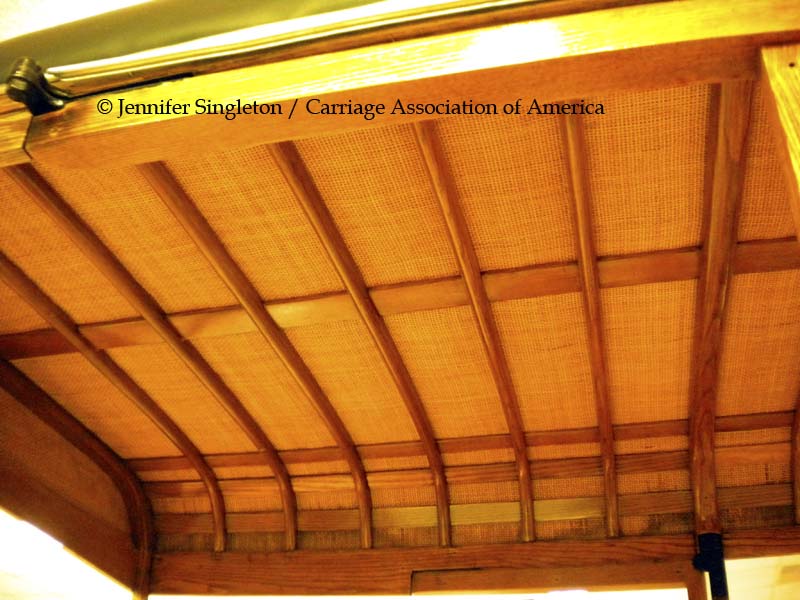
the lovely underside (interior) of the station wagon’s roof

.

horse-drawn station wagons (unlike our cars of the same name) were usually used to transport guests from train stations to hotels, etc. … here, the luggage rack

.

.

For some reason, the Brewster records refer to this vehicle as a station wagon “prairie schooner.” The size, shape, and probable use of this Brewster vehicle bear no real resemblance to actual prairie schooners, of course. So I’m guessing the reference may have had something to do with the style and look of the sides of the vehicle’s body.

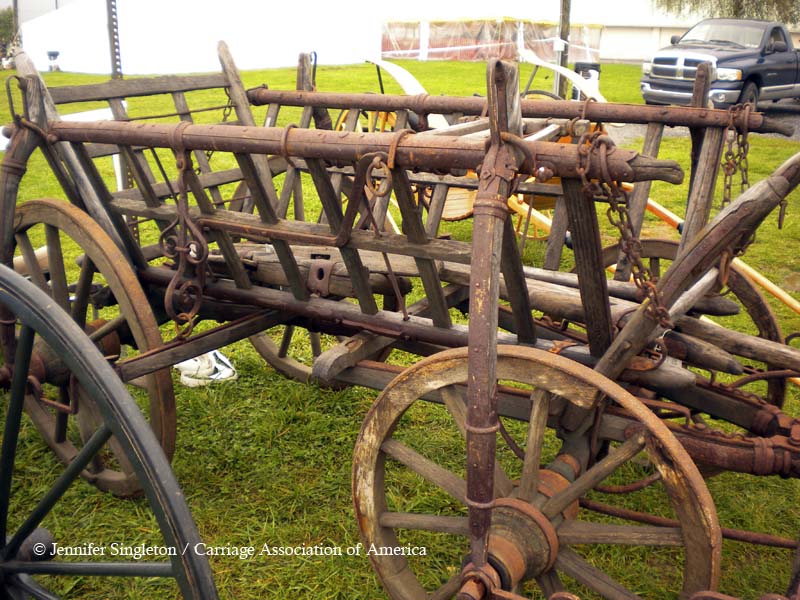
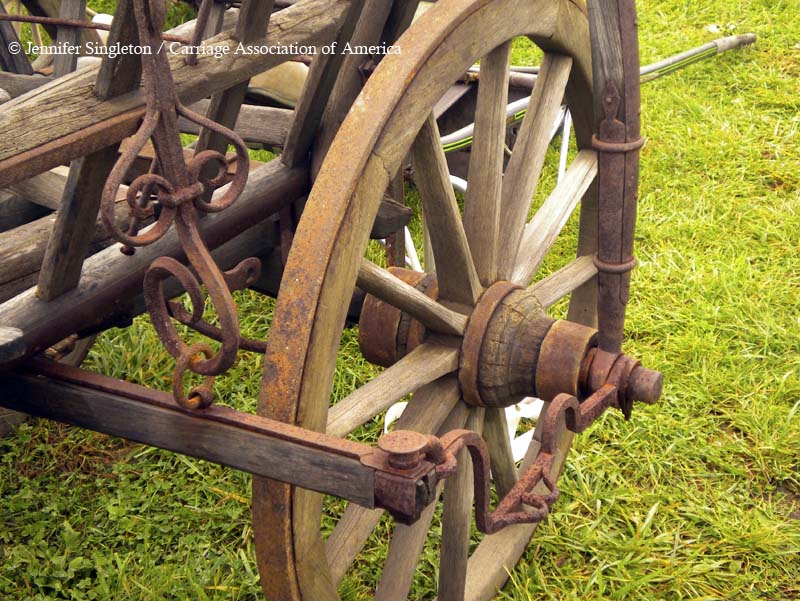
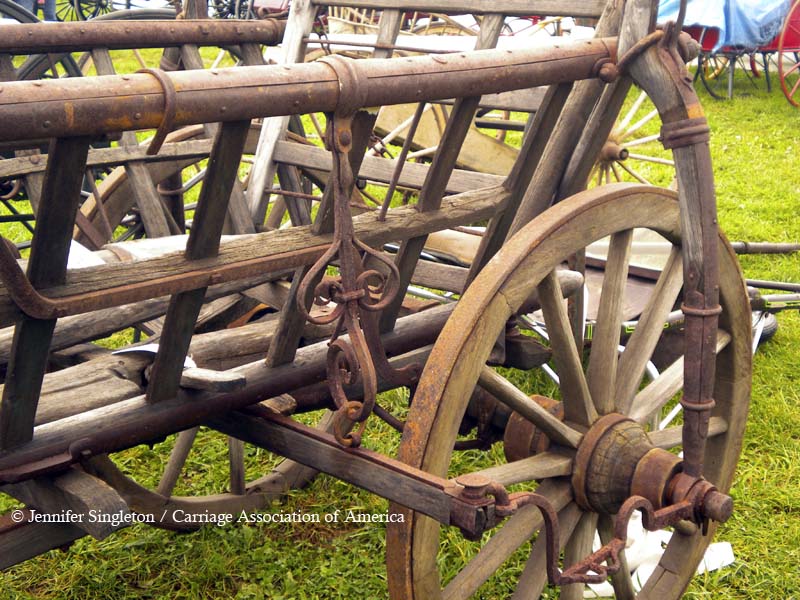
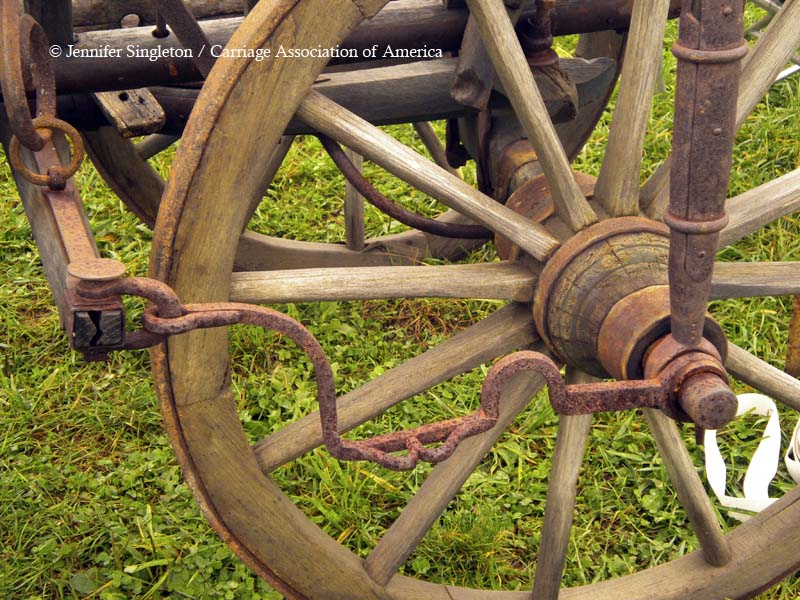
I ventured out into “the field” at Martin’s Auction only once over the course of the weekend. And I found this mysterious vehicle. It reminds me of a farm wagon, but it seems much too small.

And what on earth are all those curlicue metal connectors, and the bars (braces?) that run under the body, and the, um, braces (?) that run from the axles, outside the wheels, to the top rail and then extend beyond it??

Any ideas?

Anyone?

.

.

.

.

.

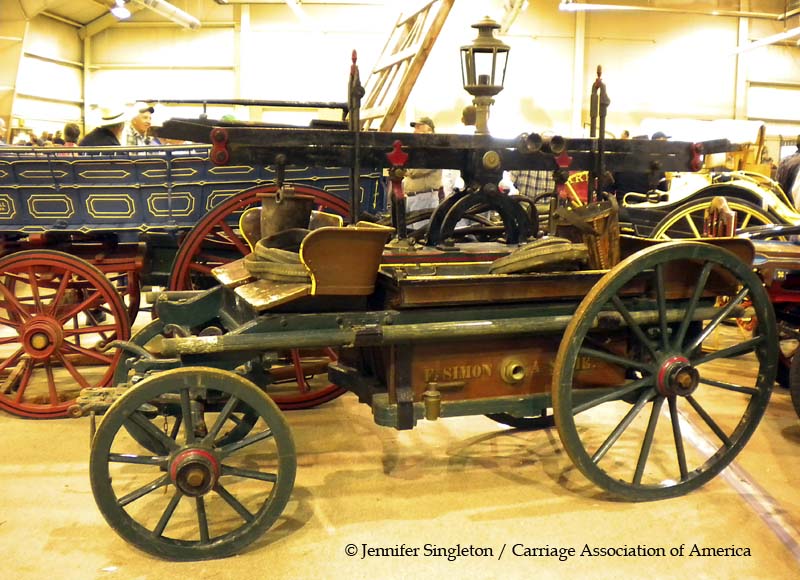
For today’s stop on our tour of a few of the vehicles that went through Martin’s Auction last weekend, we have a hand-pump fire engine.

.
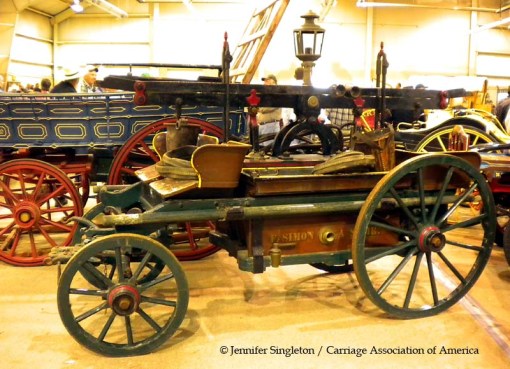
that streetlight just looks like it’s part of the fire pumper … it’s really not

.

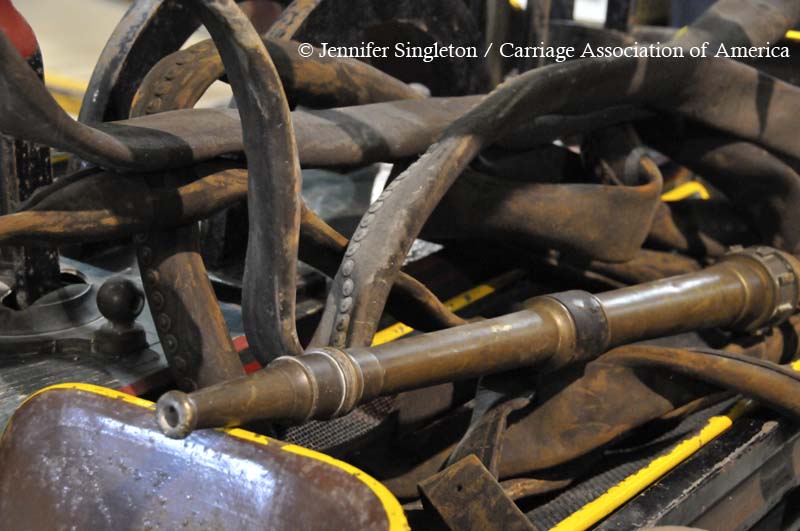
these old leather-looking hoses appear a bit stiff and unwieldy now

.
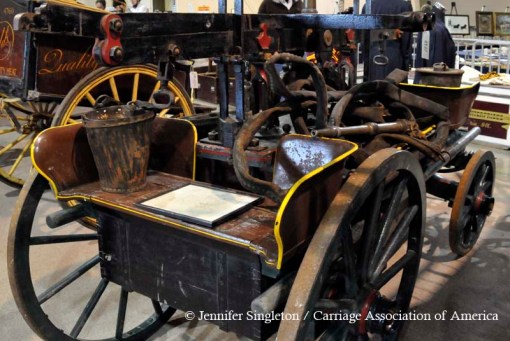
two (three?) fire fighters would’ve sat here, and two in the front, on the way to the fire

.

The metal arms on the top of the pumper unfold, one to the front and one toward the back. When they’re both unfolded and locked into place, they form the arms of the pump mechanism, which could be operated by four people.

In the first photo, do you see the trough under the mechanism, behind the seat? There’s one of these on each side, with a heavy wire-mesh screen on top to act as a filter. Bucket brigades would’ve kept a supply of water pouring into the troughs, which was then pumped out through the fire hose.

How do I know this, you ask?

Bonus material alert!

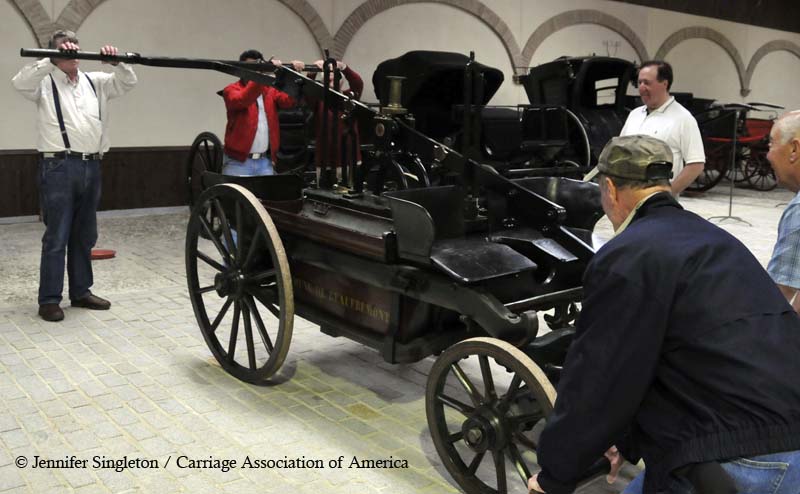
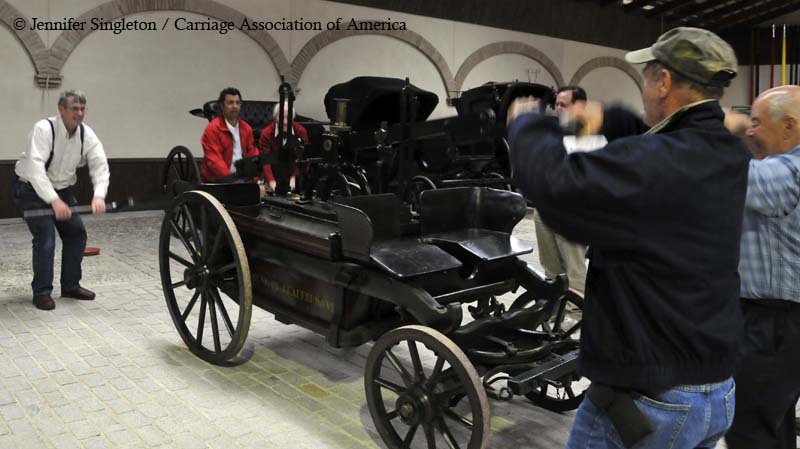
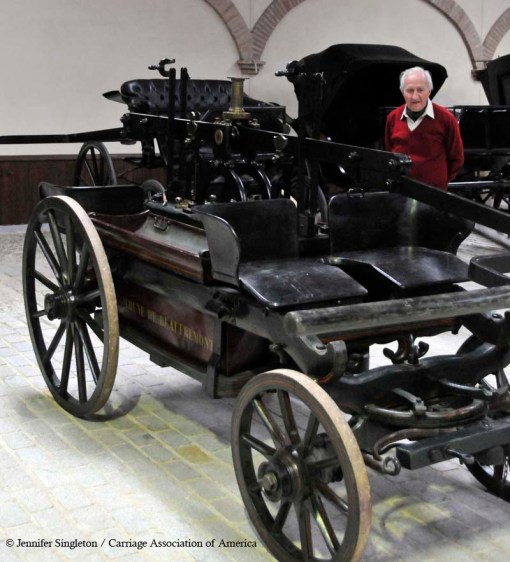
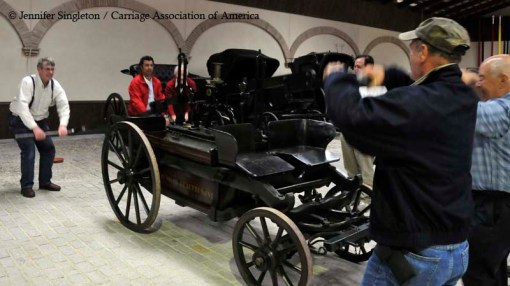
Here are a few photos of a similar hand-pump fire engine, first “at rest” (but with the pumping arms already folded out) and then “in operation” with CAA members manning the pumping stations.

This fire pumper is owned by CAA member Miguel Angel Gutierrez Camarillo, whose collection our CAA group visited during our 2011 trip to southern Spain:

.
.

.
.

Over the next couple of days, I’ll continue to feature a few (a VERY few, mind you, there were hundreds) of the vehicles that went through last week’s auction.

Here’s a beautiful, if a bit down at the heels, butcher’s cart:

.

.

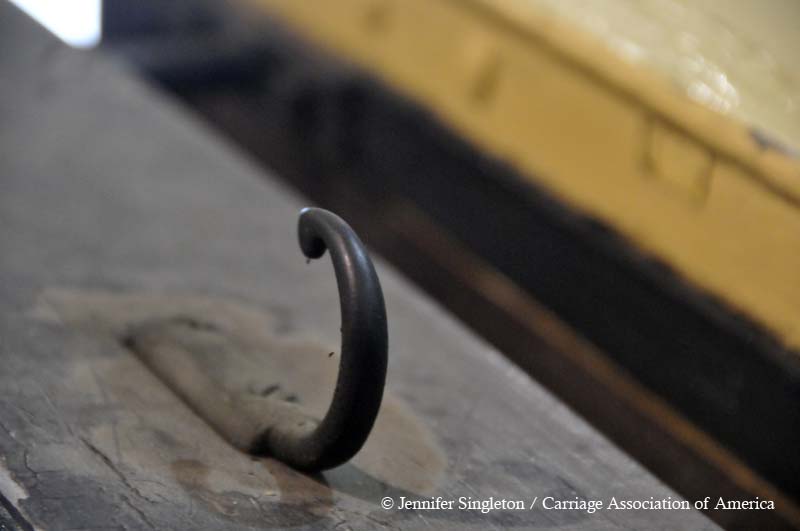
And here’s another view. See the hooks on the fender (and the close-up in the second photo)? Anyone know what these were for? There’s one on each fender, and they do appear to be original. Someone I talked with was wondering whether they might’ve been for hooking the reins out of the way while the butcher was helping his clients.

.

.

.

« Previous PageNext Page »