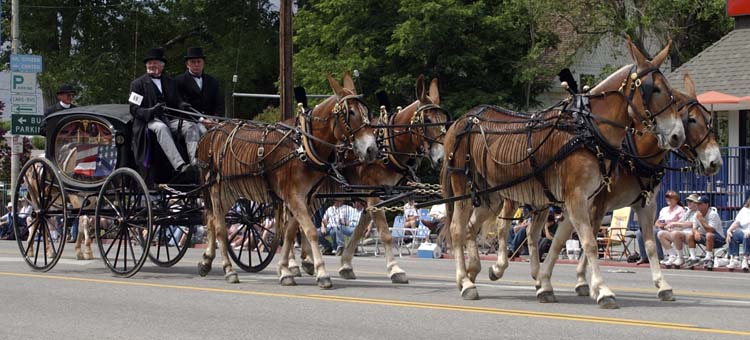
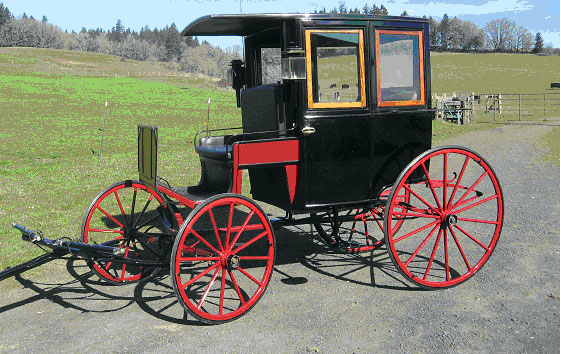
people


Today, a couple of children and a very wooly goat, in front of what appears to be a bungalow in Florida or California, judging by the palm fronds in the photo. I wonder if this goat and his wagon were traveling photo props, like all those ponies and cowboy hats in the 1950s?

.

(from the CMA Archives)

All this week: some lovely old portraits of ordinary people, with their horses, mules, dogs, bicycles, even a goat.

Here we have a pair of big mules and a little girl, posing for their photo in front of what appears to be a new barn. The photo isn’t dated, but judging by the girl’s outfit, I’m going to guess this was taken in the very early 1900s.

.

(from the Jack and Marge Day collection)

… and Canadian cowboys in “Olde England.”

Earlier this year, the Bowman family (father and sons, FEI competitors for England and coachmen) agreed to do a bit of a life swap with the Sutherland family, who race chuckwagons.

First, the Bowmans traveled to western Canada to participate in a rather wild-looking demonstration at the Calgary Stampede, and then in September the Sutherlands participated in a proper English coaching run, from Newcastle to Carlisle.

Here’s a short recap of everyone’s journey:

.

.

If the embedded video won’t play on your computer, click here to go directly to YouTube.

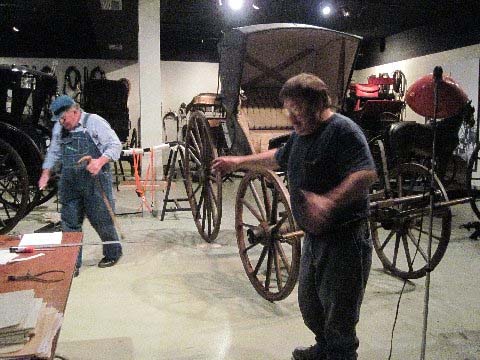
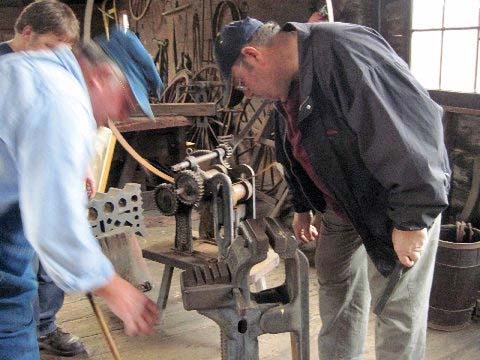
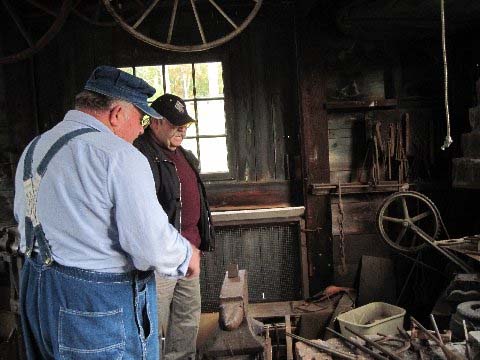
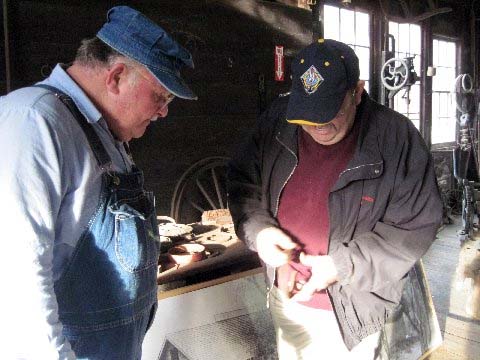
Jerry Trapani sent these photos, which show him (in the red shirt), fellow CAA member Harley Chandler (in the overalls and cap), and Harley’s brother, David (in the blue shirt).

Harley is a carriage builder and collector of antique carriage-making tools here in Kentucky, and he was recently commissioned to build a new carriage for Colonial Williamsburg. He and his brother did some research for the project at the Long Island Museum of American Art, History and Carriages in Stony Brook, where they also investigated some of the old tools in the museum’s blacksmith shop.

Thank you, Jerry and Rita Trapani, for these photos.

.

.

.

.

.

.

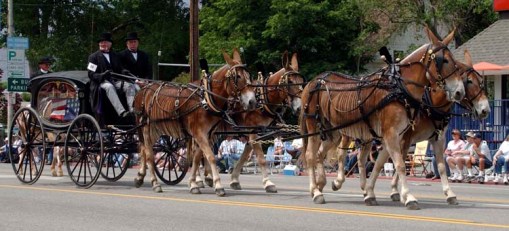
In February 2002, Bill Neel (a CAA member in Oregon) obtained a hearse built in 1854. It was made by Samuel Conners of Lowell, Massachusetts, and, much more recently, restored by Morgan Carriage Works in Ojai, California.

.
(photo courtesy of Bill Neel)

.

This vehicle is considered a “country” hearse; it is not cut under and has no elaborate urns or other decoration. It saw service during the Civil War, was sent to eastern Canada, and then returned to the U.S. in 1998. The Neels have taken the vehicle to shows (winning a number of awards with it), driven it in parades (as in the photo above), and used it for funerals.

Over the years, the Neels added a variety of ingredients to their basic lineup of hearse and four mules with funeral nets and black plumes. Eventually, their show “entry” included a preacher, a riderless horse, a bugler, and a “widow” and “mother,” all lead by a piper. Bill decided that, to complete the ensemble, he would need a family coach and a pallbearers’ coach. And so the search began.

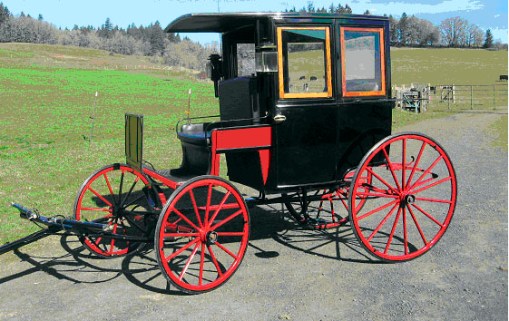
Bill first found this Studebaker Rockaway to serve as the “family coach.”

.
(photo courtesy of Bill Neel)

.

Then, just this year, Bill finally found a suitable “pallbearers’ coach” in New Jersey. He’s recently purchased the vehicle and had it shipped to Oregon, where it resides in the carriage house at his Copper Windmill Ranch.

.
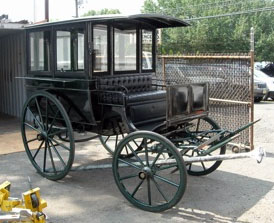
photo courtesy of Bill Neel

 .
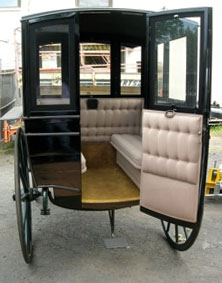
photo courtesy of Bill Neel

.

This particular vehicle was made by the Geneva Wagon Company in Geneva, New York. You can see a picture of it here, from the company’s 1906 catalog.

.
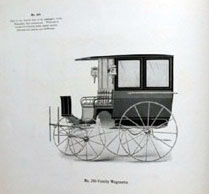
« Previous PageNext Page »