Those of you who (like me) love beautiful old cars just as much as beautiful old carriages will enjoy the story and photos sent by CAA member Randy Solle:
Last weekend, our Solid Axle Corvette Club (1953–1962 Corvettes) went up to Oxnard, California, which is about an hour up the coast from Los Angeles. There, one of our stops was the Mullin Automotive Museum, which contains mainly Art Deco era French automobiles.
.
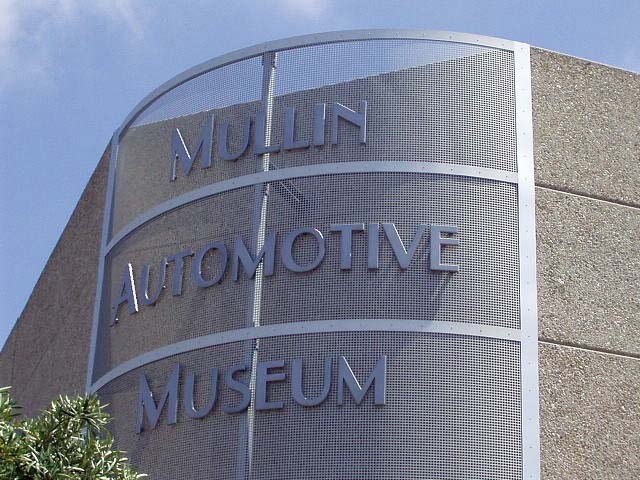
photo by Randy Solle
.
Among the beautiful collection of vehicles is this $40,000,000 (no, that’s not a misprint) Bugatti:
.
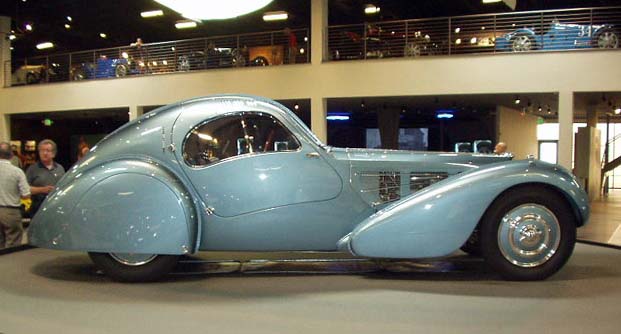
photo by Randy Solle
.
I was surprised to find that they still used the term Shooting Break for some of their vehicles:
.
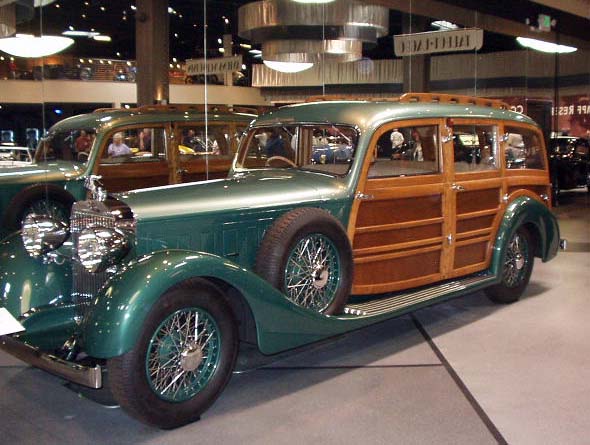
from the museum label for this 1937 Hispano Suiza K6 Shooting Break: the body type is called a "shooting break," a term used to describe a cross between a two-door sports coupe and an estate car; it was designed for the well-heeled to carry large amounts of cargo, such as dogs and hunting guns for grouse shooting; it is also described as a "woody" due to the wooden exterior paneling; the car also has natural buffalo upholstery and seagrass floor mats (photo by Randy Solle)
.
I did manage to find a horse-drawn vehicle in the collection. This is one of the three vehicles that were built for Ettore Bugatti by his family’s automobile company. I would guess that this was one of the vehicles that came from the Kluge Collection.
.
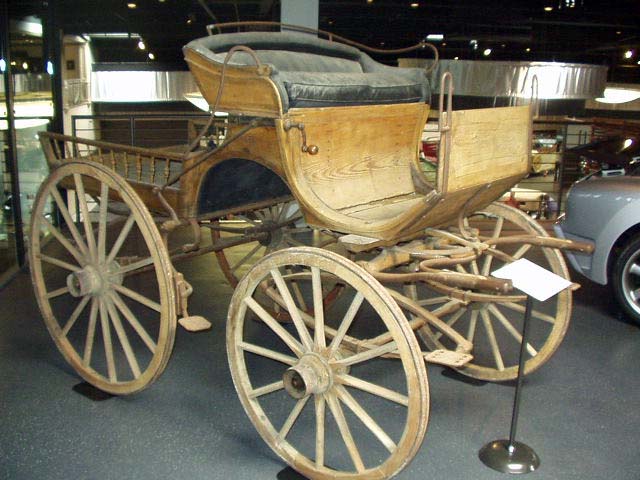
according to the museum label, this vehicle was built in the 1930s by the Bugatti company for Ettore Bugatti, who was an avid horseman; this and two others were intended to be used on the family estate and for short trips (photo by Randy Solle)
.
I thought that the rear spring angle was rather unusual on this vehicle. In the second (detail) picture of the springs, you can see a wedge that has been inserted under the spring – by the looks of it, some time ago.
.
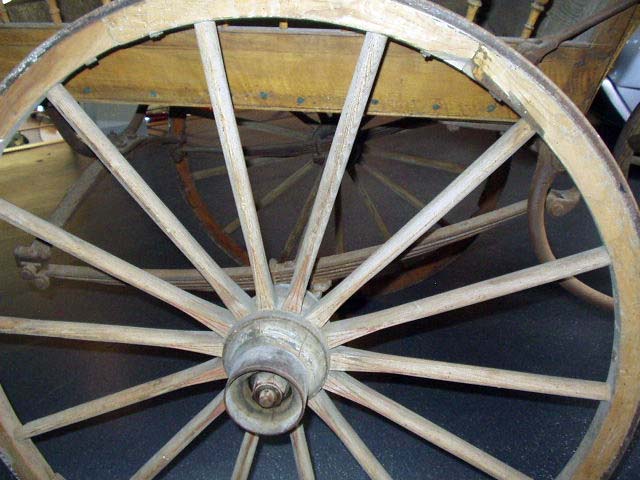
photo by Randy Solle
.
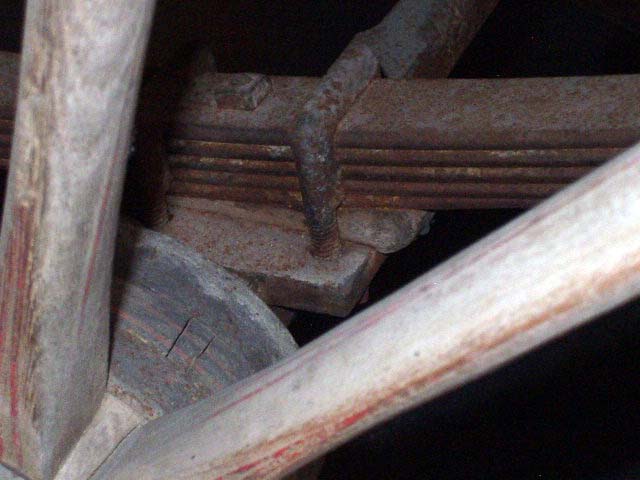
photo by Randy Solle
.
Carlo Bugatti was also very interested in building furniture, which seems to have something of an Asian influence:
.
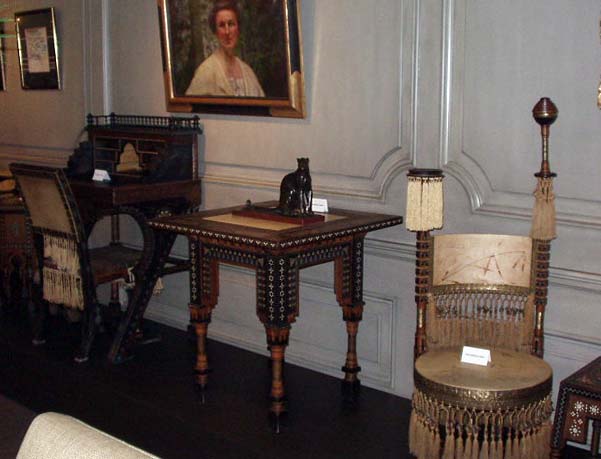
photo by Randy Solle
.
Finally, this was a barn find from northern California. It was in dire need of restoration then, but look at it now!
.
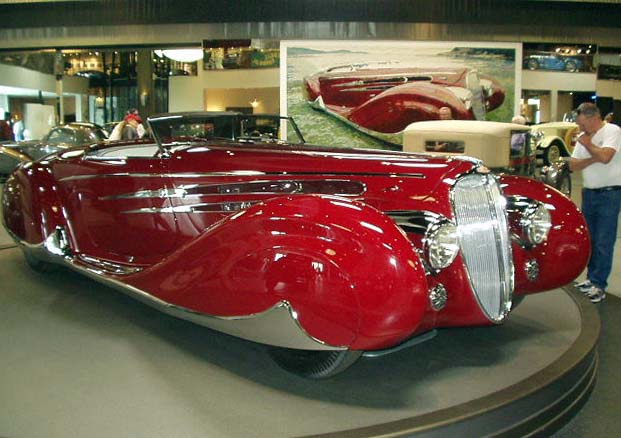
1930 Bugatti Type 46 Cabriolet (photo by Randy Solle)
 The Slower Road