horses & driving


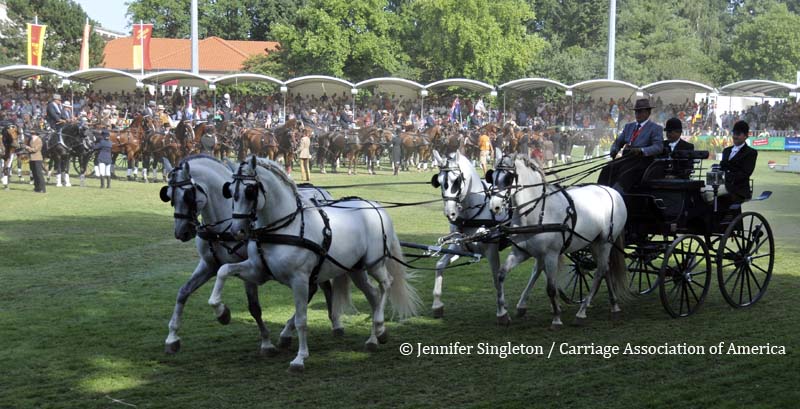
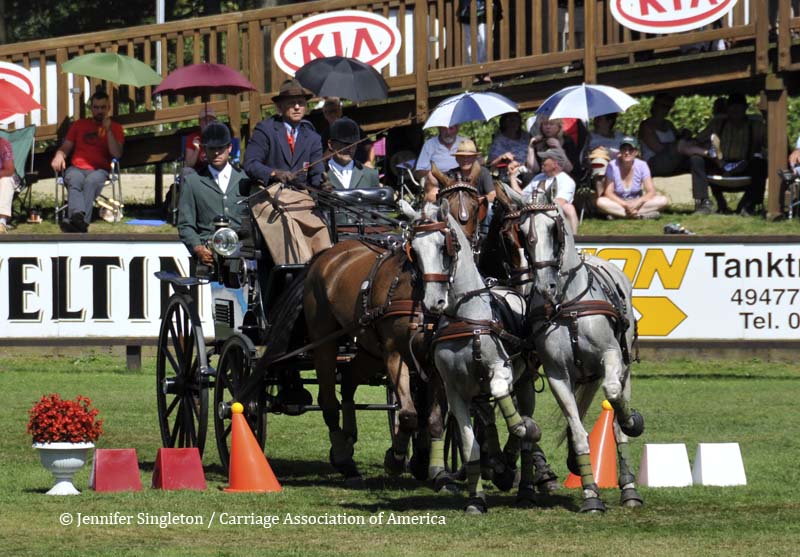
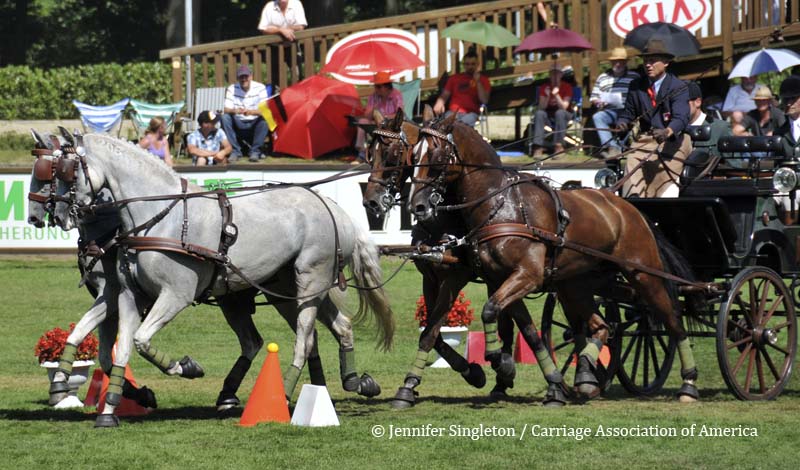
CIATs, which I mentioned in yesterday’s post, consist of three phases: standing presentation in front of three separate judges, a drive with several “tests” of the drivers’ skill, and a cones competition. This year’s Celle CIAT featured nearly forty competitors in several divisions: ponies, single horses, horse pairs, tandems, horse teams, and a lone five-in-hand of horses. Like the CAA’s own Sporting Day of Tradtional Driving, this type of event celebrates traditional driving and (mostly) antique vehicles.

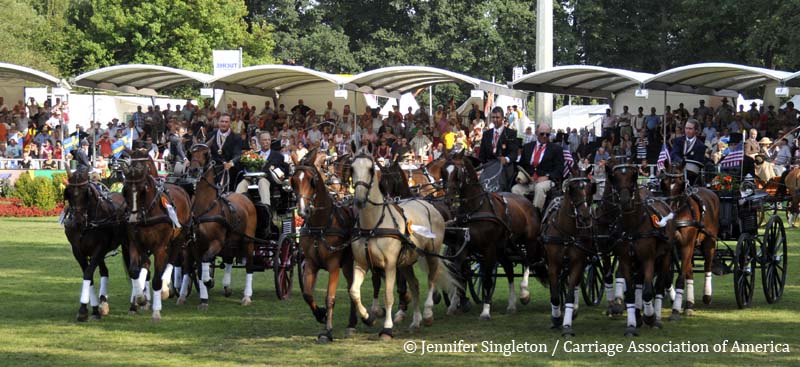
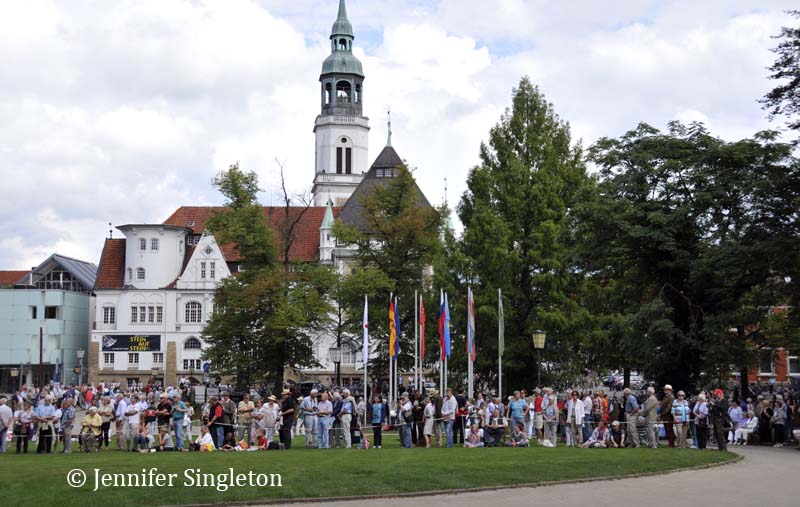
To my mind, one distinct advantage of this type of competition over CDEs is that there’s a wide variety of vehicle types, sizes, and styles on display … which makes the event both interesting and educational for spectators. And speaking of these, there were quite a lot of people on the grounds of Celle’s palace, watching Saturday’s presentation competition:

.
.

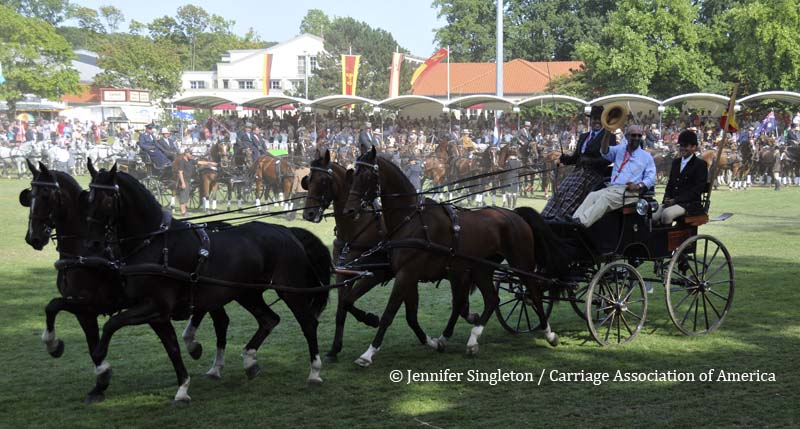
A.J. and I stationed ourselves in different spots, and we both had fun photographing the various turnouts as they stood in front of the palace to be reviewed by two judges: first by Christian de Langlade (France) and then by Raimundo Coral Rubiales (Spain). The third review, in front of judge Reiner Wannenwetsch (Germany), took place in the main arena at the Landgestüt Celle. Here are some of our favorite photos from among the pony and single-horse divisions.

.

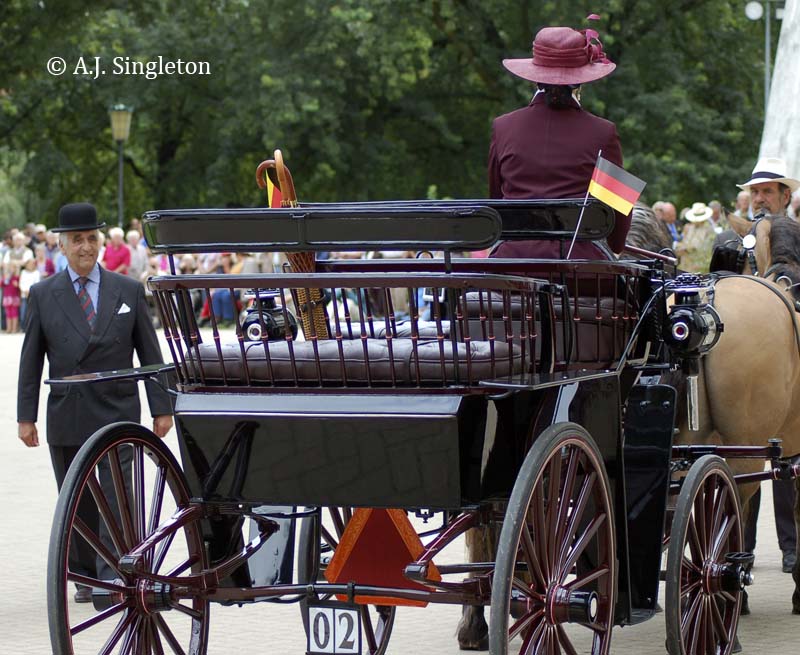
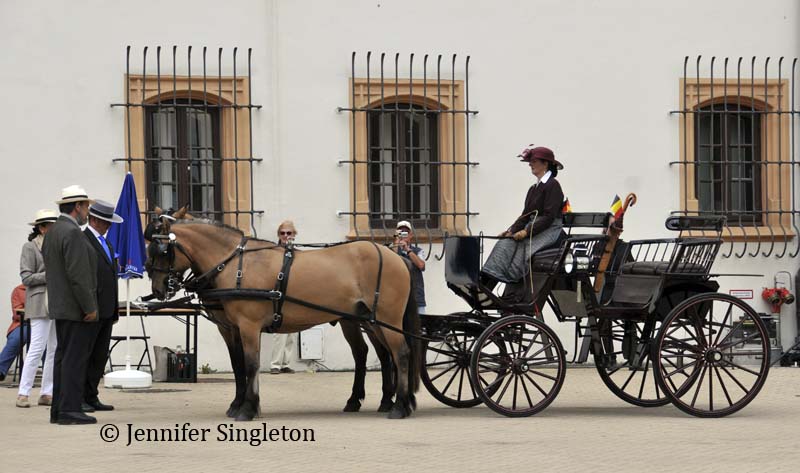
Consuelo de Grunne, representing Belgium, drove her pair of Highland Ponies to a Siamese Phaeton, c. 1890:

.
.

.
.

.

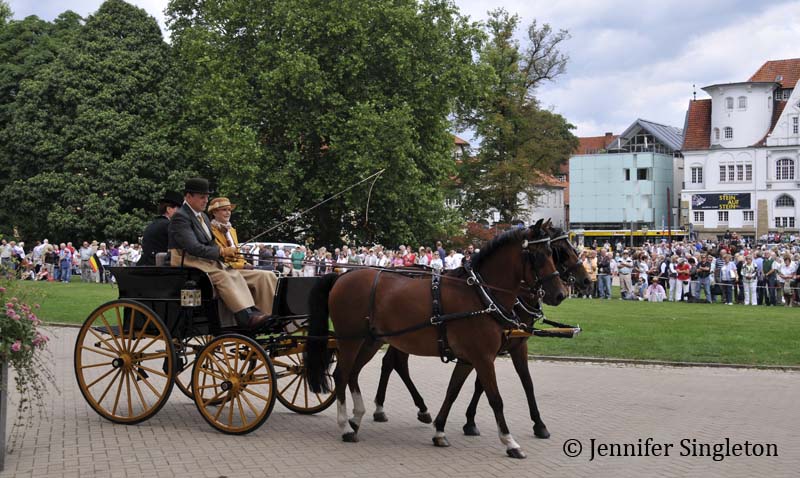
Hugo Livens, also representing Belgium, drove a Ralli Car built in 1890:

.
.

.

.

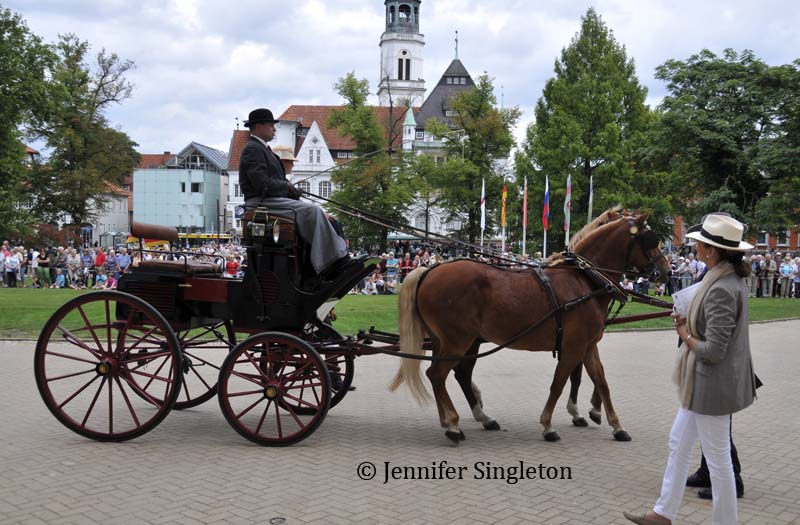
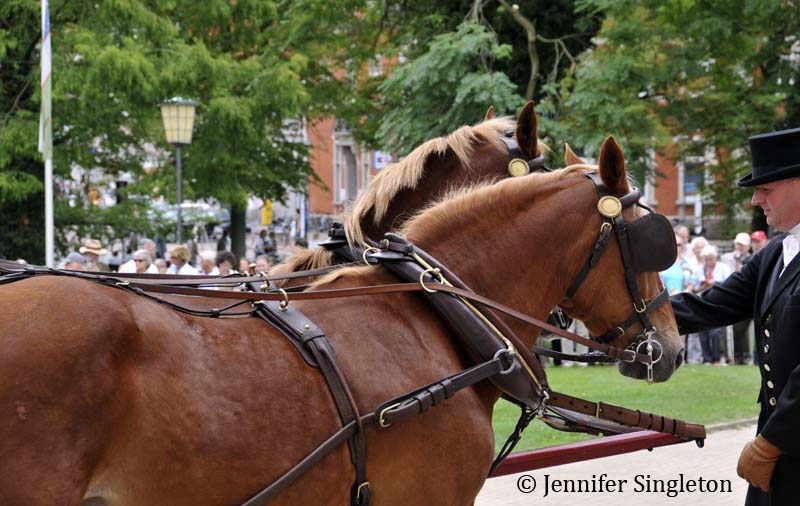
Representing Germany, Carsten Ringe drove a Shooting Break, c. 1880;

.
.
.

.

The first of the single-horse competitors, Rolf Bette, representing Germany, drove an American-made vehicle from 1900:

.

the man standing at the right is the event’s organizer, Count von der Schulenburg

.
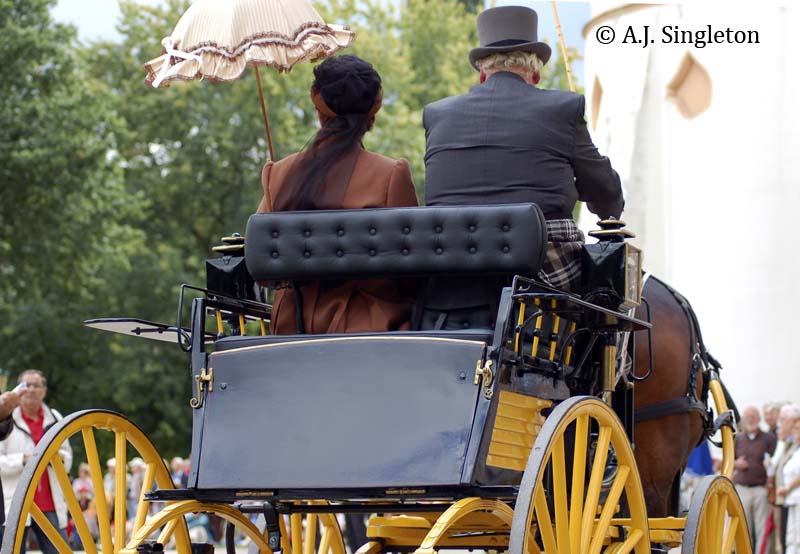
.

.

Cornillie Idès, representing Belgium, drove a Ralli Car built in 1924:

.

.

.

Dutch driver Ruud Korst drove his Friesian to a Spider Phaeton built in 1900:

.
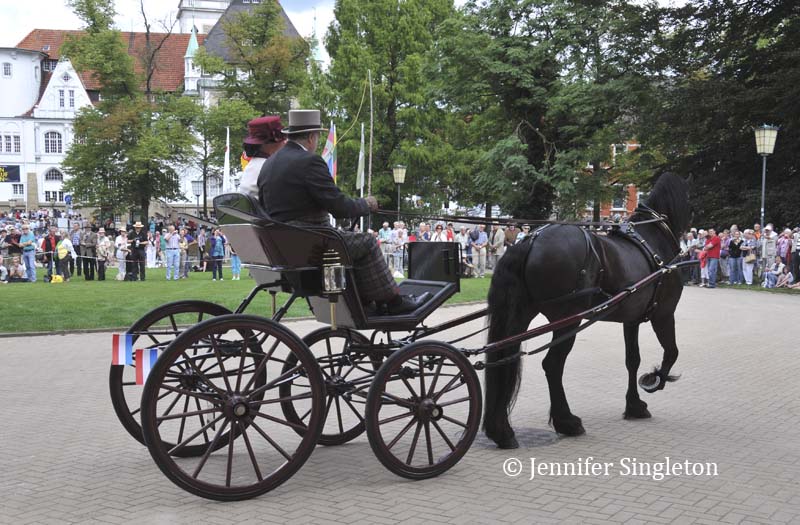
.
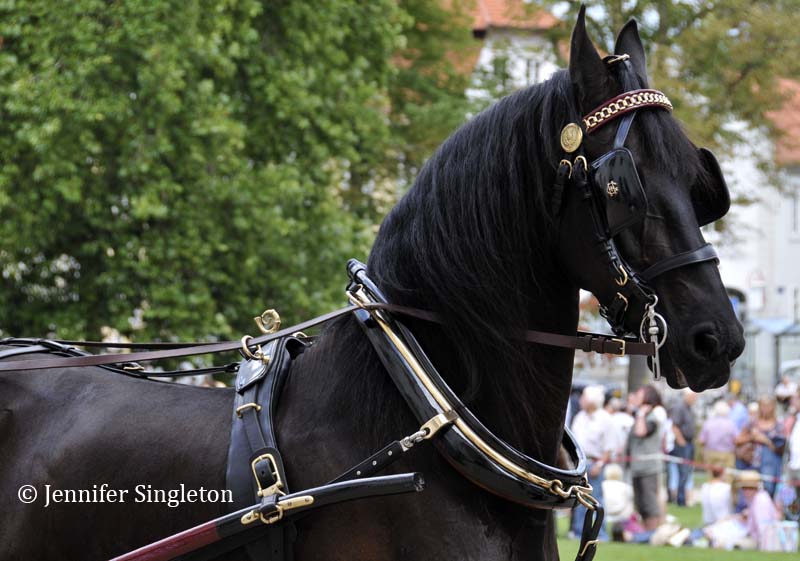
.

.

Barbara Löschenkohl, of Germany, drove her horse to a Dog Cart, c. 1900.

.
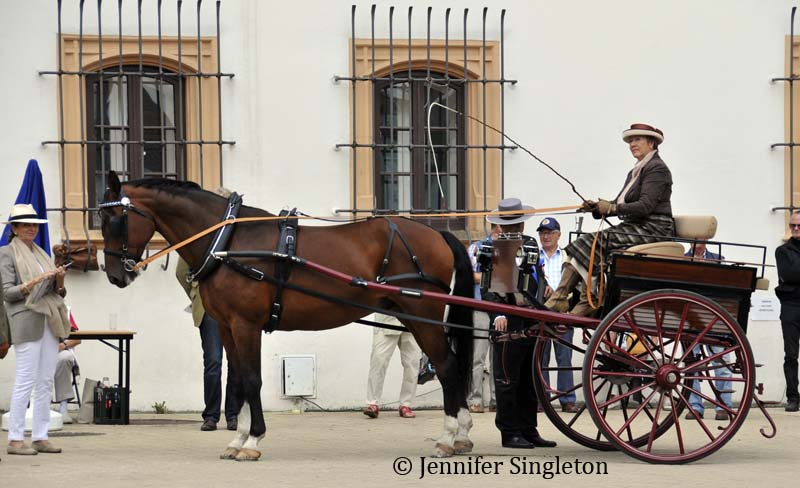
unfortunately, Barbara’s horse looks rather too tall for this carriage

.

.

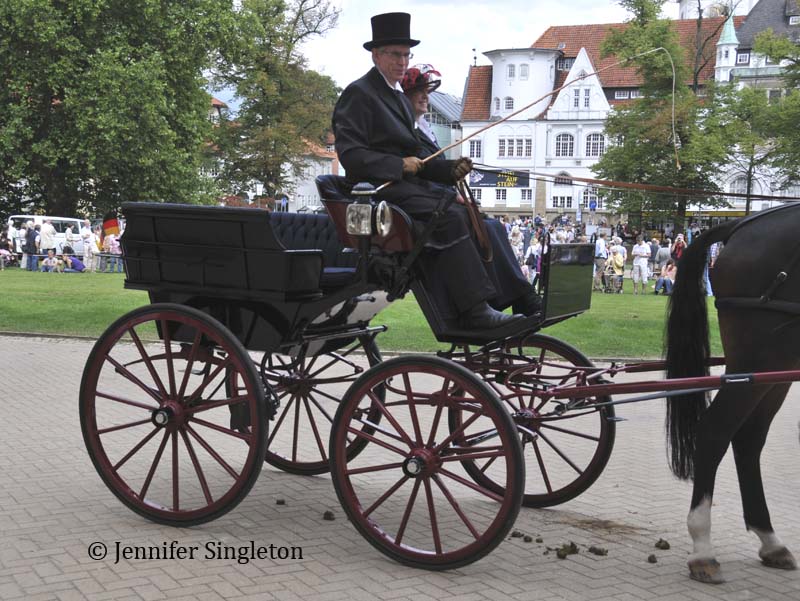
The final competitor in the single-horse division, Eberhardt Stripling (representing Germany), drove a Danish-built Wagonette, c. 1905:

.
.

I’m busily working on the October issue of the magazine, so I’m going to streeeetch our vacation photos out throught the rest of the week! Stay tuned for more presentation (pairs of horses tomorrow, then tandems, teams, and the five-in-hand on Thursday), to be followed by photos from the drive on Friday, the cones competition on Saturday, and the awards ceremony (in the pouring rain!) on Sunday.
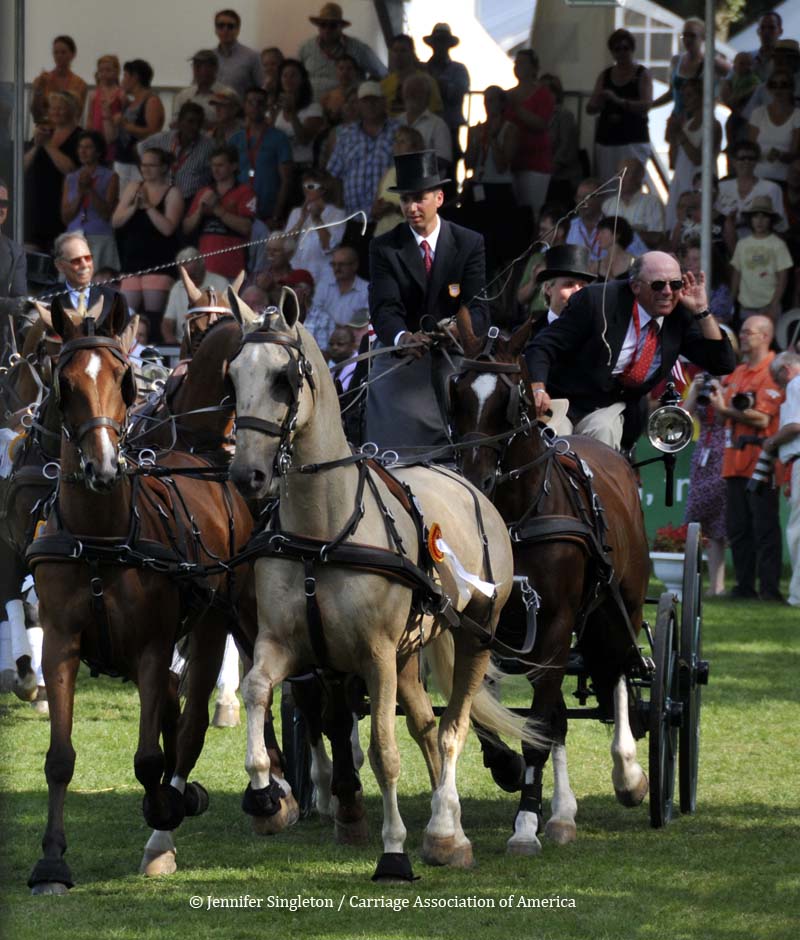
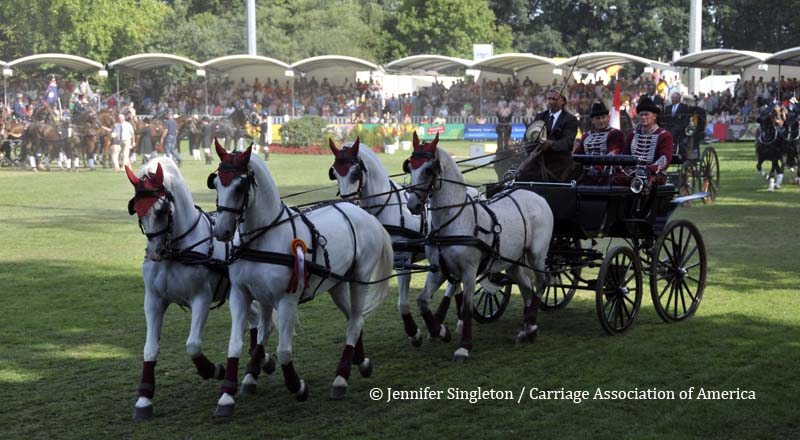
Friday night at the World Four-in-Hand Championship featured a three-hour spectacle in the arena, with vaulters, trick riders, Spanish horses being ridden, Friesians being driven, the World Championship dressage awards ceremony, foxhounds from a local hunt, Pony Club riders, birds of prey, and more, including a huge display of local heavy-horse breeds. Some of these wonderful draft horses were hitched to carriages and wagons; some demonstrated old and newer horse-drawn farming equipment; and some of the various breed champions — stallions, broodmares, and foals — were shown in hand. 

Here are a few video clips I shot, featuring the heavy horses:

.

.

.

.

.

If the embedded videos won’t work on your computer, you can see them on the CAA’s YouTube channel.

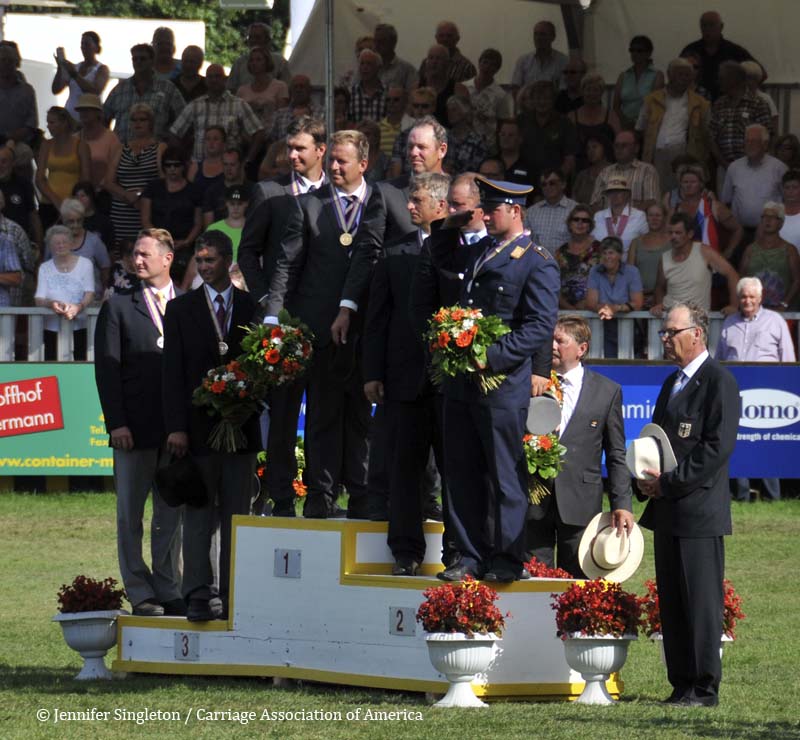
Even though we’re now practically two weeks after the fact, I wanted to wrap up the blog coverage of the recent World Four-in-Hand Championship with the awards ceremony. It was quite a spectacle.

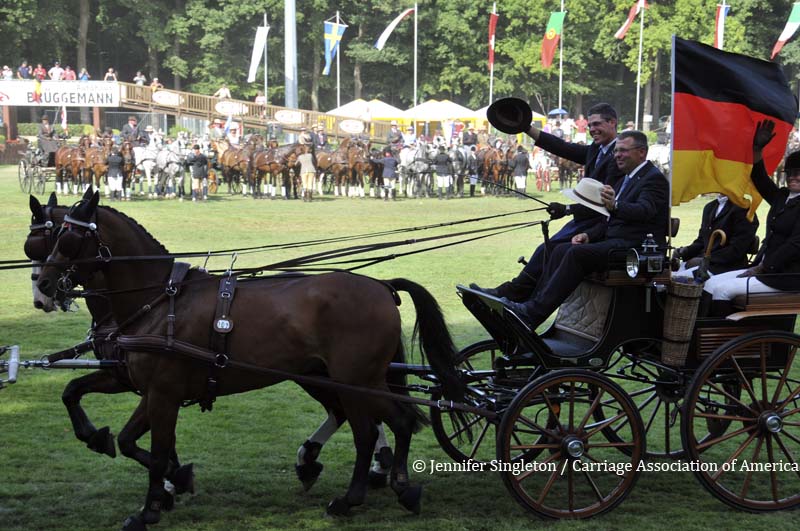
First, all the competitors paraded into the arena and lined up in two long rows (medal winners in the front, and everyone else behind them). Then there were two medal ceremonies: one for the individual winners (gold: Boyd Exell, silver: Chester Weber, and bronze: Ysbrand Chardon) and then a second for the medal-winning teams (gold: the Netherlands, silver: Germany, and bronze: the USA). Finally, there was a huge “carousel” of teams driving around the arena and out, followed by a couple of victory laps by the winners. Throughout the entire spectacle, the crowd applauded in unison, cheered, and waved flags.

.

.

.

.

.

.

.

.

.

.

.

.

.

.

.

.

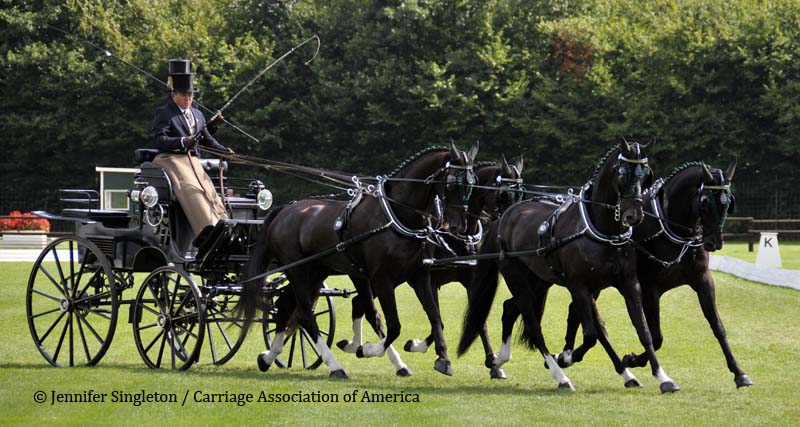
… where we have a bit of dressage to catch up on, from the World Four-in-Hand Championship about two weeks ago. As you may remember, I spent most of the two dressage days watching the warmup arena instead of the dressage tests themselves, and I was (and remain) fascinated by the loooong, telescoping whips that the drivers use as they warm up. 

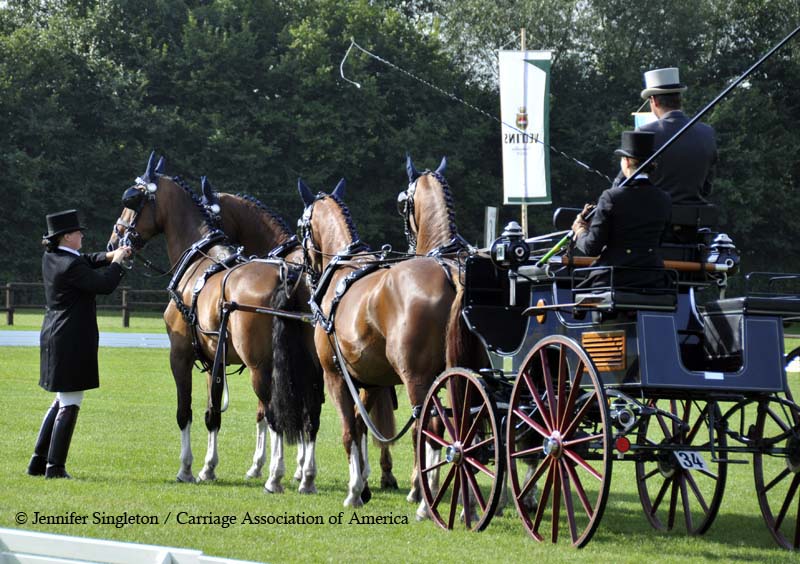
As you can see in these photos, the huge whips are usually carried by a groom and handed forward to the  driver as needed and then handed back. As they’re trotting smartly into the arena, the driver or groom either drops the whip or hands it off to a gate steward. It’s then folded back up and collected by a team member. Because so many of the modern whips used in dressage either are too short to reach the leaders or have the lash wrapped tightly around the shaft, I suppose this is a “new” way to be able to communicate (in the warmup arena, at least) with all four horses individually.

.

First, we have Boyd Exell (the individual gold medalist), who drove his dressage test on Thursday.

.

.

.

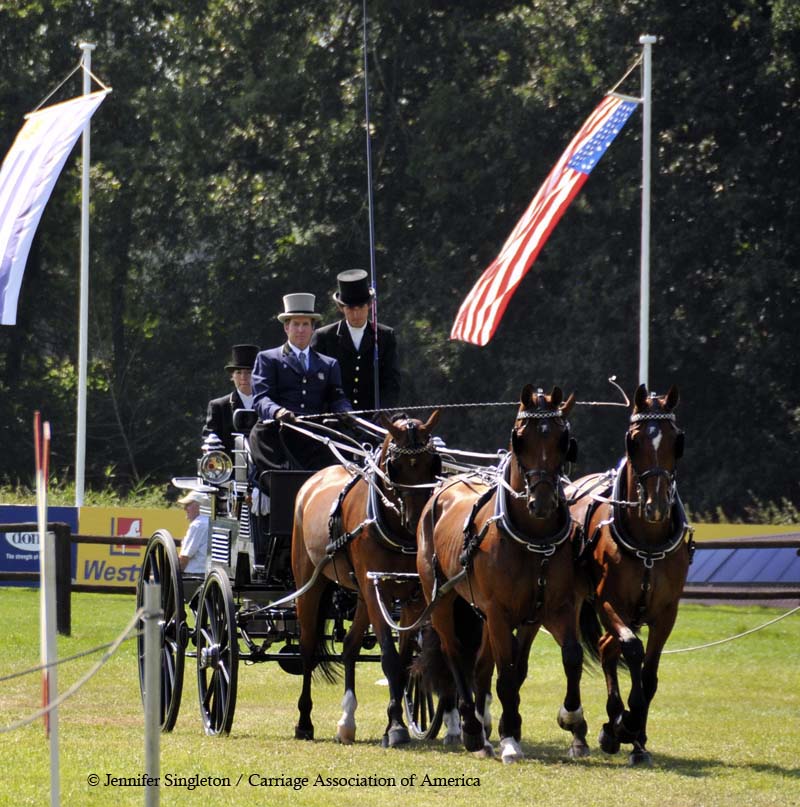
Next, from Friday: three photos of Koos de Ronde (a member of the Dutch gold-medal team) and then three photos of U.S. driver Jimmy Fairclough (a member of the bronze-medal team).

.

.

.

.

.

.

.

Before we get to the awards ceremony, let’s take a look at Werner Ulrich’s drive through the cones. The Swiss driver was the thirty-sixth of forty-nine competitors to tackle the cones course, and the first of only two drivers to manage a double-clear round (no balls down and no time penalties).

After the drive-off, he ended up the winner of the cones phase.

.

.

.

.

.

.

.

The only other double-clear round, by the way, was driven by Hungary’s Jozsef Dobrovitz.

« Previous PageNext Page »