This article appeared in the National Republic (“a monthly review of American history and public affairs”) in August 1927, eighty-five years ago this summer. It offers a fascinating look back at horse-drawn travel, plus a look back (for us) at common modes of travel in the 1920s.
.
From Oxcart to Aeroplane
Transformation In Methods of Travel by Congressmen to Capital Illustrates Transportation Progress of a Century
by Uthai Vincent Wilcox
At the opening session of the Congress ninety-eight years ago this December [so, Dec. 1829] it was stated in a most emphatic way that “traveling to Washington is the most laborious of Congressmen’s duties.”
Many illustrations of these difficulties are recorded in the debates and writings of that time. They were filled with incidents and vivid descriptions of the trips to the nation’s capital. The early sessions of Congress were enlivened with the stories. Representative Charles A. Wickliffe, of Bardstown, Kentucky, and nine other members of Congress who were with him traveling in the “Congressional East Stagecoach,” were upset on the way into the city. “We were like a load of live hogs in a country wagon, uttering a squealing sound as the stage rolled into the gully,” he told Congress.
Such experiences made entertaining contrasts with the luxurious, speedy transportation enjoyed by senators and representatives who are now in Congress [in 1927, that is], who might, if they told the truth, say that traveling to Washington was now their pleasantest duty. Before the nation could be crossed in ninety-four hours there was a century of horseback riding, covered wagons, roundabout ship routes, and slower locomotives.
It was the covered wagon days in 1846 when Iowa was admitted to the Union. These rolling ships of the plains were the only means of reaching Washington available to Iowa’s first senators — Augustus C. Dodge and George W. Jones.
C. C. Dowell, a present representative from Des Moines, Iowa, tells of the time when “past my mother’s early home, oxen drew those large canvas wagons. Senators plodded along beside their teams, whip in one hand, rifle in the other. Indians, bears, and snakes were near, and forts were far apart.” [He continues,] “Few were the ferries and fewer the bridges to help the national legislators over rivers. Sometimes streams were so swollen that a senator’s family could not cross safely in their wagon.”
The senator’s wife and children alighted and securely fastened their baggage to the wagon floor. The oxen would be unyoked and swam across the river. The senator having attached strong ropes to the wagon, towed with the ropes across the stream, and hitched to his team, the wagon was rolled into the river and the senator started the oxen, shouting at and cheering them. Thus the equipage was hauled through the current and up the opposite bank. The next thing was to get his family across. The senator took soundings until he found a strip where the water was not above his waist. Then he carried over those who could not swim.
Nightfall usually brought new dangers, even though the congressional family might be fortunate enough to reach some trading post hut. One fearful night was described by Jessie, daughter of Thomas H. Benton, Missouri’s pioneer senator: “I was awakened by a sound full of pain and grief and wild rage. It was a she-wolf looking for her cubs, which hunters had killed that day. A panic swept over me as I realized that Aunt Kitty was the only one in the room with me. Sight of the great fire that we had builded brought a new fear. The windows were near the ground and without shutters or curtains. What if the blaze should serve to guide the wolf? We hair-pinned shawls over the windows, but by that time men’s voices and sounds of the dogs gave us a sense of being protected.”
The delegate from the state of Washington, Major General Isaac I. Stevens, had to travel across the snow-capped Rockies. It was necessary to swim, beside his horse, many times. His meals he obtained with his rifle and his fishing rod. When at last he reached the Mississippi, he took a slow train the rest of the way.
It wasn’t the distant Western places alone that made traveling the legislators’ most laborious duty. There were the men from the Southern states and even from the East. Senator Gouverneur Morris, of New York, wrote in 1801 that “from Annapolis to Washington was one sea of mud so deep that the stage was stalled and stuck fast. It took ten hours to go twenty-five miles.”
Another national legislator stated that “the road from Baltimore to Washington is so exceedingly bad that a carriage sometimes sinks so deep as to defy the utmost exertions of the strongest horse to draw forward. Bridges built across creeks are perilous, being formed of a few loose boards that totter while a carriage passes over them. For miles the driver has to wind between great stones, logs, and stumps.”
Such handicaps made coach-riding to Washington about as slow as walking. Twenty-five miles in twenty-four hours was the rate over Kentucky roads as late as 1819. To go from Richmond, Virginia, to Fredericksburg, which is sixty-nine miles, required two days in 1817. From Buffalo, New York, to New York City, 475 miles, took a hundred hours of actual travel in 1816. Such are the records of the members of Congress that made the trips.
These legislators not only had slow, tedious traveling but exceedingly rough going, for very few coaches had springs in those days and the seats were of wood and rarely covered. Thomas Moore, the Irish poet, in telling of his trip to Washington, said that the “coach takes twelve passengers which generally consist of squalling children, stinking laborers, and republicans smoking cigars.” This was in 1804.
… to be continued …
.

.
According to the caption accompanying this photo, on the first page of the National Republic article quoted above, “airplanes were operated by the Philadelphia Rapid Transit Company between Philadelphia and Washington during the sesquicentennial [1926], and now passenger and mail service is planned.”





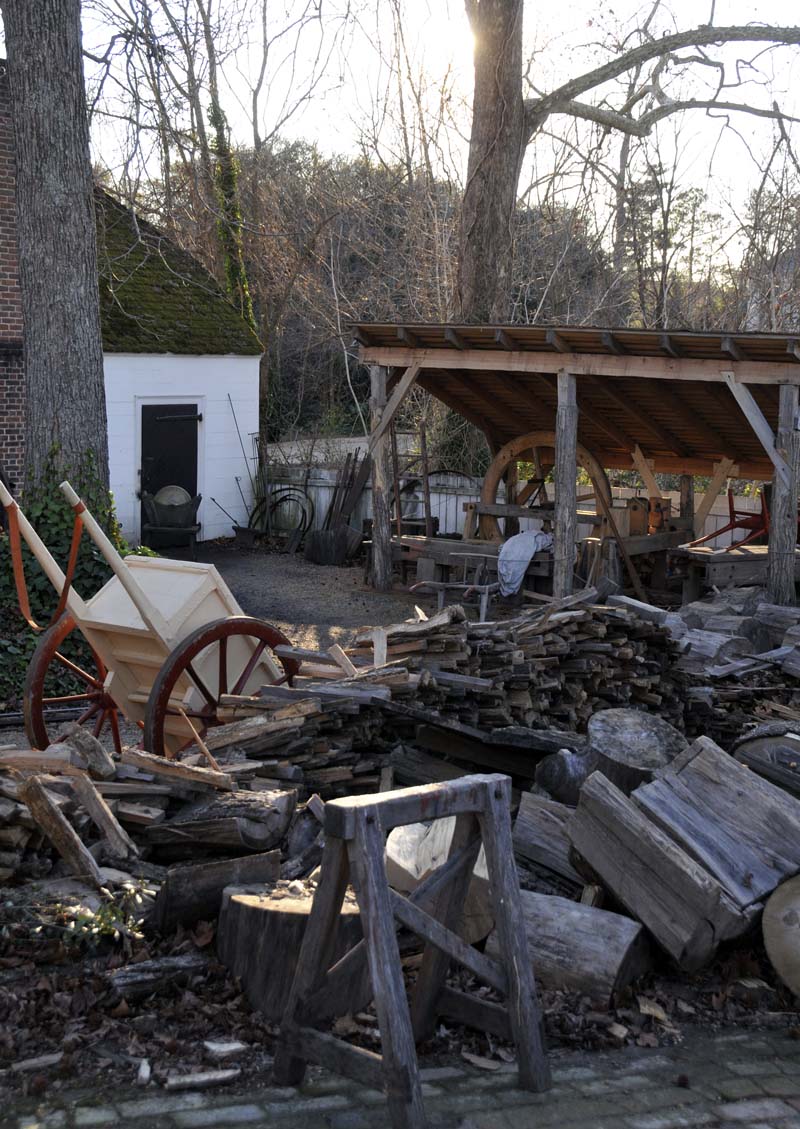


 The Slower Road