history


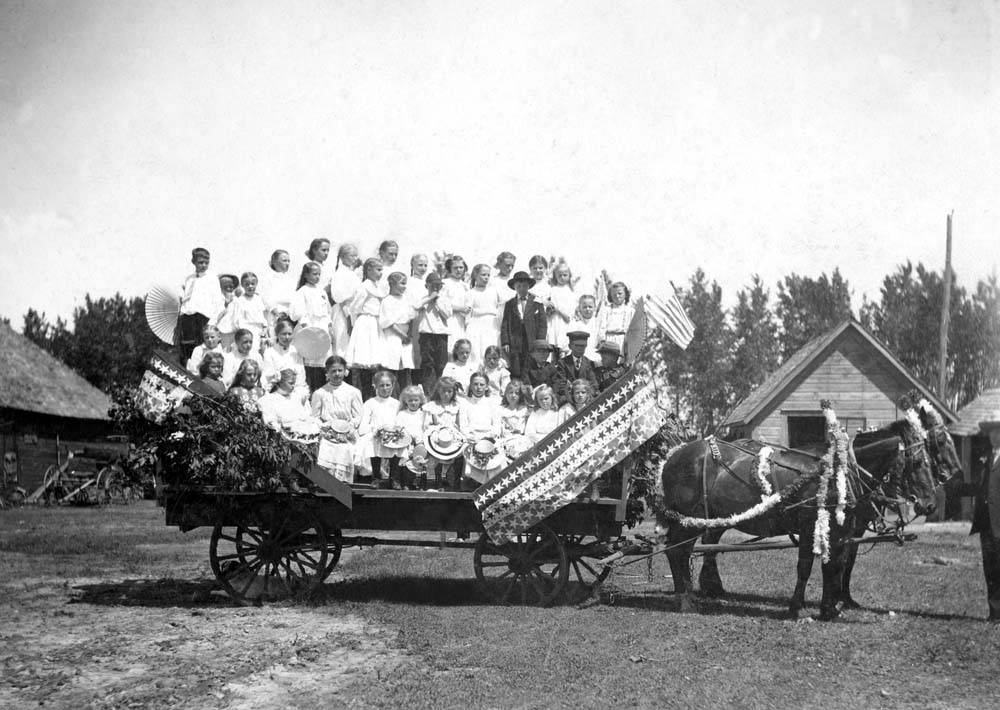
I’m working on the May issue of The Carriage Journal at the moment, and our featured “old image” in that issue will be this lovely old photo of a group of children who appear to be ready for a parade …

.

old image - parade wagon

.

According to a hand-written note on the back of this photo, this was taken on July 4, 1911.

Our thanks to the CMA Library & Archives for the image.

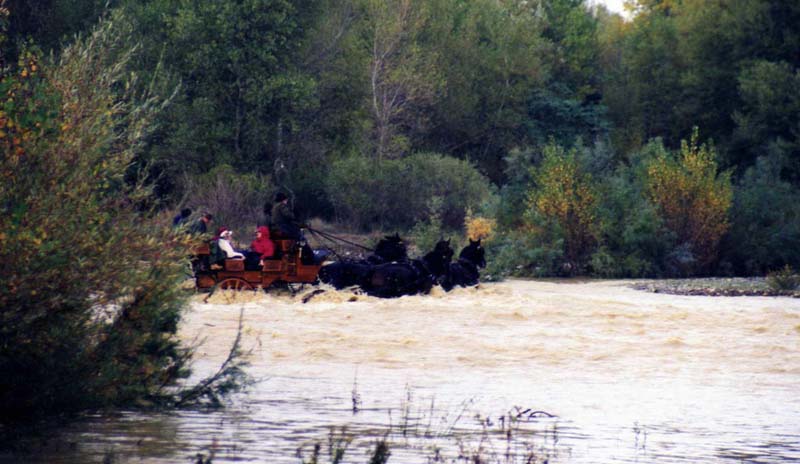
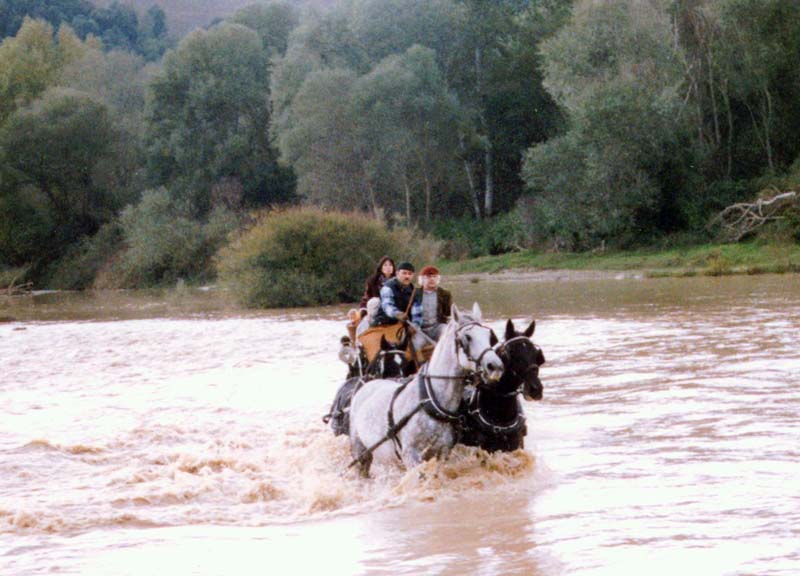
I had an email this morning from Andreas Nemitz (of the fabulous-looking Coaching in Bavaria horse-drawn tours).

He said that, over the last couple of days, as he was reading Mr. Johnson’s story of trying to cross a swollen river,  it reminded him of one of his crossings of the River Ombrone in Tuscany. (There were two horse-drawn vehicles on the trip, so people on each vehicle took photos of the other.) …

.

Nemitz1

.

Nemitz2

.

Mr. Nemitz assures us that the crossing looked far more dramatic than it actually was.


… continued from yesterday …

“About twelve o’clock I came to a road that ran at angles. To the right is Fort Bridges, nine miles, and to my left is Bridges station, one mile. Here I stopped, fed my cattle on grain, no hay or grass, [and fed] myself on bread, milk, butter, cheese, and salmon, a very good dinner. I had just finished my dinner when the three teams I had left at the river came up. I asked, ‘What luck crossing the river?’ ‘We came across as you did, but got badly wet. It was much deeper than we supposed; our wagon was under water. It has made work for us; we will not cross another creek as we did that. It is taking too many chances and won’t pay. We shall have to overhaul our trunks and dry our clothing.’

“Leaving them at dinner I went on and about six o’clock these teams overtook me. They passed me but soon after went into camp, and I camped with them; no grass or hay, feeding our cattle wholly on grain. I gathered some sage brush for fuel, making a fire, got some coffee and ate my supper. If you asked what it consisted of, I would say hot coffee, cold salmon, boiled eggs, butter, cheese, milk, and crackers for bread. My neighbors having gone through the same routine, they overhauled their trunks, taking out their clothing and got ready for a dry-out. I have a box which is watertight that contains my clothing, sugar, tea, coffee, and other things that water affects. On the top of this box are my blankets, covered with a rubber blanket.

“At half-past eight, it was time to make up my bed, so I made fast my cattle to their several posts, made up my bed and laid down for a good night’s rest.”

When we last checked in with Mr. Johnson, he’d been obliged to camp for the night at a post office, as the nearby river was too high to cross.

“On the morning of the 20th, I was up in due season and made ready to move on. I went down to the river to see how it looked and found it about the same as yesterday. I turned back rather blue, and went to the post office, where I found the proprietor, to whom I remarked, ‘I have been to the river; but saw no change in its condition. What can I do? My only chance is to go back and ford the river.’ ‘The river can be forded, but it will be a hard job. It is a deep and powerful current; you may be able to ford it, but you should not be alone,’ she answered.

“As we were talking, three teams came up to where we were and the drivers asked the road to Green River City. The postmistress said to me, ‘Now is your time.’ The teamsters were answered, ‘There are two roads: one you can’t go and the other you can if you dare ford the river.’ ‘Which road is that?’ asked the teamsters. ‘The left road.’ ‘What is the matter with the other way?’ they asked. ‘A heavy wash-out; a bridge to be built before it can be traveled. Rivers and creeks are very high, it seems.’ ‘They are high; we are on our way to Green River City, and still further east across the plains,’ said the teamsters. ‘I came to the river yesterday but found it so high I dared not cross, and came here to take this road, but find it impassable, so here I am as you see,’ I said. ‘Get ready and go with them and cross as they do,’ said the postmistress.

“We all went back to the river, and as we got there saw on the opposite side a herd of horses with three men in charge of them. They rode up to the creek, looked at it a moment and then rode down the bank and over the opposite — in no time. ‘That was quickly done,’ I said. ‘How shall I get across with my carriage?’ I asked. ‘Drive down into the river, that is the way to cross; you can’t do it while on that bank,’ said one of the horsemen. ‘If you will ride across, I will follow you,’ I said.

“He rode down into the river and I followed close after him and got across all right, but my wagon was full of water, but it soon ran out. I went on and did not stop to see how the three teams got across. In crossing, my feed got wet, but it did no other damage.” …

to be continued …
Here’s what I want to know: Did the person in charge of the delivery wagon on the right side of this street in Saginaw, Michigan (c. 1908) actually park it there, or did the horse decide to climb the curb on his own?

.


« Previous PageNext Page »