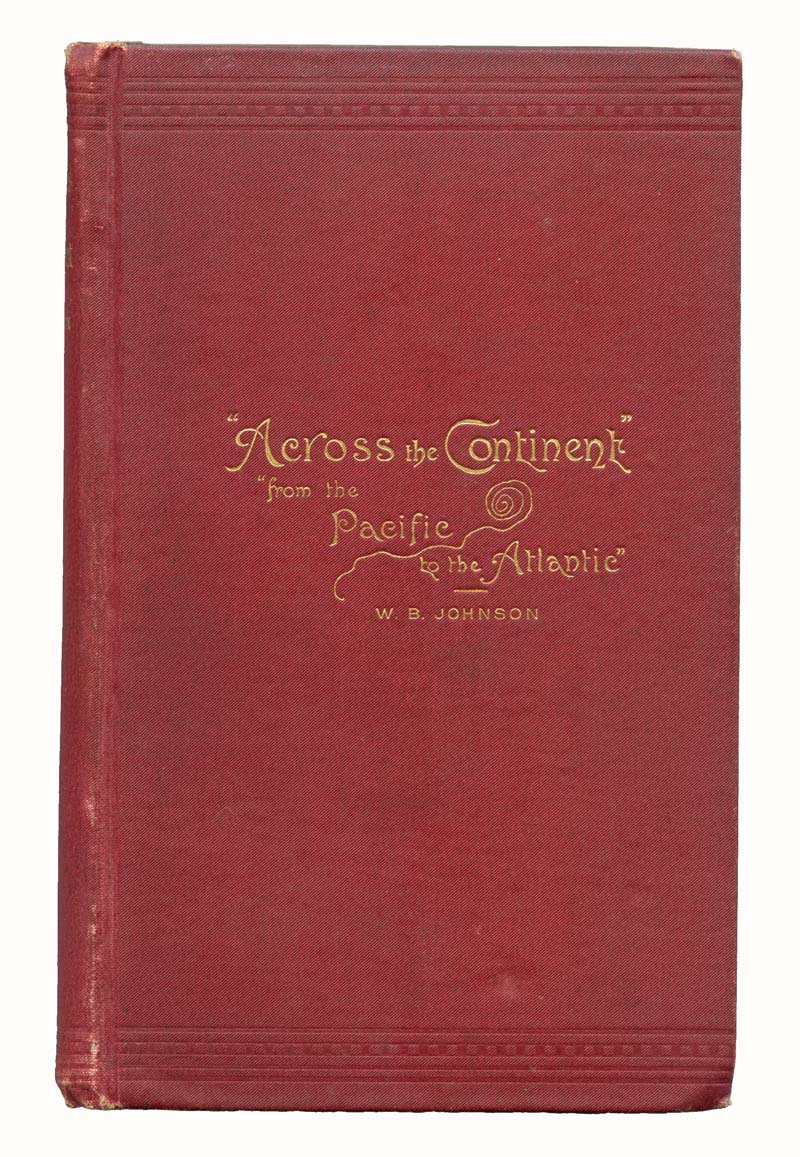
For our first foray into Mr. Johnson’s tale, we read that he started his journey from Eureka City, California, on June 1, 1882.
By the end of that first day, he’d reached Hydesville, having gone twenty-five miles and having passed through Humboldt, Salmon Creek, Hookton, Table Bluff, Springville, and Rohnersville.
From there, Mr. Johnson continued: “Left Hydesville June 2d and made Bridgeville the same day, having traveled twenty-five miles. On making this place, I found that there was a vast difference in roads. To Hydesville it had been good traveling. This day I found my journey had been over rough, hard, and dangerous roads. After leaving Hydesville, I came to a canyon, turning short to the left, descending about four hundred feet in less than eighty rods [about 440 yards], then turning short to the right, ascending the same distance on the opposite side. This is one way of traveling in California.
“Going on, I came to a large, broad river, and meeting a man with a team asked him if it was Eel river. ‘Oh no, it is not,’ said the man, ‘it is the Vandozen.’ ‘How is it about fording?’ ‘Oh, it is a good ford, but the water is rather deep now, with a good hard bottom.’ Went on, and came to the ford; stopped, looked at it, and continued to look at it. All of this time I was thinking. My thoughts were covering a large space — from the Pacific to the Atlantic. ‘Can this be done?’ I had struck out on a long, rough, and dangerous journey — from the Pacific to the Atlantic, with a horse and wagon, cow and dog. Can it be done, can this be accomplished, all alone, no one with me?
“Let happen what will, I decided to try it. I approached the ford; the water was deep; I was not able to see the bottom, with a strong, swift current.
“There I must decide, go on or go back. If I return back I should never be satisfied. If I go on and make a success, then I have accomplished a wonderful undertaking. I there decided to go on, and did. I put my little dog on the wagon, got on myself, drove down into the river and got across all right.”
And so his long journey has begun …

 The Slower Road