early roads


This week, we’re diving once again into Jack and Marge Day’s fabulous collection of old photos.

Today we have a photo from 1890. Someone had written on the back of the photo, “My father & Arthur Comstock at the Center.” Unfortunately, we don’t know what or where “the Center” was, but thankfully, someone else added the date of the photo and the fact that the machinery pictured was road-grading equipment.

The actual photo is really quite faded, but you can see a good bit of detail in this restored version, thanks to the miracle of Photoshop:

.
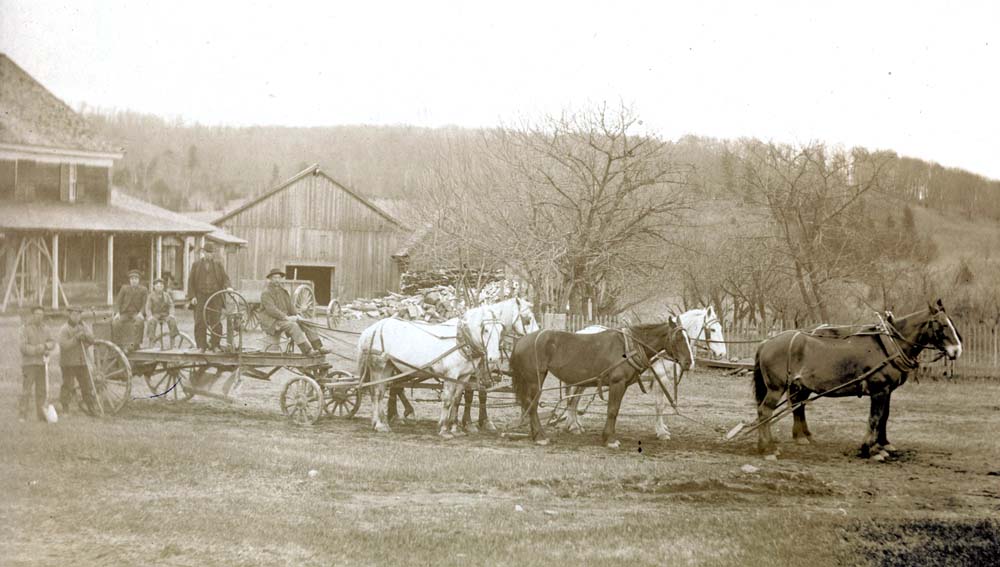
(from the Jack and Marge Day collection)
While visiting Shaker Village last weekend for the annual Blessing of the Hounds, we met a few of the village’s other farmyard residents … and took several long walks through the village and the surrounding fields and meadows. If you’re a fan of history; Shaker trades and crafts; nineteenth-century farming; quiet, truly beautiful, and well-marked walking and hiking trails; or even just really good food, I highly recommend a visit to Shaker Village if/when you’re next in or near Lexington. You can also read about the main road through the village in this blog post from back in September.

.

the Heritage Trail as it leaves the village and heads out into the countryside

.

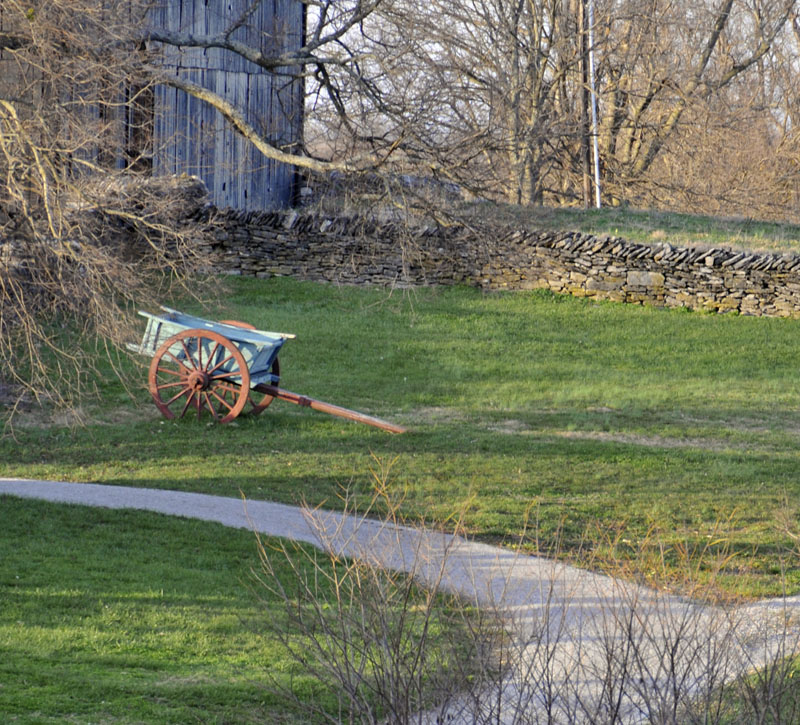
a cart in front of a dry-stone fence (there seem to be miles of these handmade fences on the 3,000 acres owned by Shaker Village)

.

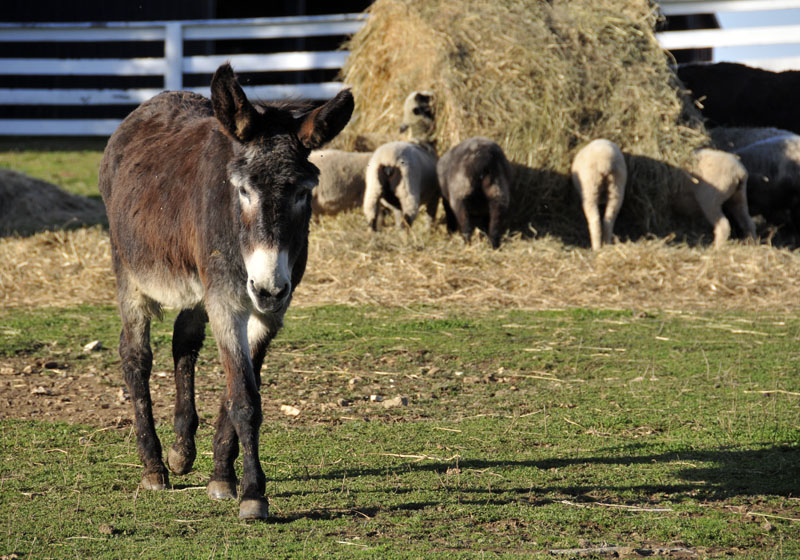
one of several adorable donkeys in a large paddock with a bunch of (hungry!) sheep

.

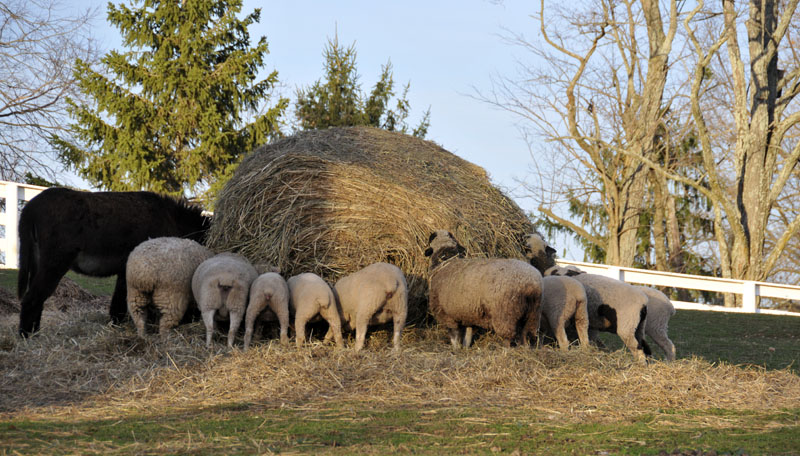
these hungry sheep kept eating and eating and eating; this round bale was completely destroyed (having been eaten and trampled) in the 24 or so hours we were there

.

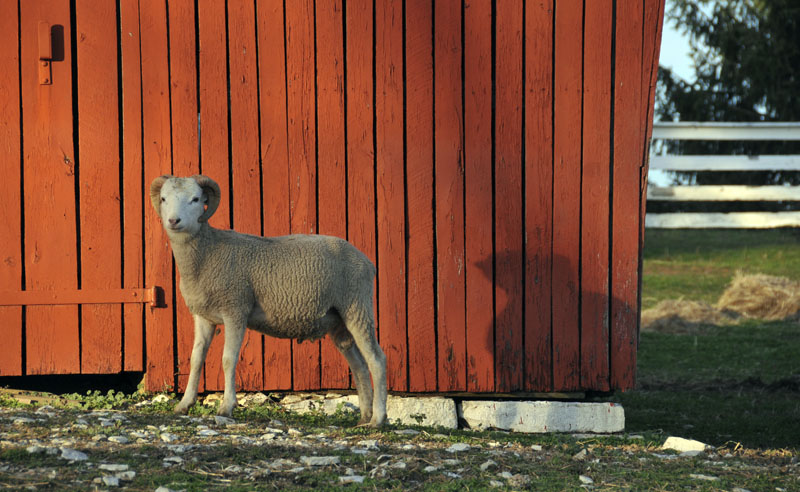
... but this little ram posed very politely for a portrait

.

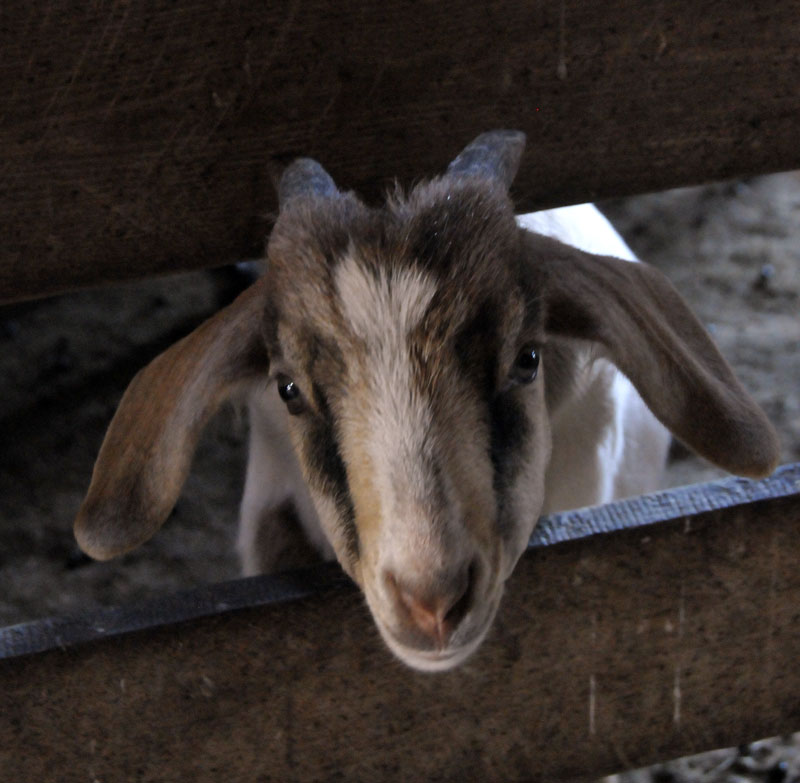
at the other end of the village, this goat and others were anxiously awaiting dinner

.

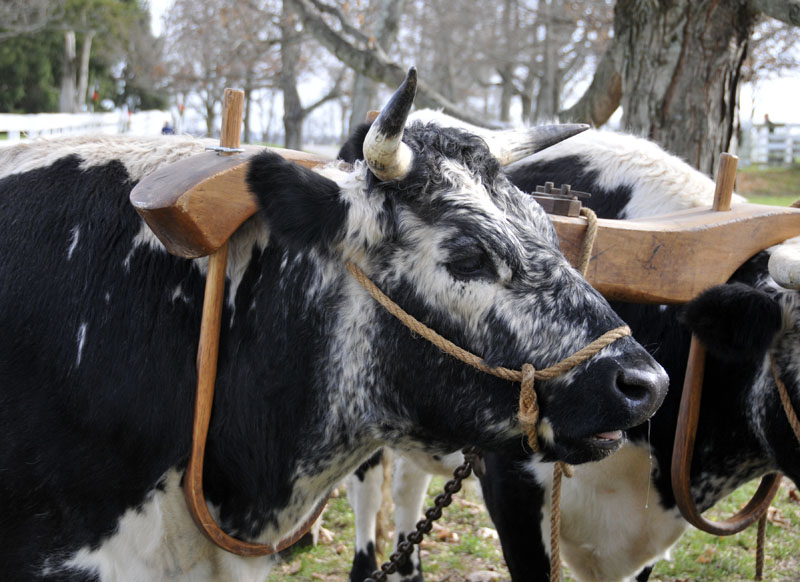
a team of oxen

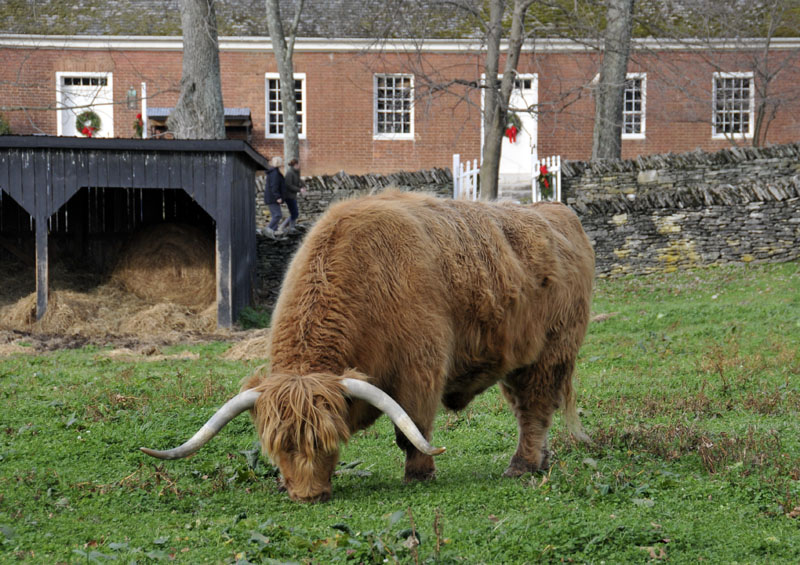
this beautiful Highland bull is in a big paddock by the pedestrian entrance to the village

.

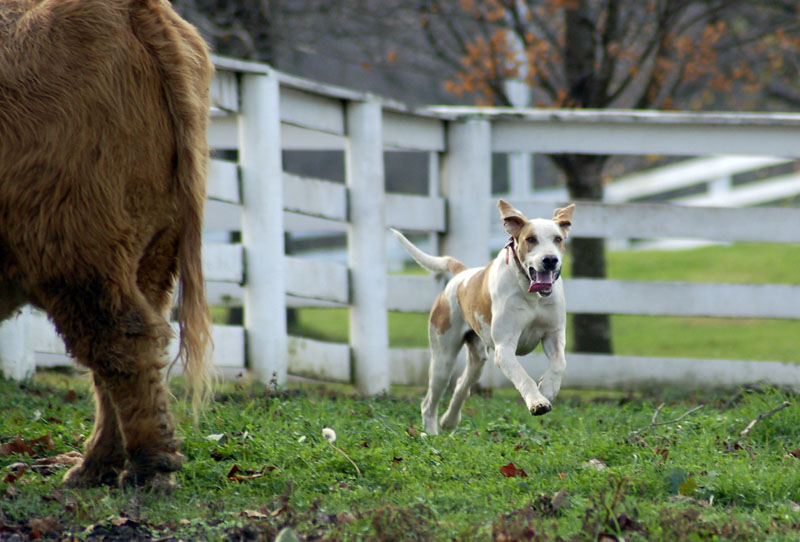
this silly fox hound escaped from the pack during the Blessing of the Hounds and paid a visit to the Highland bull (photo by A.J. Singleton)

.

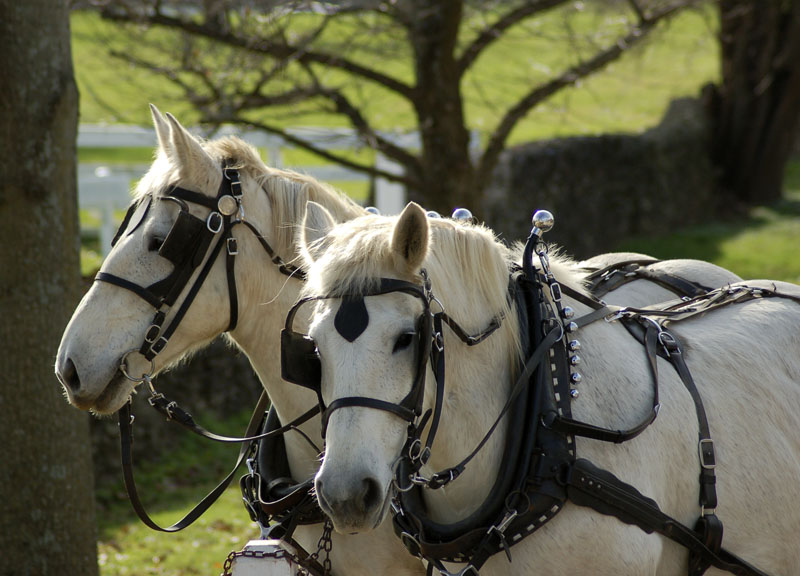
and, finally, a pair of driving horses who pull a wagon / trolley through the village (photo by A.J. Singleton)


Continuing with the carriage-history references that A.J. and I kept finding on our recent “local” vacation …

While we were at Shaker Village at Pleasant Hill (a lovely historic site that also offers fabulous hiking opportunities, delicious food, and unique accommodations), we found a Kentucky historic marker in the parking lot that offers the following nuggets:

Completed by 1839, the Lexington – Harrodsburg – Perryville Turnpike (KY68) ran through the center of Pleasant Hill. The road became part of the mail stage route between Zanesville (Ohio) and Florence (Alabama). Stages were discontinued here by 1877. The turnpike brought communication and trade to the reclusive Shakers, as well as both Confederate and Union invaders during the Civil War.

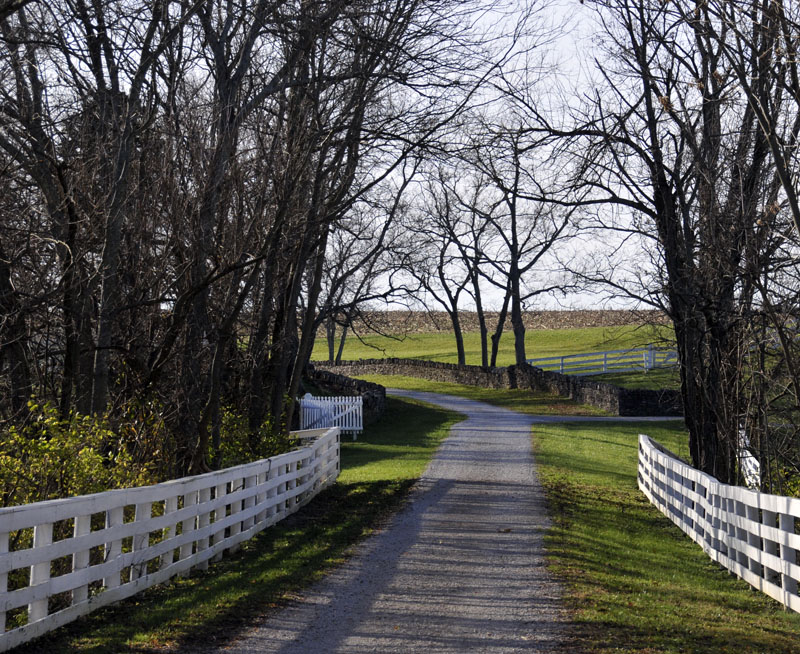
This is a photo (from our vacation) of the same road mentioned on the marker. For a number of years, the “modern,” paved KY68 followed this same route, right through the center of the Shakers’ village, an area long known locally as “Shaker Town.” When the newer KY68 was built nearby and the historic area restored, this original road was, shall we say, un-paved.

.

While on our way to a museum in Bardstown, we drove past a sign describing “The Cobblestone Path.” We were intrigued enough to stop (frankly, because, from the road, the slight clearing in the woods on the hillside didn’t look like much).

Remember when I said that little Bardstown boasts a rather stunning amount of regional, state, and national history?

Here’s what the aforementioned sign says:

The Cobblestone Path is one of the oldest paved roads in all Kentucky. By 1785, this was the original entry to Bardstown from the east and part of the legendary “Wilderness Road.” Congress ordered the Pioneer Trace to be improved as a military road after 1792. The cobbled paving of this hill dates to at least c. 1790. It allowed two-way traffic by heavy freight wagons, and for all wheeled vehicles entering and leaving Bardstown. After serving for more than thirty years as the major entry connector to the east end of historic Arch Street, the steep pathway was relegated to light traffic and mounted riders after the improved turnpike was constructed c. 1830. Cut off from the city’s modern streets after 1925, the path’s isolation allowed it to survive, serving only pedestrian traffic after that date.

.

Bardstown's "Cobbled Path" dates from the late eighteenth century

.

... for perspective, here's A.J. standing on the path; this road is so steep and narrow that it's hard to imagine two-way freight-wagon traffic here ... what a job that must've been!

.

... and a close-up of some of the late-eighteenth-century cobblestones

After Madison, Indiana, our next stop was small (but historical) Bardstown, Kentucky.

Bardstown was one of the earliest frontier settlements in what is now Kentucky, and it boasts an awful lot of national, state, and regional history for such a small town … and a lot of lovely old architecture.

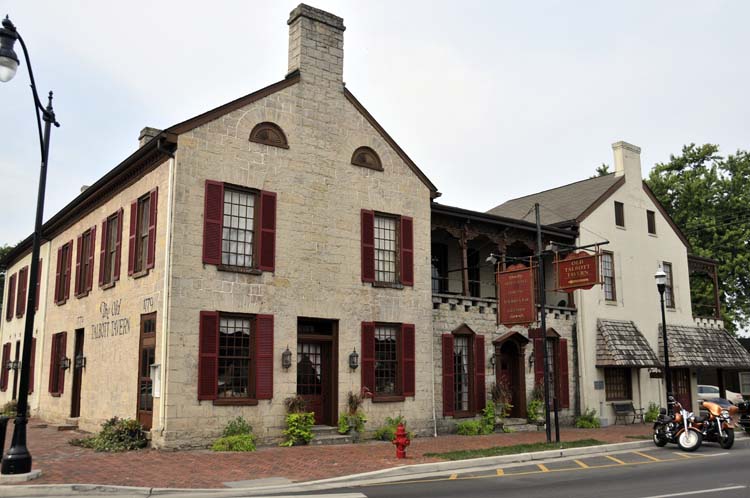
This building is the Old Talbott Tavern. Its original section (on the left) was built in 1779, and it’s still used as a restaurant, tavern, and inn.

.

this eighteenth-century tavern is said to be the country's oldest western stagecoach stop

.

According to both news reports and legend, several notable figures have stayed here, including Abraham Lincoln, when he was a young boy, and his family; Daniel Boone; and the exiled French King Louis Phillipe and his entourage (they even painted murals on the upstairs walls). Jesse James, who had family in Bardstown, is also reported to have stayed here, and he’s believed to be responsible for the bullet holes in the French king’s murals. Sadly, portions of the inn were heavily damaged in a 1998 fire. The murals have not yet been restored, so we weren’t able to see them for ourselves.

« Previous PageNext Page »