early roads


When we last checked in with Mr. Johnson, he was leaving Wells, Nevada.

“On the morning of the 14th [of September 1882], I left Wells. About eight o’clock I reached Cedar station. This is simply an accommodation station for the drawers of wood; on my right there is cedar timber in abundance. So far my trail has been good but hilly, the surrounding country rolling; no more alkalic deserts for the present. …

“At Wells I was informed that at Independence I should find grass in abundance. On our arrival I found some grass, but more cattle than grass. There was a large meadow fenced with wire, and when we came to this fence I stopped. The trail had been fenced in. I turned sharp to my right and crossed the railroad, going on until we came to a small creek. Before crossing, I looked around and saw a herd of cattle rushing after me, and we were soon surrounded by them. I should think there were seventy-five of them. I was a little frightened, so was the cow, but the horse was not. I took the dog out of the wagon and set it at the cattle, which made them scamper away. Then I crossed the creek over a plank bridge and followed the trail; in fact, the road, as money had evidently been expended on it. I went on, leaving the railroad on my left, and in front a high bluff or mountain range. I saw that I was leaving the railroad to my left, and supposed the track was obliged to go round the other side of this mountain and my trail would come on it again, so continued onward.

“The sun was fast going down. I crowded along as the day was getting darker and I could see no houses, but to my right there was a light. I think the horse saw this, for as soon as the horse came to the trail she took it, and after traveling about forty rods we came to a log cabin. Two men were standing in front, to whom I said, ‘Good evening, gentlemen.’ ‘Good evening, stranger.’ ‘I am traveling east. Am I on my right road to Ferrice?’ ‘You are not; you are from the west, I suppose, as you answer to the description of the man that is traveling from California to Massachusetts. When you were at the creek near the railroad, you should have taken the trail to the depot, this side of the bridge.’ ‘Must I turn back?’ ‘Yes, you will have to return to the depot.’ ‘Can I stay here tonight? I see you have hay and I would like some for my cattle.’ ‘Yes, you can have all the hay you wish, and I will not charge you a cent.’ ‘I carry grain, and when not able to find grass or hay, I fall back on grain.’ ‘There is the hay, help yourself to what you want; down there a few rods, you will find water, and good at that.’

“Taking my basket to the cabin I asked permission to make some coffee. ‘Yes, if you like, but, stranger, you can take some supper with me.’ ‘Thank you, I have plenty to eat, as I carry tea, coffee, sugar and milk.’ ‘I see you have a fine-looking cow. Does she give milk?’ ‘She does. I will milk her and you can have the milk; it may be a luxury to you.’

“At five o’clock on the morning of the 15th, I left Cabin Ranch for a return to Independence station. My taking the wrong trail had made fourteen miles of extra travel.”

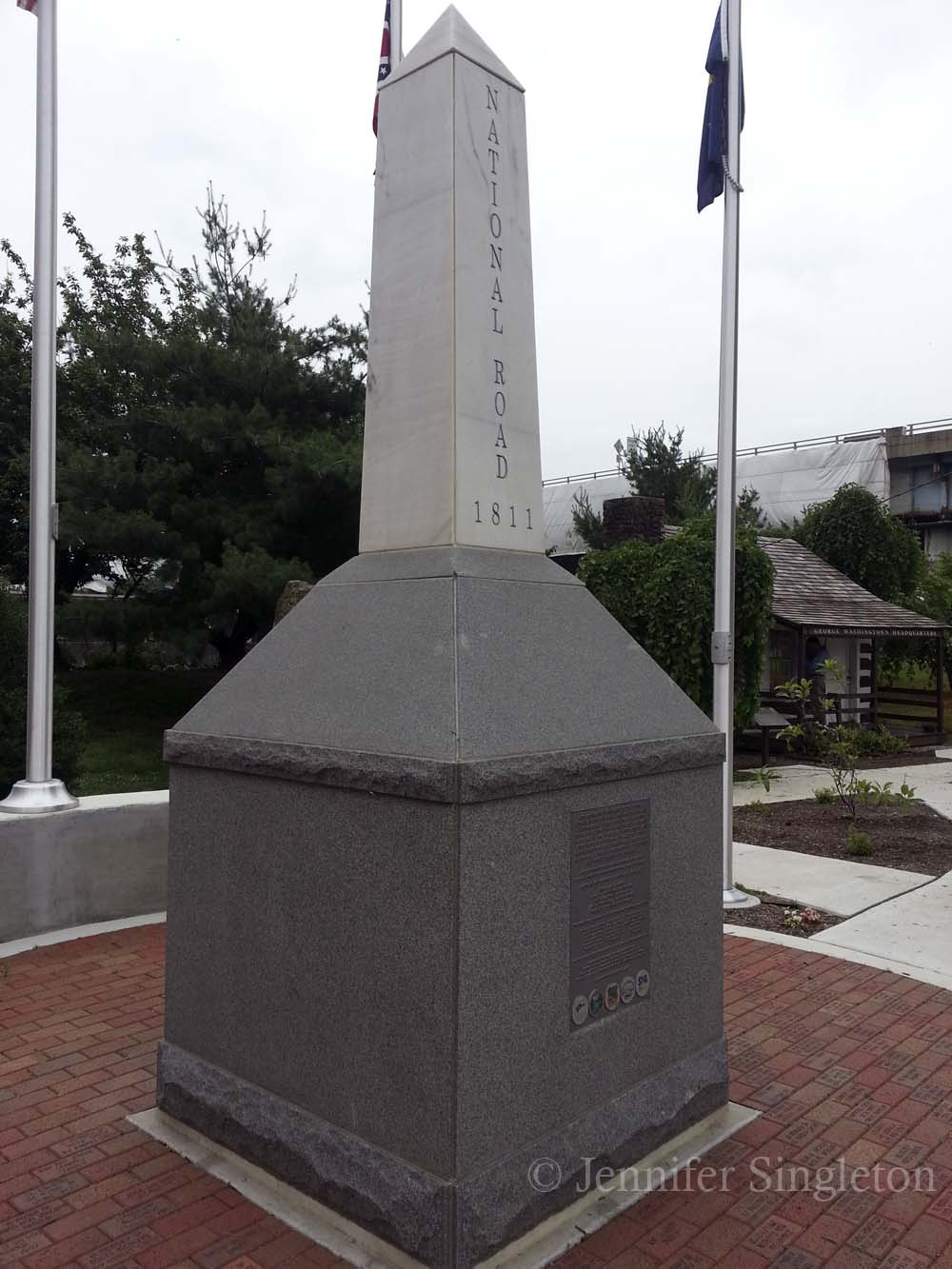
While driving back yesterday from a short visit to Baltimore, A.J. and I stopped for lunch in lovely little Cumberland, Maryland. It was here, beginning in 1818, that travelers heading westward were able to set out on the then-brand-new National Road.

We even found this marker commemorating the road to Wheeling, Virginia (now West Virginia), which is considered the first national highway. (The 1811 on the marker is when construction of the road began.) …

.

.

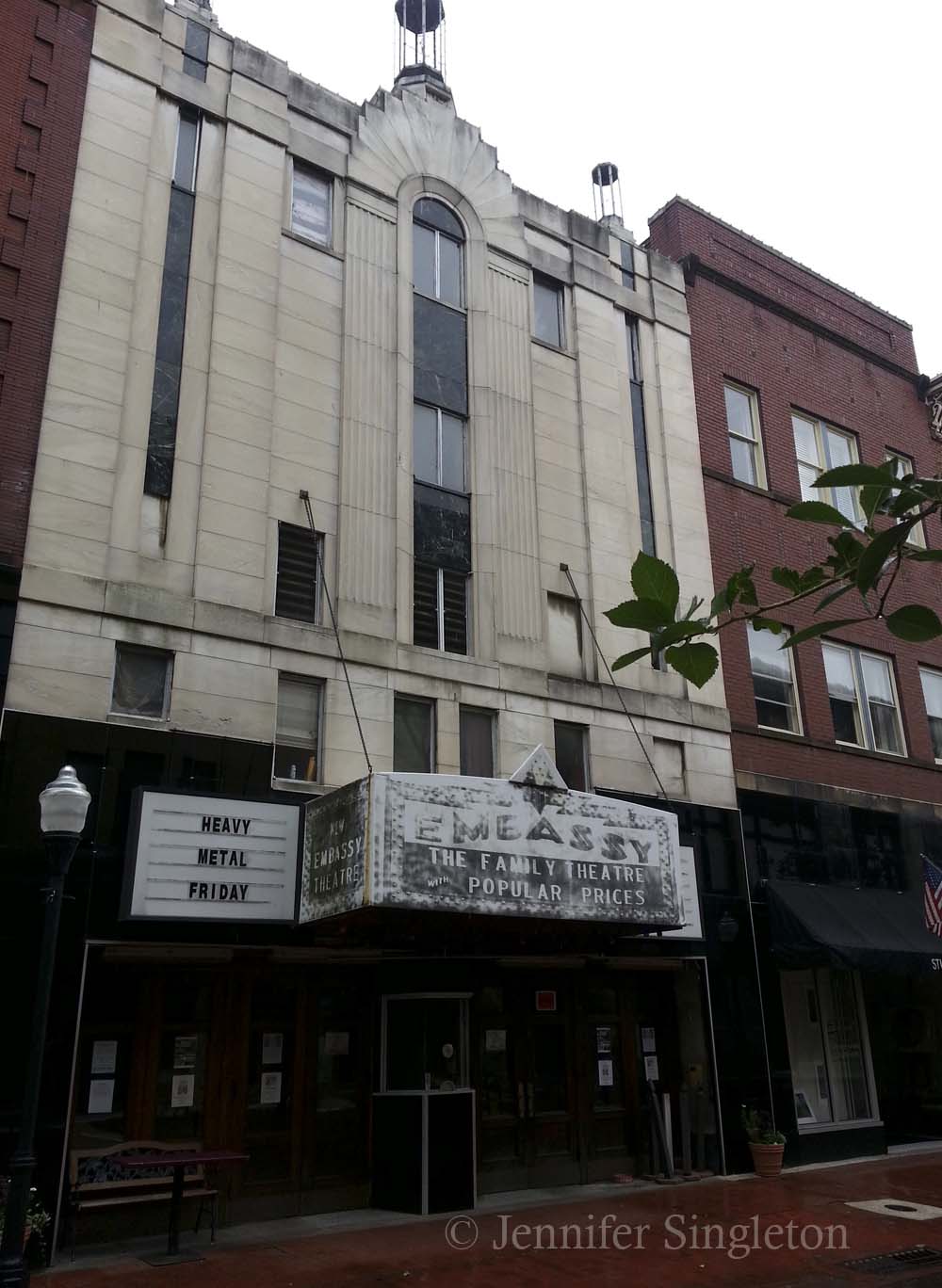
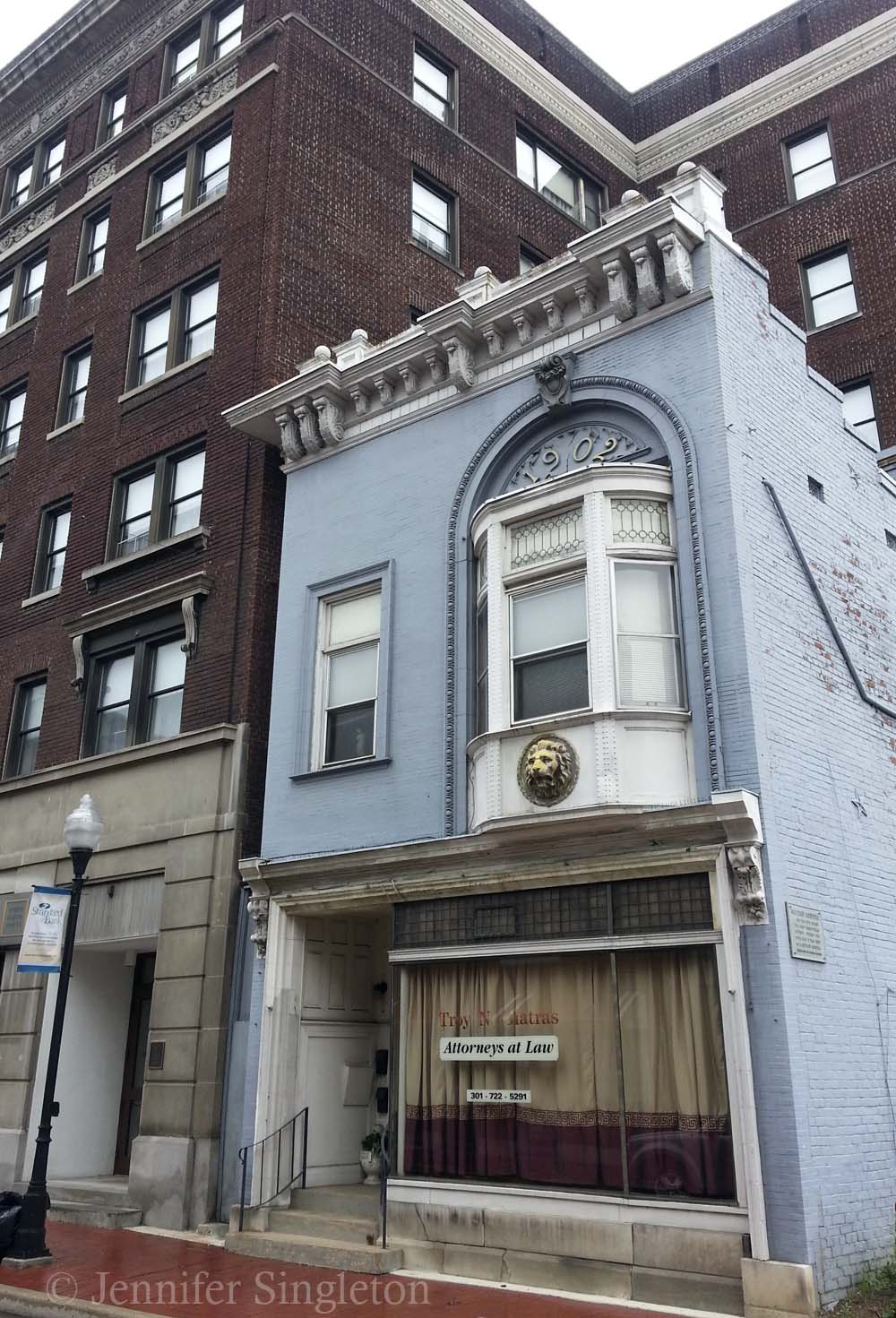
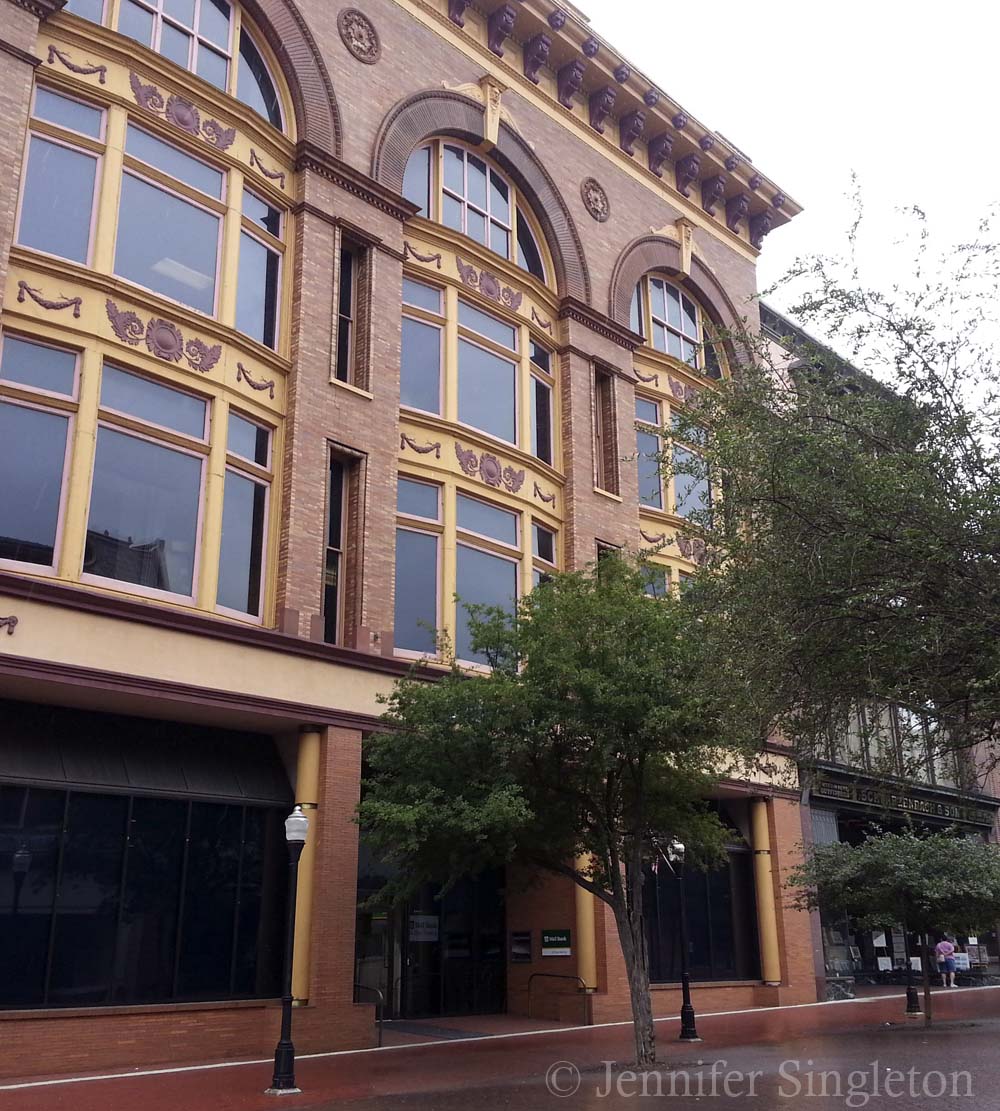
And here are a few other photos of Cumberland’s old downtown …

.

.

.

.

.

.

… and, just for fun, a photo of the front window at the shop selling Curtis’s famous Coney-Island hot dogs … since 1918!

.

.

When we last checked in with Mr. Johnson, he was on his way to Wells.

The next morning …

“I left the ranch at Hallocks on the 12th [of September 1882] and reached Wells on the 13th, a distance of about thirty miles. It was about break of day as I awoke from my sleep and got up and gave the cattle their liberty to eat hay or grass as they choose, and then went back to bed again. It was a cold and frosty morning.

“After a little while the owner of the ranch came out to me saying, ‘Well, stranger, did you sleep well, and could you keep warm during the night?’ ‘I did, sir.’ ‘It is a cold, frosty morning, come into the house, I have a good fire. Your cattle are all right and doing well; go in.’ I took my lunch basket and went into the house; the lady was making the breakfast ready. While this was going on, I went out and greased my wagon, which I do every other day. As I was returning to the house I met my friend with two pails of grain, which he gave me for my cattle. After breakfast I prepared to leave and turning to them, said, ‘Friends, what can I say to you for your hospitality? I shall ever gratefully remember you; good morning.’ ‘Good morning. Success to you, I trust you will get along all right. I should like to hear how you get along on your journey.’

“It was just half-past five o’clock as I left the ranch. After traveling about a mile, I came to the river, which I successfully forded. My road now lies between the railroad and the river, the latter on my right. It is a fine morning, a fine trail, and we are all feeling finely. Shortly we shall leave this long alkalic desert.

“About half-past six the express train we met and at eleven o’clock we came to a stop. It was where I could get down to the river to water my cattle. Here I made my dinner. While we were resting, the emigrant train from the west passed by, the hands on the train saluting us, as they still remembered me and my outfit. At one o’clock [we] resumed the journey toward Wells, and at half-past two we came to the river once more, that had to be forded again and for the last time I had been informed. I have followed this river, right and left, for more than three hundred miles, crossing and re-crossing many time, and only once on a bridge. This ford looked a nasty one, with only about thirty feet of water to cross; the rest appeared to be all mud.

“I got on to the carriage and spoke to the horse, saying, ‘Fanny, this is a nasty, muddy hole, but we have got to cross, so let us try it.’ We went down the bank into the mud, the horse sinking up to her knees at every step and on getting to the water there was good stepping, as we were then on a sunken bridge. Here I stopped to let the cattle drink all they needed, and having drunk all they would, I spoke to the horse, saying, ‘Fanny, go on.’

“After stepping about eight or ten feet, she left the bridge, got into the mud and floundered over, breaking both of her tugs, and bringing me and the dashboard face downwards into the mud and water, leaving the carriage, cow, and dog in the creek. I was a muddy fellow, you bet.

“My thoughts quickly comprehended my situation: here I was, far from any help and nothing to get my carriage out of the creek with. What to do, was the question: I want two ropes about thirty feet long. First, I detached the cow and the dog from the carriage, then unloaded my goods and secured my horse to an alder tree, let the cow loose to graze for herself and then started for Wells for some means of extricating the wagon out of the creek. I knew that Wells was a large town for that part of the world. The railroad was about fifteen rods to my left. I took the railroad and went on traveling, I think about four miles an hour. About five o’clock I saw a man with two horses about a quarter of a mile from the railroad and went to him. He was traveling West, where he did not just know. He had made a fire and was cooking beans for his supper. I told him the fix I had got in, in crossing the river and was on my way to Wells for two ropes, so that I could hitch them on the forward axles and make them fast to the tug buckles, then I thought my horse would drag the carriage out of the creek. He replied, ‘Stranger, if I had not these beans cooking, I would break camp and go back to help you. But I can let you have the ropes, they are on my horses; take them. I can hobble one of them, the other will not then go away and you need go no further.’

“I took the ropes and went back, finding all right but the cow; she was nowhere to be seen. It was dark, so that I was not able to see any distance. For a few moments I had some peculiar feelings. Where can she be and where gone? On going for the ropes I remembered seeing a herd of cattle, so I thought that she might have strayed off with them. I called for her, ‘Bessie, Bessie,’ and the horse would call after me, for a time without success. I continued calling for the cow, when after a time she came scampering back into camp with a large herd of cattle after her. I had been feeling pretty blue, but her appearance cheered me up. I caught and made her fast, giving her some grain.

“My wagon was still in the creek and in the wagon was a box made to fit the body of the wagon. In this box I kept all needful articles, and now I wanted my lantern and some kerosene oil. I took off my boots, stockings, pants, and drawers, put on my overcoat, fastening the skirt tight around my waist and went into the creek and got my lantern and oil, and made the ropes fast to the front axles of the carriage. With the oil I filled my lamp and the balance I poured on the ground and set it on fire. The water I used to wash me. After this, I re-dressed and ate a cold supper, not being able to find wood for a fire. Then I fed the cattle and went to bed to rest, as I was very tired. During the night I was awakened by the passing express train. And the herd of cows that my cow had become acquainted with, kept around the camp all night and disturbed me some.

“Early on the morning of the 13th, I was up and connected the ropes with the tug buckles, and then hitched my horse to the ropes, and it was not much trouble to drag the carriage out of the creek. I put my things back in the carriage and got all ready for moving on.”
… After conversing with his host, Mr. Johnson said, “‘Friend, it is now about time to milk my cow, can you let me have a pail and I will go and milk her and give them some water and grain.’ ‘I will go with you, we have plenty of good water.’ While I was milking my host came with two pails of grain for my cattle. This was wholly unexpected. I gave the grain to the cattle and then carried the milk into the house, giving it to the wife, when she remarked, ‘Sammy, what a lot of milk his cow gives, more than all ours put together. Well, stranger, I suppose you would like to go to bed soon?’ ‘Yes, I feel as though I would like some rest.’ ‘Any time when you are ready I will show you to your room.’ ‘But, friends, I always sleep with my cattle; I have had good beds offered me, but I always decline them. I dare not leave my cattle; should someone borrow them I fear they would not return them in season. I carry my bedding, make the cow fast to one wheel and the horse to the opposite, and myself and dog lay between them. Many nights I have been awakened by the snorting of my horse. I always keep my lantern burning. Many times I have been awakened by the wolves around me, but as yet have come to no harm. Tomorrow I would like to reach Wells. What is the distance.?’ ‘Wells is about thirty miles from here. You can not travel to Wells in one day, can you?’ ‘I travel about two and a half miles an hour, day and night if I wish; sometimes I crowd three miles into an hour and sometimes only two, but I average the two and a half miles. I suppose I am not far from the river?’ ‘The river is north of us, about a half mile, and a half mile from here you ford the river, then there is a good road to Wells.’ ‘I must reach Wells tomorrow. I can travel that distance in fifteen hours, with stops, and should like to start at six o’clock. If you make a good fire, I will take advantage of it and make myself some coffee. I have some good [coffee] that I brought with me from San Francisco, so you see what I carry with me. Well, friends, I will go to bed with my cattle.’ ‘Stranger, you had better sleep in the house, it looks like a cold, frosty night; your cattle will be safe.’ ‘You do not know that. When coming through Hallecks I intended to have stopped there overnight, but things did not suit me, so I came on here. Perhaps some of those I saw may follow me; I have been advised to look sharp after my cattle.’ So lighting my lantern I left them for the night and went to my quarters, securing the cattle for the night and laid down for sleep.”

… continued from yesterday …

At six o’clock the next day, Mr. Johnson reached Hallocks station. “The surroundings at this station I did not like. I gave my cattle water and went on, taking the trail that led to the right and followed it until I came to a house, which I found untenanted, so I journeyed on still further and came to another house where I found the people at home, and asked if I could stop there for the night, having coming from Elko and myself and cattle being very tired. ‘Yes, stranger, you can, I like the sound of your voice. It is Eastern, if I am not mistaken; you are or have been an Eastern man.’ ‘I am. Will my cattle do any harm to let them in to those stacks of hay and let them eat all they want?’ ‘You can let them in there and they can have all they need.’ I led them into the yard and turned them loose; the horse took to rolling and the cow to the grass.

“The man of the house asked me in, saying he had a wife and two children and had many questions to ask me. So I went into the house and he said, ‘Wife, this stranger is going to stop with us tonight; get him some supper while I ask him some questions.’ ‘No, Sam, wait till he has had his supper, then we all will listen,’ answered the wife. So as soon as the supper was ready we all gathered around the table and partook of a hearty meal. The man of the house asked for my story, where I was from and where going. I answered, saying, ‘Well, friend, I have come from California, more than three hundred miles north of San Francisco, having left Eureka city on June 1st, following the railroad most of the way, and have traveled more than a thousand miles already.’ ‘What, and brought that cow that distance?’ ‘Yes, just as I am: horse, carriage, cow, and dog.’ ‘And where are you going to, I would like to know?’ ‘Well, friend I belong in Massachusetts, and am going there; that is my intention.’ ‘Well, stranger, ain’t you a little crazy?’ ‘You are not the first that has thought me so, but as yet I am all right.’

“[My host replied,] ‘Well, well; what a long journey before you, and you think you can make this journey. How many miles will you have to travel to make it?’ ‘About four thousand, perhaps a little more.’ ‘Why, that cow can’t stand it; she will wear off her feet and legs.’ ‘But, friend, she has on her feet iron shoes, and so has the horse. So far, the cow has stood the journey the best.’ ‘I did not think she was shod, and should not wonder that the cow did stand it best. Does she give milk?’ ‘Yes, I milk her twice a day; I have milked her three, and once four times a day, and have sold milk all along for fifty cents a gallon to the station agents. When I have sold on the trains I have got twenty cents a quart. When I came through Reno, where I got the cow shod, I was obliged to stop four days, as she was lame from the shoeing. This was her first shoeing and, as she had traveled more than seven hundred miles, her feet were very much worn, and putting on the iron shoes contracted her feet, causing the lameness. The blacksmith told me not to take off her shoes, and the soreness would wear away; she could not have traveled much farther without shoes, so I stopped over. The four days I was at Reno I sold over seven dollars’ worth of milk, so you can easily see that she is worth something on the road.’

“‘What part of Massachusetts are you going to?’ ‘The town of Webster, Worcester county.’ ‘I am from the State of New York, so you see I also come from the East.’ ‘What brought you out here?’ ‘Oh, I came out here to get rich by raising cattle.’ ‘You have got rich, I suppose?’ ‘Well, I am not rich, but I can make more money by raising cattle than I could by raising corn in Nebraska. We can grow potatoes and small grain, but no corn; we can cut any quantity of hay. You see those four stacks? There are eighty tons of hay in them.’ ‘How many cattle have you?’ ‘I have thirty-six head on my own ranch. There are three of us, each having a ranch, about one hundred head of cattle in all.’ ‘Do you feed your cattle in the winter?’ ‘Oh, yes. We do not intend to have them freeze to death. We give them shelter and feed with hay. We do not have such barns as you have down East, as lumber is too costly. We have long sheds fronting to the south, boarded on the north side and ends, about twelve feet wide and seven feet high, covered with straw. This gives our cattle a good, comfortable shelter in a storm and breaks the cold wind. This mode is an improvement of our own, and there are but few in the state like ours.'”

« Previous PageNext Page »