carriage collections


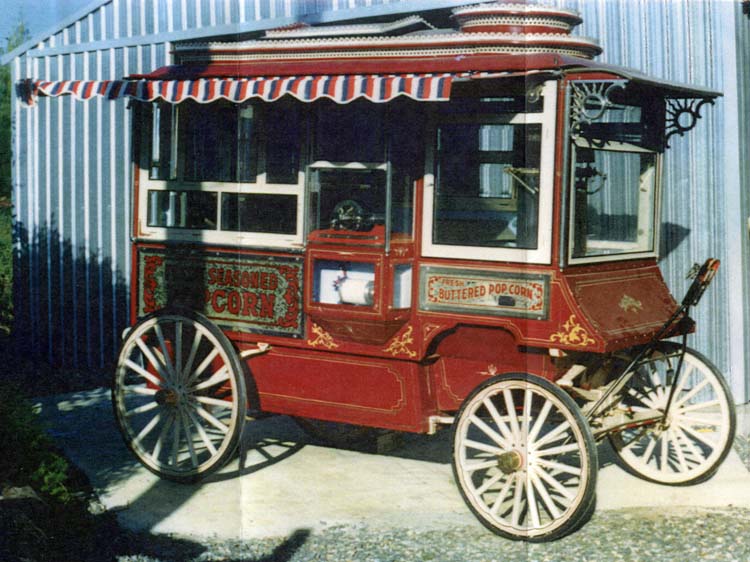
The cover of the October 2010 issue of The Carriage Journal featured a beautifully restored 1903 Cretors “Model C” popcorn wagon, owned by Richard Scott of Ohio.

You may have read more about it in this previous blog post: https://carriageassociation.wordpress.com/2010/11/16/hot-buttered-popcorn-fresh-roasted-peanuts/

That magazine cover prompted CAA members Robert & Lori Babcock, of California, to send some photos of their own Cretors “Model C” popcorn wagon. The first of these shows the wagon at home; the second is a bit more out of the ordinary.

.

the Babcocks' Model C Cretors popcorn wagon (photo courtesy of Robert & Lori Babcock)

.

... and the same popcorn wagon, with "movie ageing," on the set of Water for Elephants, which is due in theaters in April (photo courtesy of Robert & Lori Babcock)

.

The movie, based on the best-selling book of the same name, stars Robert Pattinson, Reese Witherspoon, and Christoph Waltz. You can watch the trailer here:

.

Today, a guest post (with photos) from CAA member Gloria Burgess:

Tom and I take my mother, Florence (“Queen Mom” as we call her… the smile and hat look) to a special event annually for her December birthday. This year we went to Salt Lake City, Utah, for the annual Morman Tabernacle Choir Christmas Concert. 

Fellow CAA members Craig and M’Lisa Paulsen made it possible to obtain tickets for this event, which is a BIG DEAL! Our adventure included a day trip to Antelope Island and the carriage collection of Eli Anderson (another CAA member) in Tremonton, called Wagonland Adventure.  Here are some pictures:

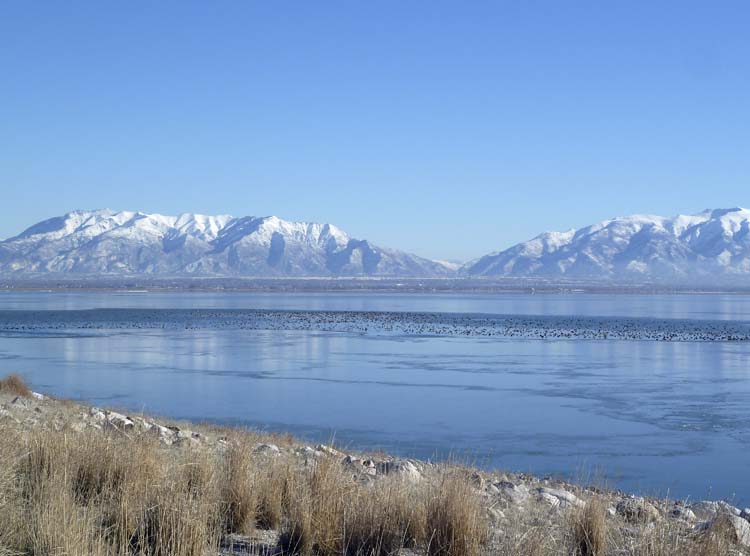
the view from Antelope Island, looking eastward toward Salt Lake City; the mountains are in the Wasatch Range, considered the western edge of the greater Rocky Mountains (photo by Gloria Burgess)

.

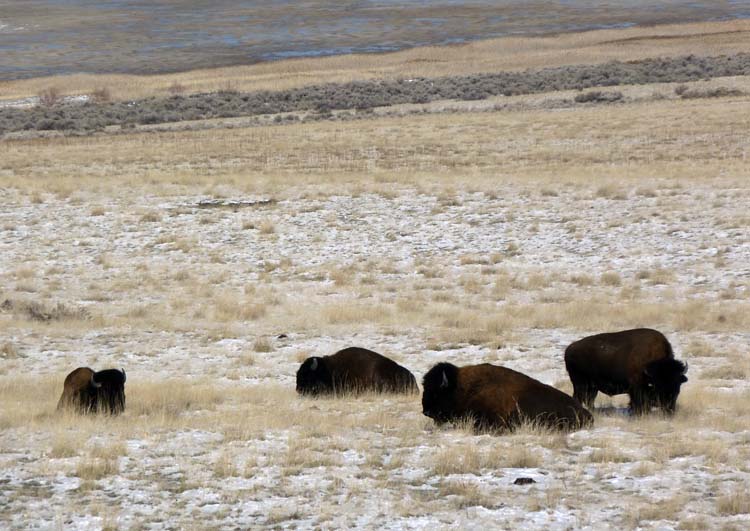
bison were introduced to Antelope Island in 1893 (photo by Gloria Burgess)

.

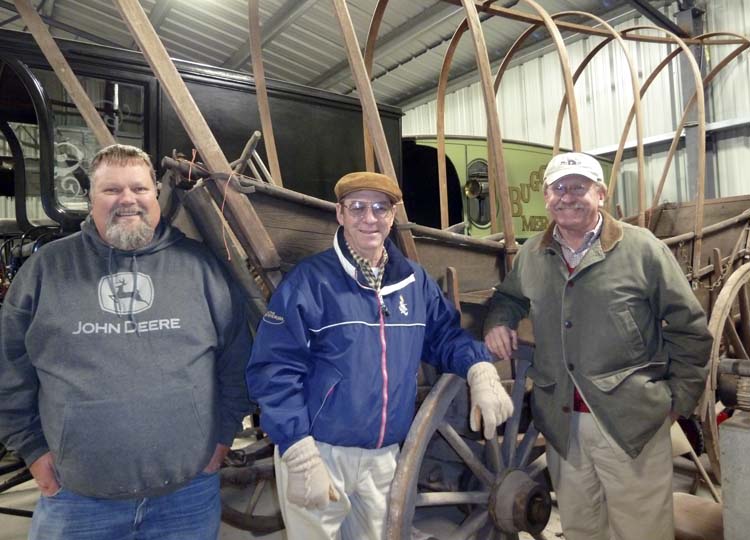
CAA East meets CAA West: CAA members (left to right) Eli Anderson of Tremonton, Utah (owner of Wagonland Adventure and collector and restorer of Western, trade, and other historic vehicles); Dr. Tom Burgess of Bridgewater, Virginia; and Craig Paulsen of Salt Lake City, Utah (photo by Gloria Burgess)

.

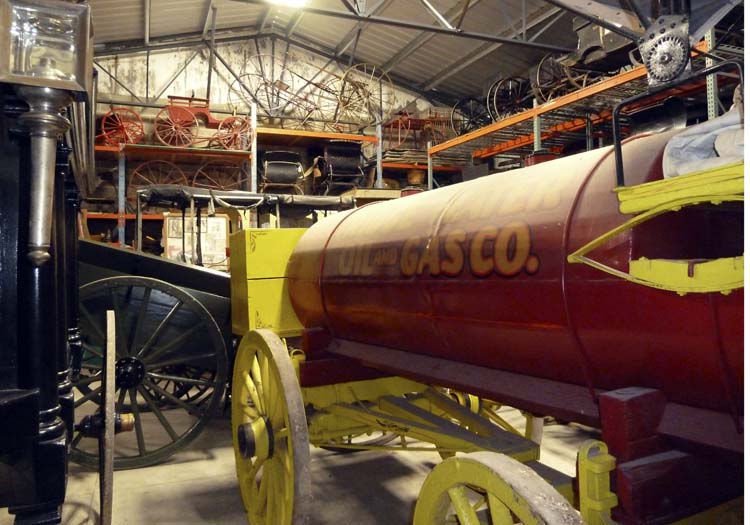
a small portion of Eli Anderson's carriage collection (photo by Gloria Burgess)

.

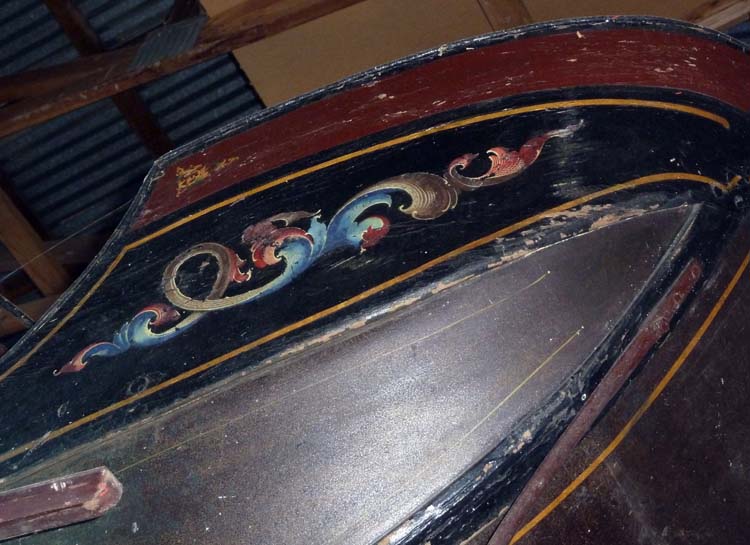
And, finally, in honor of the upcoming CAA Winter Conference and Sleigh Rally … details of a couple of sleighs in Eli’s collection:

original paint and scroll work on an Albany sleigh

.

... and an original-condition basket sleigh

If you find yourself in Alberta, Canada, you may want to pay a visit to this fascinating-looking spot:

… really. I mean it this time!

Tomorrow I fly from Seville (through Lisbon) to London, where I will spend the next week at the Royal Windsor Horse Show. As that is another official CAA trip, I’ll be blogging from there daily again, starting on Tuesday. So check back often for more reports and photos, this time from England!

To finish off my reports from Spain, let’s go back to yesterday’s visit to the private carriage collection.

My parents have a good friend here in Spain who, in turn, has a good friend we met on this visit. She has a cousin (well, 73 cousins, actually!) whose family owns the farm and the carriages we visited.  The farm and carriages belong to the Terry family, which used to own and run the Terry bodega (sherry winery) here in El Puerto, until they sold the bodega (and the brand name) about ten years ago. Our new friend’s cousin is a Terry on his father’s side, and the cousins are related through their mothers. The mothers were two of eleven children (hence the 74 cousins), and they were part of the Osborne family, who are also major sherry producers here in El Puerto. I think the Domecq family (also big sherry producers and horse people) are related to this large extended family as well.

After our visit to the farm, we stopped at a beautiful hotel here in town for a drink and a snack. It’s next to the Terry bodega and was probably once part of the same facility. It boasts exquisite architecture, including an ornate private chapel that was part of the original building (the priest would come from the local church each morning to say mass). The courtyard in the center is now covered but would have, I’m sure, once been open. And there’s a lovely fountain in its center. On one side is a huge garden with pathways between the trees and plantings, and several semicircular stone benches with small fountains at the center of the circles and rosemary bushes growing behind the benches. We understand that the furniture is not the same as it once was, years ago, but the feel of the place (overstuffed sofas, portraits on the walls) is of someone’s home. And, in fact, as you may have guessed, this was someone’s home (the grandparents of our new friend, if you hadn’t already figured that out as well!) before it was turned into a hotel.

But I’m getting ahead of myself.

Our visit to the farm was all the more delightful because the family was so kind in allowing us to even see it, as it’s simply their private getaway. The family’s small collection of carriages (most acquired by our host’s grandfather) are stored in two rooms. Some have been restored and some appear to be in original condition. All but one are driveable, although they are not driven as often anymore because the family’s horses are now mostly ridden.

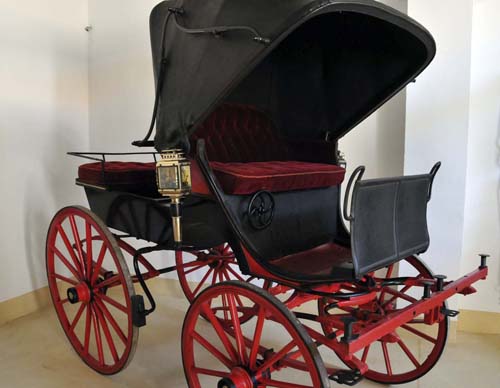
one of the old carriages in the Terry family's collection -- this one has flower decorations painted on the woodwork

one of the old carriages in the Terry family’s collection — this one has flower decorations painted on the woodwork

one of the family's carriages in the second storage area

one of the family’s carriages in the second storage area

The harness and tack room is a cosy place, full of old harness, traditional saddles, hunting trophies, and horse-show trophies. There’s even a Breyer horse that was modeled after one of the family’s Andalusian stallions.

part of the harness / tack room

part of the harness / tack room

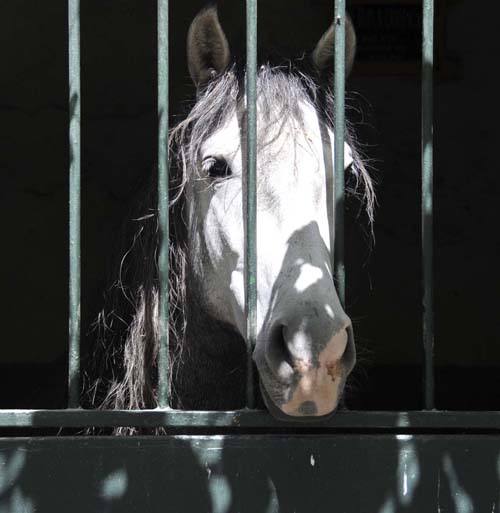
As I’m learning is the case at most of these Andalusian farms, there was a succession of delightful courtyards, patios, and outdoor “rooms,” both sunny and shady. The ones here were filled with pots of geraniums, rose bushes, palm trees and, in one case, an arbor of grape vines. Off of the grape-vine courtyard were four stalls with horses in them; Andalusians, of course. This one here was quite friendly and didn’t want us to stop scratching his nose.

this horse really wanted his nose scratched and his photo taken

this horse really wanted his nose scratched and his photo taken

Later that day, we went to El Puerto’s feria, which is just as colorful as Seville’s but has far fewer horses. One thing this feria has much more of, though, is singing and dancing. It’s a treat to see so many girls and women (and a few men) in their bright, colorful feria dresses (not the men, obviously!), dancing the traditional Sevillana. And everyone so happy! Just as we’ve been for our springtime visit to southern Spain.

I don’t know what to say. Today was amazing-, spectacular-, marvelous-, “perfecto” day number three. Wow.

Our first stop was to see the enormous carriage collection of Mr. Aranda. He’s putting the finishing touches on his new (huge!) carriage museum. Because the museum’s not finished, it’s not actually open yet and so it was a treat to be invited to see it.

I’ve been told that the entire collection numbers more than 200 carriages, and just looking at the size of the museum building, I would believe the claim. There were all sorts of vehicles, although as one of our group said, they are not necessarily representative of everyday life of the time. These were unique and high-end vehicles, most of which had been restored in an on-site restoration shop. The carriages were displayed with a lot of space around each one, which made it easy to walk all the way around and look closely at them. The ubiquitous water (usually a bucket of water under each axle to help with the humidity level) was here a whole series of spouting fountains, with one big landscaped fountain in the center of the building.

After a long look through this building, we walked into the beautifully landscaped garden (to the sound of even more fountains) and, surprisingly, into another building with even more carriages. Most of these were large and ornate, and one was being cleaned and polished to be driven in the feria later in the week.

one of the unusual coaches in Mr. Aranda's huge collection

one of the unusual coaches in Mr. Aranda’s huge collection

After exploring this hidden museum building, we were led deeper into the garden and given a view of a paddock with horses. Mr. Aranda also breeds Andalusian horses, but he specializes in black ones, as opposed to the ubiquitous grays. From here, we strolled down a shady lane at the far end of the garden and into a delightful courtyard, which is surrounded by what appear to be the oldest buildings on the farm. Around a corner into another yard, and we were introduced, one by one, to several of the farm’s stallions. Back into the first courtyard, through a doorway and in we went to the harness room. There was yet another courtyard to see, and even a small chapel. And there was a very friendly barn cat who demanded ear scratches and then followed us around for quite a while.

the first of the lovely courtyards in the oldest section of Mr. Aranda's farm

the first of the lovely courtyards in the oldest section of Mr. Aranda’s farm

On the way back to the bus, I heard the story (from Mr. Aranda’s son) of the three-month-old orphaned filly who was bottle-fed (in the house) and now thinks she’s a person. She plays with the family, lies down with them in the grass when they sunbathe, watches TV and, if they’re sitting on the sofa, hangs her head over the back until they scratch her. I would’ve thought he was pulling my leg unless I’d seen the photos of it all on his iPhone.

Our final stop in this marathon of carriage collections was the smallest, but in no way the least. To get there, we drove to the lovely-looking town of Alcala, which stretches up a hillside to the base of an old castle. On the other side of town, we turned and headed out past fields of tall grasses, daisies, red poppies, and more horses. When we arrived at the Olivera farm, we were introduced to “Pepin,” the owner (the original owner’s nephew), and his wife. They and their driver, grooms, and family (even their granddaughter, a toddler) welcomed us with a spread of bread, olives, several kinds of ham, Spanish “tortilla” (potato and egg “pie,” served cold), and more. They were even grilling delicious ham and ribs and sausages in the fireplace/grill corner of the old wash-rack room. They had a table and chairs set out for us in the small courtyard surrounded by the wash-rack room on one side, their house on one side, and the harness/carriage room on a third side. Out the other side of the wash-rack room was yet another courtyard, this one a little larger, with a barn of horse boxes off to the left.

After most of the food was gone, out came a bowl of strawberries. Then, a little later, a pot of coffee, a carafe of hot milk, and a tray of cups and saucers. Needless to say, we were very well taken care of!

When everyone had eaten and visited and relaxed, Pepin and Raimundo gave a tour of the harness/carriage room, which houses several sets of traditional Andalusian harness and both old and new sets of English-style harness. Displayed on chairs are several styles of Andalusian livery from various time periods. And arrayed across the tops of the harness cases, on the walls, and on the tables are the many trophies, ribbons, and awards the family has won for their horses, their carriages, and their driving. On the other side of the room are six carriages: five antiques that have been expertly restored and one 25-year-old reproduction. All are painted in the family’s colors of red and black.

the gorgeous finish on one of the Olivera farm's carriages

the gorgeous finish on one of the Olivera farm’s carriages

After this tour and a close look at the carriages, we met some of the horses and watched a five-in-hand do some work in preparation for driving in the feria tomorrow.
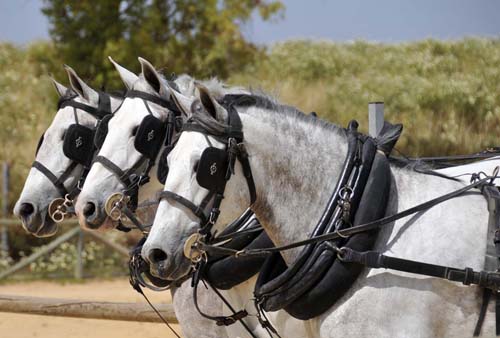
the three leaders in the five-in-hand team

the three leaders in the five-in-hand team

And then, as a final treat, we walked out the back of the yard to a large field, where we went with Pepin to see a herd of his Andalusians. There were 25 or more mares, a number of new foals, and one stallion. When we headed slowly into the field, the older mares went around to arouse the sleeping foals and get everyone moving away from us. So the group of us stopped about mid-way in and waited while Pepin walked slowly toward the herd, talking to the mares. In the end, the mares were mostly curious about us and what we were doing there, and the foals didn’t seem to take any notice at all. The stallion, however, chased any overly curious mares back to the herd. Pepin made his way around to the back while the stallion wasn’t looking and managed to move the lot toward us before the stallion realized what was going on and moved them away again. Watching the interactions among the herd was fascinating. And the horses … well, it goes without saying that they’re beautiful.
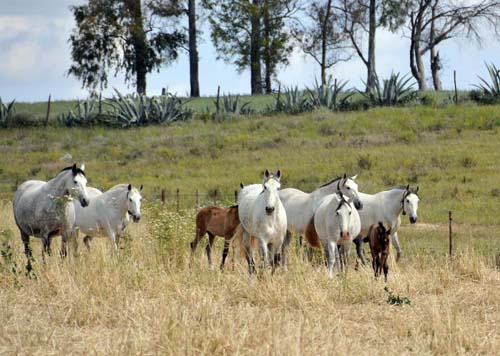
curious mares and nonchalant foals
curious mares and nonchalant foals
« Previous PageNext Page »