CAA events


One of the reasons I love working on publications projects for the Carriage Association is that, when they come back from the printer, I can hold the finished project in my hands. And speaking of publications projects … much of my summer this year was taken up with the design and layout of the CAA’s newly re-envisioned and completely redesigned World on Wheels journal. From 2009 through 2011, we’d published a small (6×9 inches), black-and-white journal containing longer articles than we can typically feature in The Carriage Journal. Many of these were printed versions of lectures given at the International Carriage Symposia that the CAA hosts every other winter, with the Colonial Williamsburg Foundation.

The content (long, in-depth articles, taken from symposium lectures) hasn’t changed much, but everything else has. In re-envisioning the World on Wheels, we decided to publish it every other year instead of annually but to make it bigger, longer, and much, much more colorful.

.

As you’ve probably guessed by now, we’ve received our copies of this year’s World on Wheels from the printer. And, if I do say so myself, it’s gorgeous!!

.

.
.

If you’d like to order a copy, you can find it in the CAA’s online shop, or you can call the CAA office at 859-231-0971. The books are $27.50 each, plus shipping, but current CAA members get a ten-percent discount on all orders.

It’s been quite a long while since I’ve shared any of the Glimpses of the World photos.

Today’s photo doesn’t have any horses or vehicles in it … at least not that we can see. But, if you happen to have a copy of the January 2011 issue of The Carriage Journal, you may’ve read Andres Furger’s article on Swiss traveling carriages. In that article — and in his 2010 CAA / CWF International Carriage Symposium lecture, in case you were at Colonial Williamsburg and heard it — he talked about this very same St. Gotthard Pass.

.

.

The photo’s caption in Glimpses of the World says, “The king of Alpine routes from Switzerland to Italy is the St. Gotthard. It is impossible to speak too highly of this noble road. Scaling the loftiest cliffs, spanning the wildest torrents, and winding through the deepest gorges, it seems like a gigantic chain, which man, the Victor, has imposed upon the vanquished Alps; the first end guarded by the Lion of Lucerne, the last sunk deep in the Italian lakes, but all the intervening links kept gilded brightly by the hand of trade! It is a splendid instance of the way in which these roads are made to thwart at every turn the sudden fury of the avalanche or mountain torrent. For where experience proves a place to be unusually exposed, a solid roof extends to break the fall of rocks and ice. Still, in these days of steam and telegraph, even this mode of travel in the Alps appears too slow for those who journey here for business purposes, and one of the most important works of this or any age is the tunnel of St. Gotthard. This perforates yonder chain of mountains for a distance of nine and one half miles, yet is sufficiently wide for two railway trains to run abreast. What labor must have been expended here by myriads of men, who most of the time were thousands of feet beneath the mountains, yet who at last, by the perfection of engineering skill, met and shook hands through the narrow aperture which they had pierced from the opposite sides of Switzerland and Italy!”

If you’ve by any chance seen one of the previous three issues of the CAA’s (formerly annual, now biennial) World on Wheels journal, you’ll remember that it’s small (6 x 9 inches) and completely black and white.

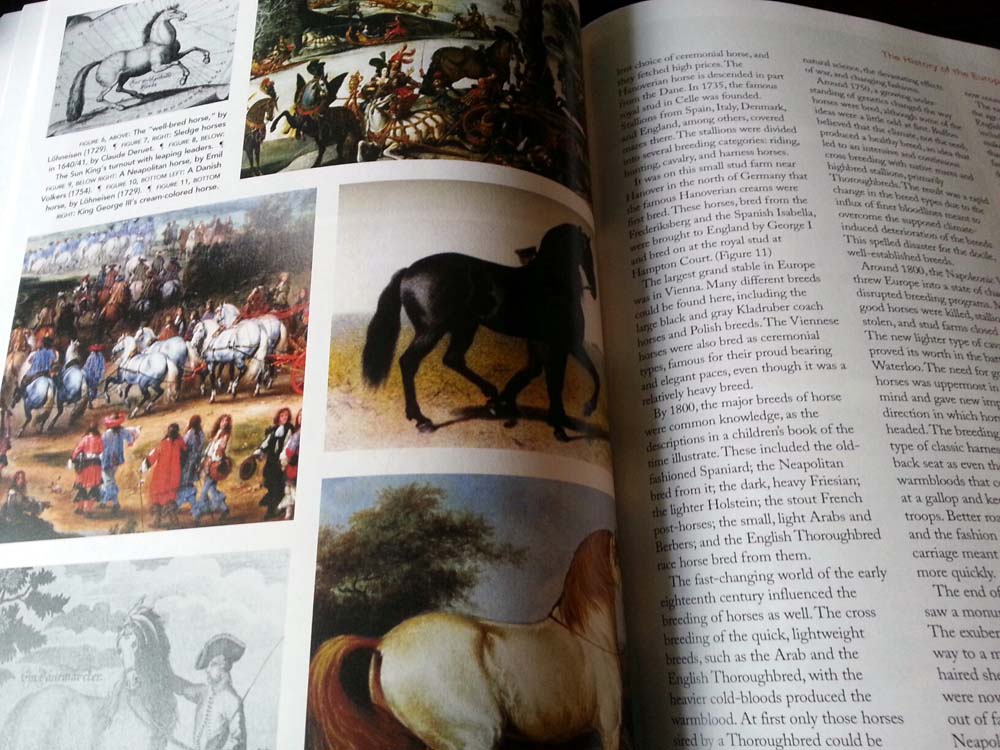
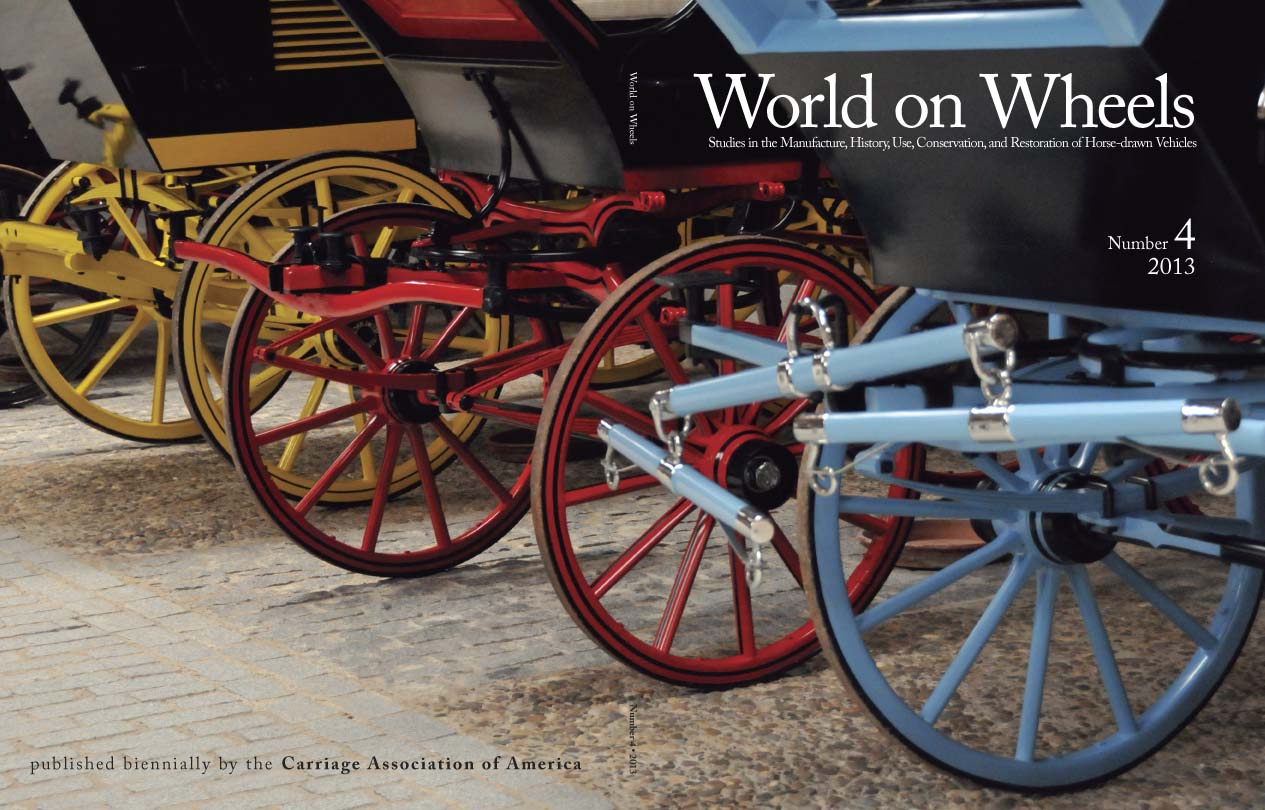
Well, I’ve just finished this year’s — completely re-envisioned — issue. This issue consists, as usual, of articles taken from the lectures at the most recent CAA / CWF International Carriage Symposium. It’s larger than previous issues (8.5 x 11, 104 pages, perfect-bound) and filled with glorious color images from the symposium lectures. The articles in this issue cover a variety of topics: commercial vehicles, Austrian imperial vehicles, the evolution of European driving horses, an in-depth study of gender notions in the sale and use of carriages, and sumptuous hammercloths and interiors.

As a color teaser, here’s the wrap-around cover (back on the left, front on the right) for this issue …

.

.

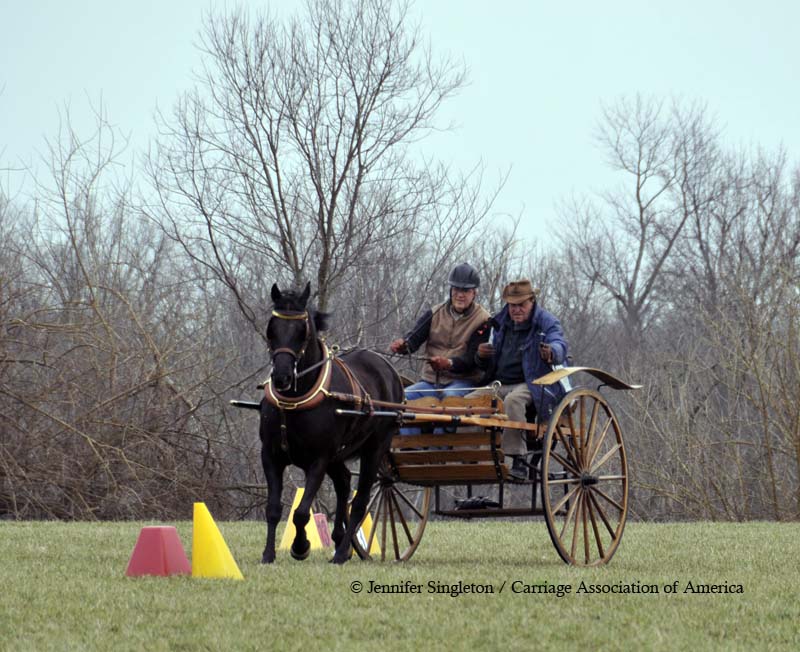
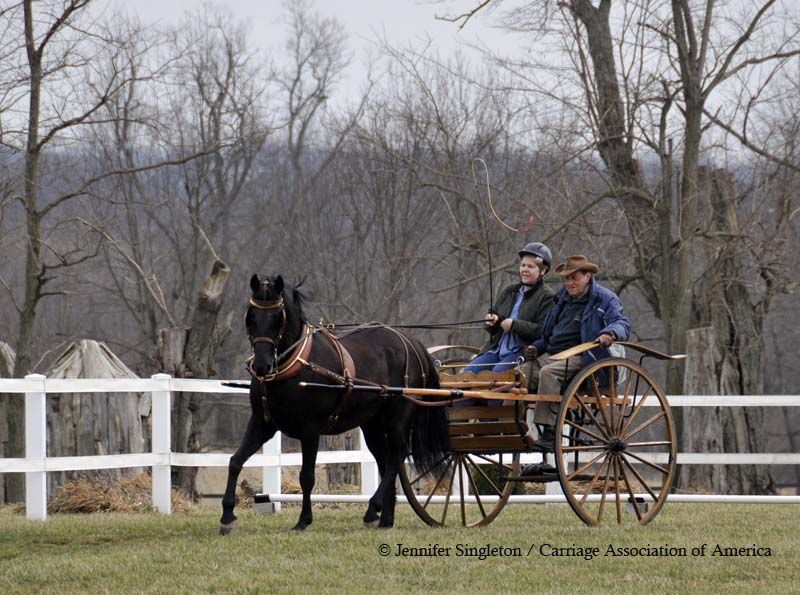
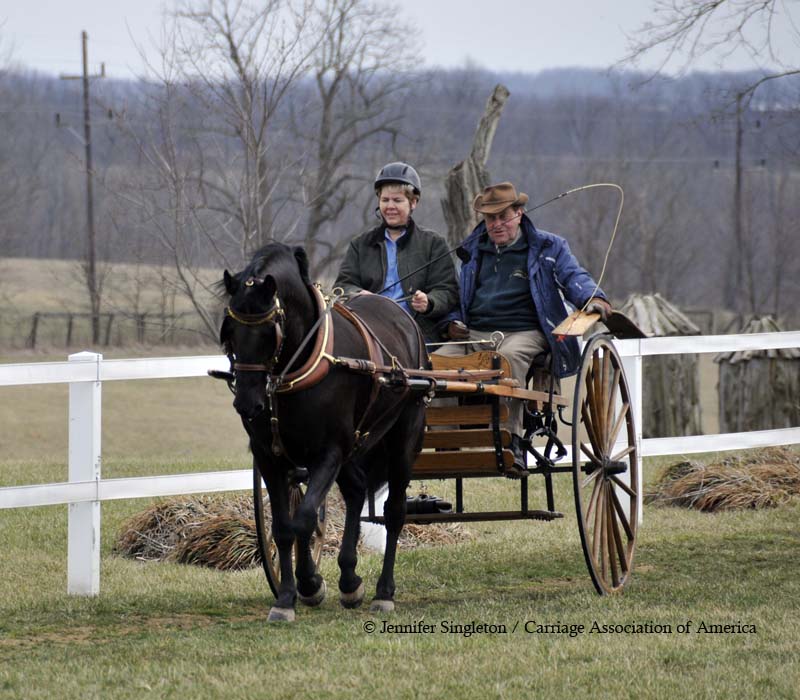
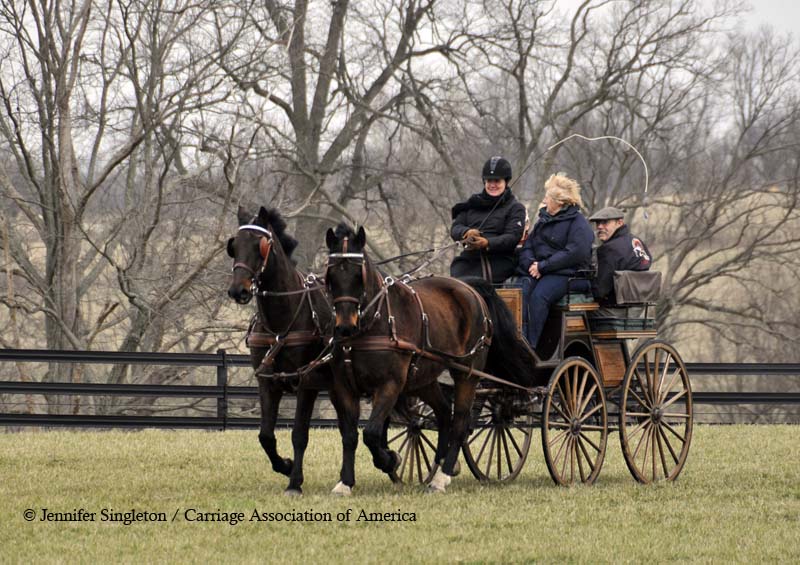
I’ve realized that I haven’t posted anything in quite a while that involves actual, living horses being driven. Of course, it’s difficult to find very many, or any at all, being driven this time of year. But you and I are in luck today! Although our weather here in Lexington is horrible today, and was horrible yesterday, Friday was nice (if a bit windy and chilly) and Saturday was gorgeous. Over the weekend, the CAA hosted a program of driving lessons and Driver Proficiency evaluations at the Gayla Driving Center in nearby Georgetown. The special-guest instructors and evaluators were John Parker and Susan Townsend from England.

I made it out to Gayla for just a little while on Friday afternoon, but here are a few photos of, first, Colonel Davis (the CAA’s immediate past president) and, then, Colonel’s wife, Kathi, taking a lesson with John Parker and their morgan mare, Dixie. Then we’ll see Debbie Banfield taking a Level 3 evaluation with Susan. And in the background of all these photos: the Bluegrass in the early spring …

.

.

.

.

.

.

.

Earlier today, some of the participants in the weekend program (those, especially, who came all the way from California and are staying in the area for a couple of extra days) stopped by the office to visit with John and Susan and to have a cup of tea. I’ve posted a photo of all those folks on the CAA’s Facebook page … which, coincidentally, is easier to find now: just click on the FB link in the upper right corner of this page and it will take you to our FB page, where you can see everything (but not post or comment) without having to either sign in or even have a Facebook account.

One of the ads I’m designing for the March issue of The Carriage Journal is a full-page advertisement our 2014 International Carriage Symposium (next February at Colonial Williamsburg). The focus of this fourth biennial symposium is carriage and wagon accessories, which includes lamps, livery, whips, etc.

In searching for an image to illustrate this particular ad, we went through Jill’s collection of Vanity Fair’s prints of famous coaching men. And we found this lovely print of Alfred G. Vanderbilt. You may remember him as the American coaching enthusiast who took his coach, the Venture, and eighty horses to England, in order to drive them on the London-to-Brighton road for several weeks during the summer of 1908. (You either already knew this or picked it up from yesterday’s tweets, right?).

He was a little too tall for my scanner, but I managed to scan him in two parts and stitch him back together quite nicely.

.

Alfred G. Vanderbilt, from Vanity Fair

.

« Previous PageNext Page »